Stories

In towns and cities across the country, the real shape of the Irish economy is found in the businesses that open their doors long before the rest of us start the day.
These family-run firms rarely grab headlines, yet they underpin employment, investment and community life in ways that many multinationals cannot.
For all the glitz of tech giants and start-ups, the backbone of Irish enterprise remains these family-run operations — the businesses that anchor local economies and stay embedded in communities long after others would have moved on.
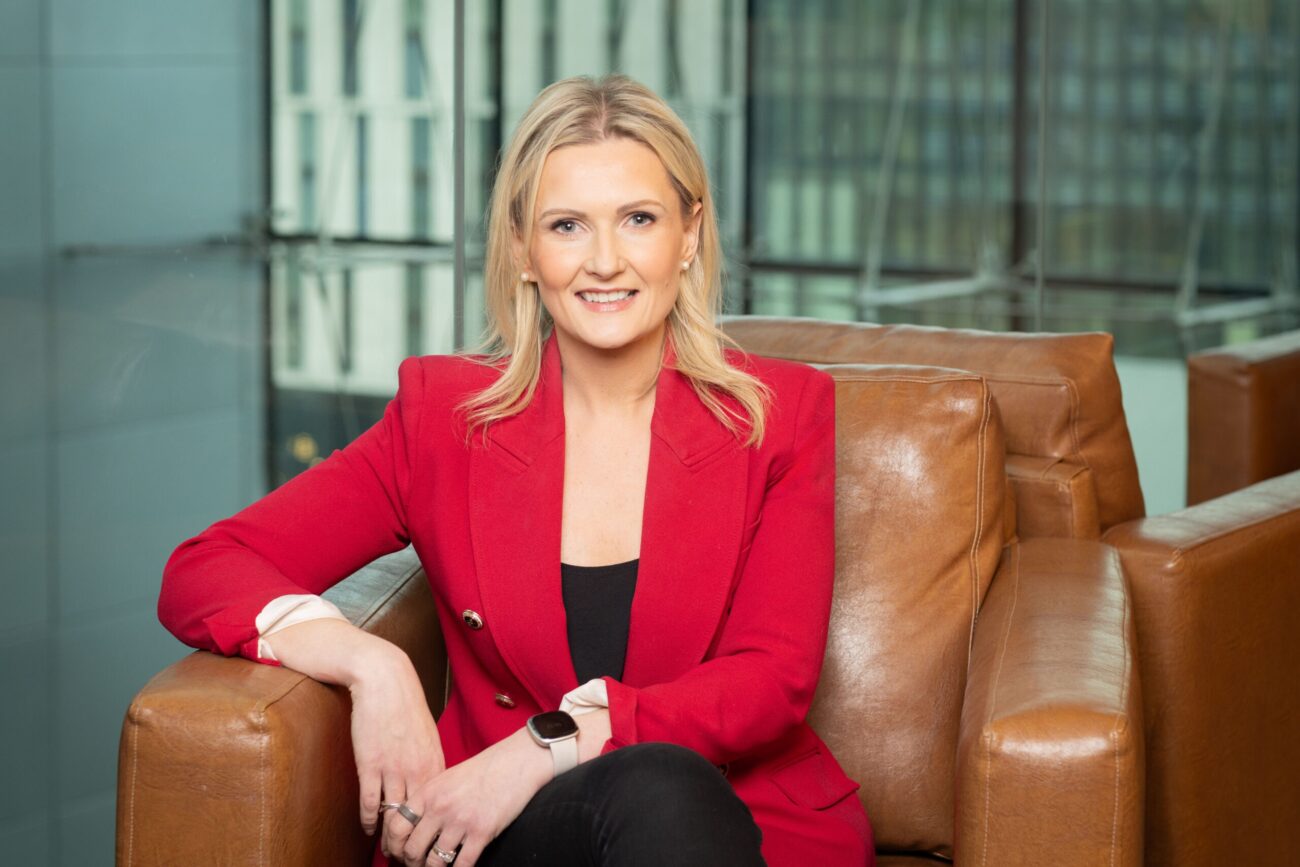
For Mairead Harbron, Partner at PwC Private, this is where some of the most interesting stories in the Irish economy actually live. Harbron has spent nearly two decades at PwC, beginning in a traditional corporate tax role before finding herself drawn into advising entrepreneurs, business owners and high-net-worth families.
“I just loved working with private clients, because you were dealing with individuals where their concerns a lot of the time went way beyond tax,” she says. “A lot of the work that I do is around succession. It’s often not about the tax; it’s more about how the kids will deal with wealth, how the business passes through, and still stay successful.”
Her clients these days range from entrepreneurs to long-standing family businesses and high-net-worth individuals.
The topics she works on — things like ownership, legacy, and passing the business to the next generation — tend to mix emotion with strategy, so the conversations are often as personal as they are practical.
“It’s not just about the numbers,” she says. “It’s about the family dynamic, the sense of responsibility, and the desire to keep something going that’s bigger than any one person.”
Optimism in challenging times
PwC’s 2025 Family Business Survey, now in its twelfth cycle, arrives at a moment of complexity for Irish business.
On the one hand, the economic fundamentals remain strong. On the other hand, many owners feel besieged by costs and global uncertainties. Yet the survey shows a striking conclusion: Irish family businesses are more optimistic than their global peers.
“About 20 per cent of businesses surveyed reported double-digit growth,” Harbron says. “And on the ambition side, 83 per cent of them have ambitions to grow over the next two years.”
The result is particularly noteworthy because those same businesses are also feeling economic pressure more acutely than firms in many other countries.
Harbron sees this clearly in her daily work.
“They are reporting significant challenges,” she says. “Sixty-five per cent were feeling competitive pressures… and 72 per cent were citing economic concerns.”
Inflation, higher borrowing costs, supply chain stresses and labour market constraints have created a perfect storm, something that is evidenced by the survey.
The country’s near-full employment — usually a sign of economic strength — has left many companies scrambling for staff. According to the survey, 65 per cent of Irish family businesses cite workforce availability as a risk compared to 47 per cent for global peers.
“It is a product of our own success in the sense that we have near full employment,” she says. “And the availability of workforce at the right cost is a huge issue.”
Layered on top of this is a series of incremental policy changes that collectively strain smaller enterprises. Harbron lists them as though reciting a familiar litany.
“We’ve had auto enrolment, we’ve PRSI hikes, we’ve had increases in minimum wage, increases in sick leave… even the additional bank holiday,” she says. “They’re all good for society… but it’s tough for SMEs and they need support to counter-balance the impact of these measures.”
Yet despite it all, resilience persists. She believes the optimism is rooted in how these companies view themselves.
“They ranked themselves highly in terms of agility,” she says. “If you think you’re agile and you think you’re an innovative business, you can outpace the challenges.”
The strategic value of patient capital
Unlike publicly listed companies responding to quarterly earnings pressure, family businesses operate with a longer horizon.
The way Harbron sees it, this is a major advantage as it can help the businesses navigate short-term uncertainty.
“For family-owned businesses generally, they have that kind of flexibility,” she says. “They’re not forced to give that immediate return on investment.”
This patience shows up in subtle ways. Harbron says it is visible in reinvestment decisions, in owners deferring their own salaries, and in a commitment to employees and communities.
“There’s such commitment to growing the business, to reinvesting,” she says. “Family business owners often put themselves on the back burner until the business is at a point that it can pay them without putting undue pressure on the business.”
This long-termism influences everything from layoffs to expansion strategy. Harbron points out that decisions in family businesses often include considerations that never appear on a balance sheet.
“They tend to be embedded within the community,” she says. “It’s not a cutthroat purely financial decision.”
That embeddedness fosters loyalty both ways. Employees often stay for decades; businesses often choose long-term resilience over short-term profitability.
The survey shows that Irish family firms are notably more cautious than their global peers, particularly in times of disruption. Fifty-two per cent said they revert to familiar management styles and decision-making approaches during challenging periods, well above the global average of 35 per cent.
Harbron sees this pattern regularly.
“It does come across in the survey,” she says. “That kind of cautious approach can hold businesses back.”
Yet this caution sits alongside something unexpected: Irish family businesses also consistently rate themselves as more agile than those globally.
“She says. “On the one hand, they’re conservative… on the other hand, they’re saying, ‘We can adapt quickly.’”
For Harbron, the two traits can coexist. Decisive action is often easier in a tightly held business where decisions are made quickly by people who have lived with the company for decades.
“They feel that they have the ability to adapt,” she says. “They ranked themselves highly in agility.”
The complexity of succession
If there is one theme that dominates discussions with family businesses, it is succession.
It is not just a business challenge; it is a personal one — and often the point at which otherwise strong companies falter.
“Just because the parent was an entrepreneur, it doesn’t follow that the next gen will have the exact right skillset… or the interest,” Harbron says.
She has seen succession done well, and she has seen it done disastrously. The most effective transitions, in her experience, often occur when the next generation builds a career elsewhere before returning.
“It kind of works well where the next gen actually goes off and does something independently… and come into the business at a point where they’re bringing a skillset,” she says.
In many cases, professionalising the business becomes essential, such as strengthening boards and recruiting professional managers.
“For those larger family businesses, there is a need to augment the board with professional management,” she says.
But professionalising raises its own questions. How do you retain a world-class executive when the company may never be sold?
“Equity isn’t much use if it’s never going to be sold,” she says. This is where “phantom equity” and long-term incentive plans come in, giving executives a stake in value creation without diluting family ownership.
“These are the structures that replicate what that person with that same skillset could get in a non-family business,” she explains.
The AI debate
The survey reveals a familiar paradox. Irish family businesses are captivated by the promise of AI — yet only a small minority are embracing it at scale.
According to the survey, digital transformation and automation are seen as the top growth opportunities for Irish family businesses. Indeed, nearly two-thirds specifically cited experimentation with AI as a key growth opportunity.
Yet, less than half (46 per cent) are currently prioritising investment in digital transformation and AI adoption for long-term growth.
“They see it as being a huge growth opportunity,” Harbron says. “But at the same time, it’s not a high priority in terms of where they actually think they’re going to invest.”
Many recognise AI’s potential but are struggling to identify precise business cases.
“They’re really struggling to see exactly what the return on investment is going to be for their particular business,” she says.
She adds: “I think there’s still a challenge there in terms of actually scaling AI so it’s enterprise-wide,” she says.
Yet despite this, she believes family firms are open to change — they simply need guidance, capability and a clearer sense of how AI can create measurable value.
The high price of losing indigenous champions
Harbron is unequivocal about Ireland’s deeper structural problem: the country has become dangerously reliant on foreign direct investment while failing to nurture its domestic business base.
“There’s been years of… neglect of the domestic sector,” she says, adding this has a consequence: “A lot of domestic businesses are selling out too early.”
She sees it repeatedly in her client base — strong Irish companies acquired by private equity or international trade buyers before they reach their full potential.
“From an Ireland Inc perspective, we’d like to see more of those businesses staying in Irish hands,” she says.
One of the clearest solutions, she argues, is reforming employee ownership schemes (ESOTs), which could allow founders without a successor to exit without selling to foreign buyers.
“It’s a way of keeping ownership in domestic hands,” she says. “It’s a no-brainer.”
She wants Ireland to look to the UK and Denmark, where ESOTs have become powerful tools for retention and long-term growth. Beyond ESOTs, she argues for more meaningful entrepreneur relief, mechanisms to allow founders to take money off the table mid-cycle, and stronger strategic support from the State.
“Enterprise Ireland does a good job,” she says. “It could probably do with an expanded mandate.”
The goal, in her view, is simple: make it easier — and more attractive — for Irish companies to scale here, not sell.
International headwinds
Irish family businesses may be optimistic, but that optimism is not blind. External pressures — tariffs, geopolitical tensions, shifting supply chains — remain a constant concern.
“If they’re exporters, that would already be impacting them,” she says.
Yet even as they face these pressures more intensely than their global peers, they remain more upbeat. Harbron sees this as a blend of experience and determination.
“We still have a really strong domestic economy,” she says. “There’s still buying power… that comes through in the sales growth.”
At the end of the conversation, Harbron pauses, reflecting on the breadth of issues covered — succession, technology, governance, taxation, culture, and the thin line between caution and confidence.
“There is a lot on the table,” she says. “But underpinning it all is a resilience in family-owned businesses.”
This article is partner content and has been produced in association with PwC.