Stories
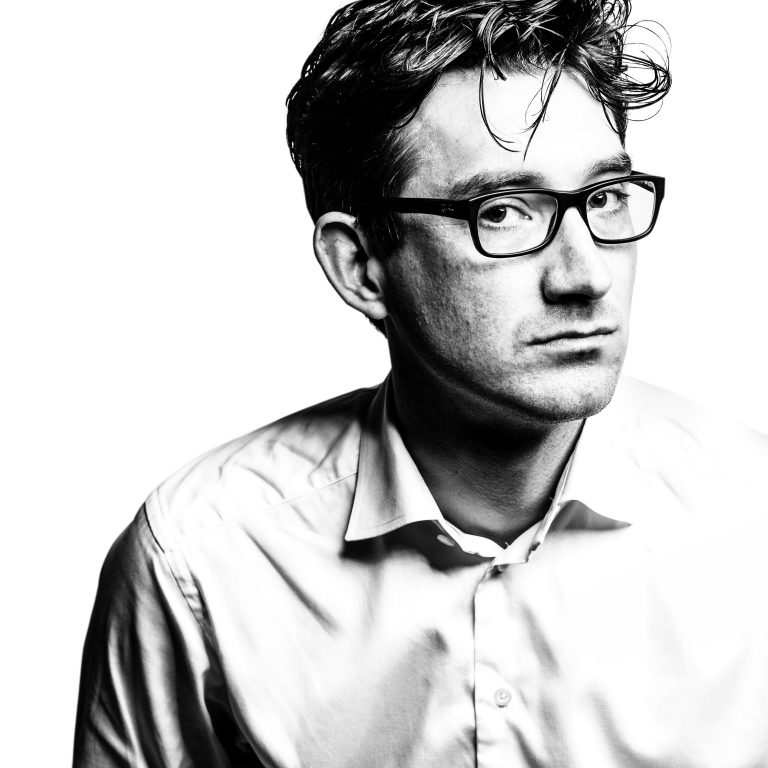
Earlier this month, I sat down at my computer to read Alan’s interview with Ben Taylor, editor of The Sunday Times.
I expected an interview, but what I found was something more. It was a portrait of a man, a newspaper, and an industry, all woven together with panache and deep insight.
Ben Taylor does not do interviews. He occupies one of the most senior roles in British — perhaps even European — media, yet he keeps his head firmly below the parapet. As Alan notes, he searched high and low for a single interview Taylor had given in the five and a half years since joining The Sunday Times. He found none.
“So look,” Alan said, “you haven’t really done a whole lot, in terms of interviews — would that be fair?”
“Very much so,” came the reply.
And yet, Taylor opened up. He spoke candidly about the ebbs and flows of his career, the people he has encountered along the way, and the changing nature of the media industry. He reflected on scoops and controversies, and on his own approach to leadership.
The result is a compelling read — everything a great interview should be — and I commend it to your attention.
Ben Taylor was one of hundreds of people we spoke to over the past 12 months. Some were entrepreneurs; others were policymakers or politicians. Some led newly conceived start-ups, while others ran semi-state giants or publicly listed companies. We spoke with authors, poets, and documentary-makers.
I read every piece published this year, but revisiting them while preparing this review, I was struck by the sheer diversity of voices that appeared on the site.
In every case, we aim to be inquisitive, fair, and thorough. We ask questions designed to elicit the most informative responses, while giving interviewees the space and freedom to answer fully. We don’t always get it right, but our goal remains the same: to speak with interesting people about interesting topics — and to let them speak.
Here is a selection of 25 interviews from the year that you might enjoy.
*****
The last stand? Eamon Dunphy on Trump, democracy and the future of media
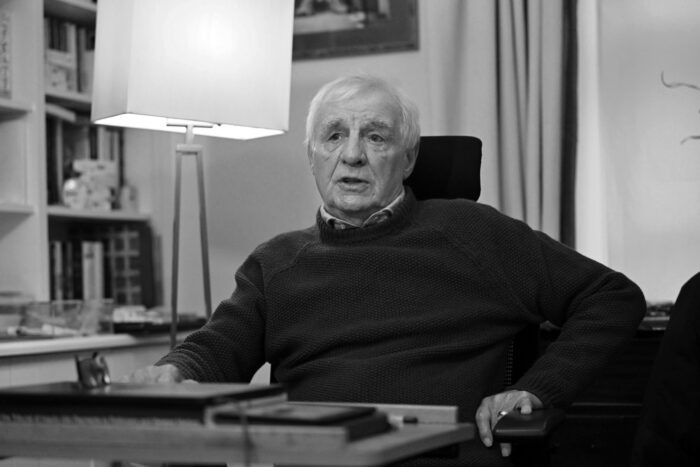
In January, after 2,000 episodes of The Stand, Eamon Dunphy had opted to push the pause button on the current affairs podcast that had consumed him for much of the past decade and which, by his own admission, allowed him to help sate his own internal curiosities.
Two days after he made the announcement, he invited me to his home to chat about the reasons for shuttering the acclaimed podcast, as well as talking about the pernicious influence of Trump, the rise of authoritarianism and the need for nuance and conversation in an increasingly polarised world.
“The point of The Stand was to do something small, something niche. That is what we did, and we made it work,” he told me.
In Glasthule, with love: Food, friendship and the fight in Peter Caviston
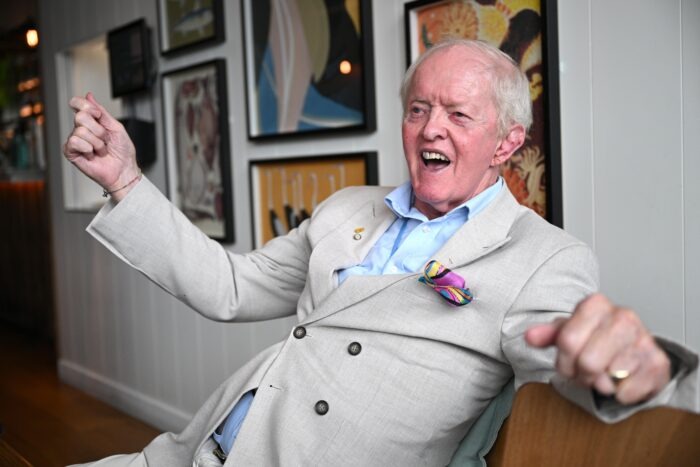
A new addition to our roster of writers this year was Brighid McLaughlin, and one of her first interviews was with Peter Caviston. I have to admit I was a little dubious when the interview was first pitched to me. Caviston is clearly a well-known figure in the seaside village of Glasthule, due to his eponymous food businesses, but I wondered if the article would appeal to readers outside of south Co Dublin.
I was wrong. The interview was charming, engaging, and, at times, poignant. It dealt with issues of life, love, and loss.
There is a wonderful vignette where he talks about his staff.
Caviston employs 100 people, and as Brighid acknowledges, he is good at picking people because most of them have been there for years. James, who works behind the fish counter, has clocked up 50 years. Elaine, 20 years. Caviston calls his staff “the lungs and heart of the place”.
“Without them, I’m just an aul fellow with Parkinson’s and a few memories of scallops,” he said.
The chain restaurant dilemma: Anna Haugh on tradition and the future of Irish cuisine
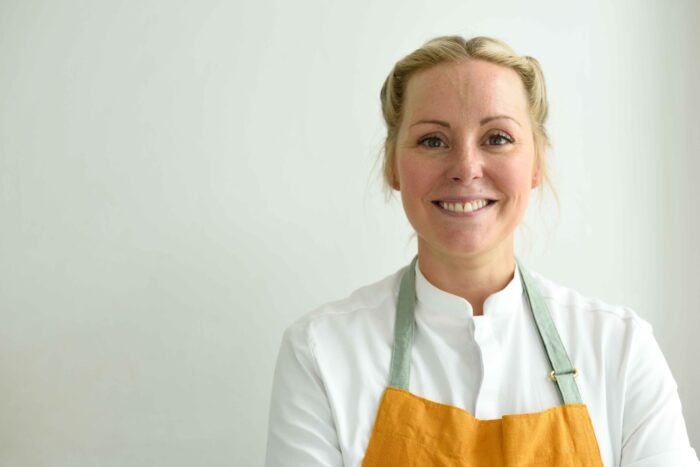
Anna Haugh is perhaps best known for her role as a judge on BBC’s MasterChef, but she is also the owner of Myrtle, an Irish-cuisine, fine-dining restaurant in Chelsea, one of London’s most exclusive boroughs, as well as a newly opened neighbouring wine bar called The Wee Sister.
Earlier this year, she sat down with Michael, where she talked about the revolution building within Irish food, and the threats posed by chains.
However, the interview went much further than food. Haugh discussed the prospect of a united Ireland, raising her son in a time when young men have been put into sharp relief, and much more besides.
“Succession is not about just giving it to the next generation. It’s about creating purpose for the family”

In 2008, I went to the Galway office of Lifes2good to interview its founder, James Murphy. I still remember the office, as it was full of life-size cardboard cutouts of a string of Irish celebrities. Model Glenda Gilson was talking happily about the increasing size of her breasts, as golfer Christy O’Connor Junior enthused about the relief of magnetic therapy. Amanda Brunker chatted about how slimming tablets helped her go from a size 16 to a size 10.
The strategy paid off — years later, Murphy would sell the business for €150 million. Earlier this year, he sat down with Alice to discuss money, succession and wealth. It was a deeply personal interview by a remarkably thoughtful entrepreneur.
“I think that it’s important that entrepreneurs who make a lot of money in Ireland could do something really good,” he said.
The black belt who sold Ireland the world: The many lives of Bob Haugh
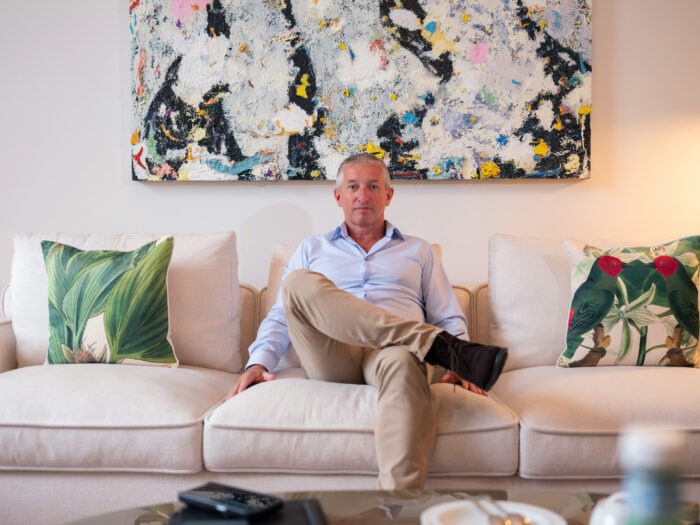
I have never met Bob Haugh, but as I read through Tom’s interview with the businessman, I could not help but wish I had.
He has lived many lives — the son of a judge who never went to university and spent years working as a bouncer in gay nightclubs, he would later become a serial founder and one of Ireland’s most successful travel entrepreneurs, pioneering guided travel across the globe.
Indeed, when Taylor Swift came to town earlier this year, she rented his house.
Digital first, but not digital only: Mediahuis Ireland’s new CEO on subscriptions, AI, and print
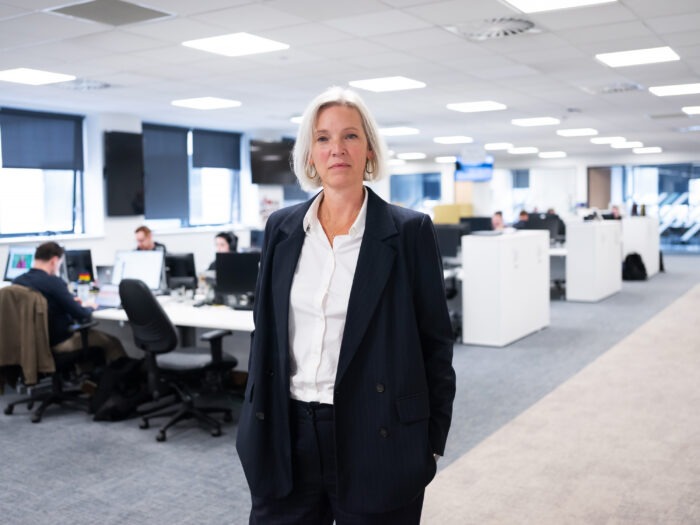
On October 1, Sheena Peirse formally succeeded Peter Vandermeersch as chief executive of Mediahuis Ireland, placing the English-born executive among the most powerful figures in the Irish media landscape.
Vandermeersch was steeped in print. Peirse is not. Her career has been built in digital — first in the UK, where she held senior roles at ITV and Channel 4 during the years broadcasters were scrambling to adapt to online platforms.
Over coffee, Peirse talked me through her career arc and outlined her plans for the future of the country’s biggest private media business.
“We are digital-first, and our newsroom is dedicated to feeding what our readers want to read online first. We love our papers, and we still sell a significant amount of them, so we are keen to make those products as good as possible for readers who still want to read them,” she told me.
The big Kerry Group interview: “We don’t like to think of ourselves as a big company”
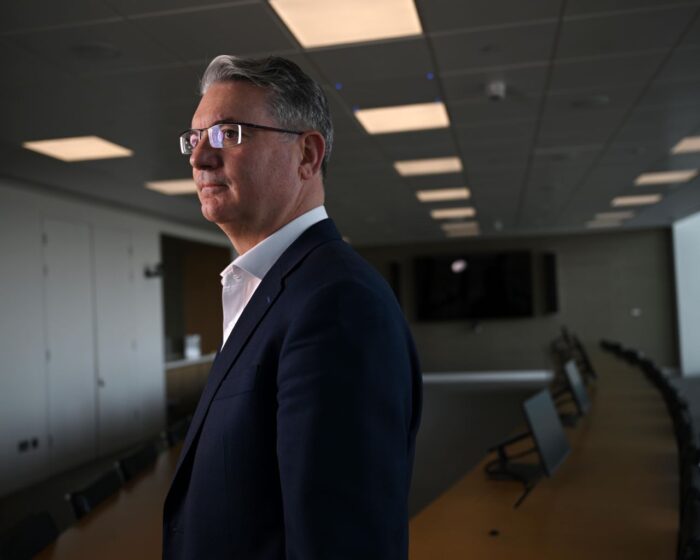
Thomas met Kerry Group CEO Edmund Scanlon at the group’s global innovation centre in Naas, Co Kildare — the nerve centre of the group where patents are registered, and customers come from all over the world to work on their applications for the group’s technology.
Aged 51, Scanlon is almost the same age as Kerry Group and only the fourth chief executive in the business’s history.
The size and scale of Kerry Group are worth remembering. With a €17 billion market cap, it employs 20,000 people in more than 55 countries, and its ingredients find their way into the food and drinks of almost 1.4 billion people.
Scanlon talked Thomas through the business — its strategy, ambition, and challenges. It is a wonderful insight into an understated business leader and a marvellous company.
Designing influence: the McDonnell sisters on publishing, partnership, and a new creative chapter
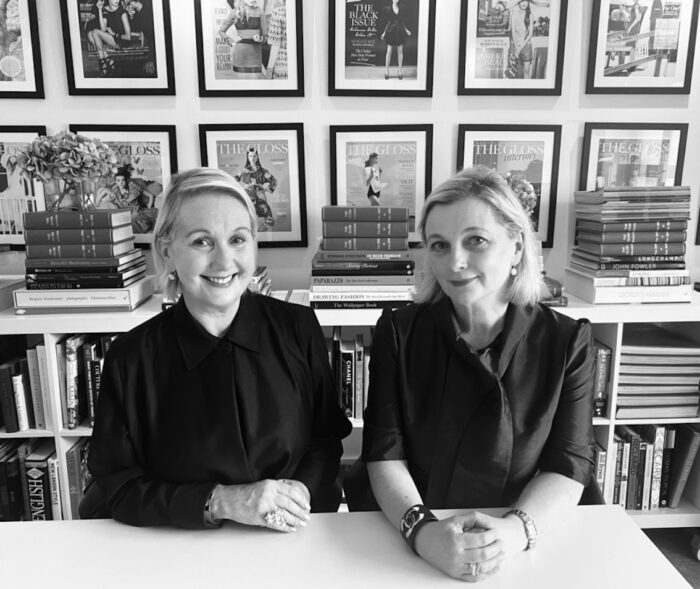
As Rosaleen put it, sisters Jane and Sarah McDonnell give a good interview — a skill honed by years spent on the other side of the dictaphone, interviewing and editing for glossy magazines.
“Although too modest to ever admit it, they have played a considerable role in shaping the tone of modern Irish media over the past three decades,” Rosaleen wrote.
Before co-founding The Gloss, where Jane is publisher and Sarah editor, the pair were at the helm of Image magazine. They spoke about selling The Gloss, and why they are moving deeper into interior design.
From Russian shadow fleets to the “on-orbit economy”: Ubotica’s pitch for AI and space
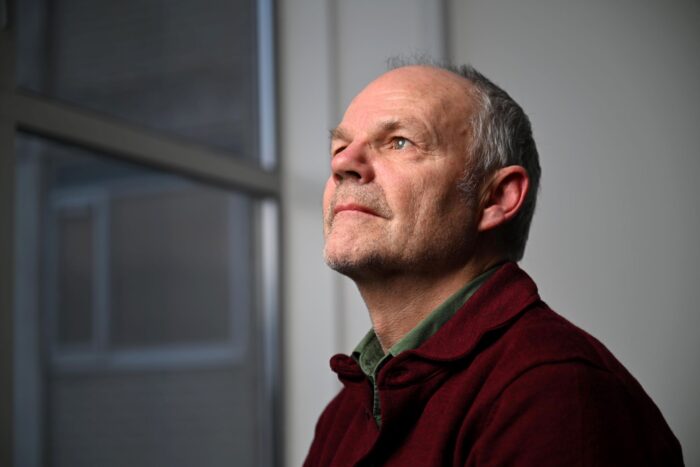
The Irish company Ubotica builds hardware and AI software that sits inside satellites. Once in orbit, they are used for a multitude of purposes, from climate-change monitoring to tracking space debris, and indeed maritime surveillance.
It might seem quite scientific, but it has real-world applications, and those applications are becoming more in demand — it identified a Russian ship in Irish waters earlier this year.
Its CEO, Fintan Buckley, sat down with Jonathan earlier this year, where he discussed buying out the business from Intel, its plans for the future, and the importance of national security.
“The Irish Navy is coming under a lot of pressure at the moment. I don’t know whether they’re feeling it, but in the department they must be feeling it around how vulnerable not only Ireland, but a lot of the west of Europe is to anyone trying to damage our communication network,” he told Jonathan.
David Widger: “You can’t control circumstances, only how you respond”
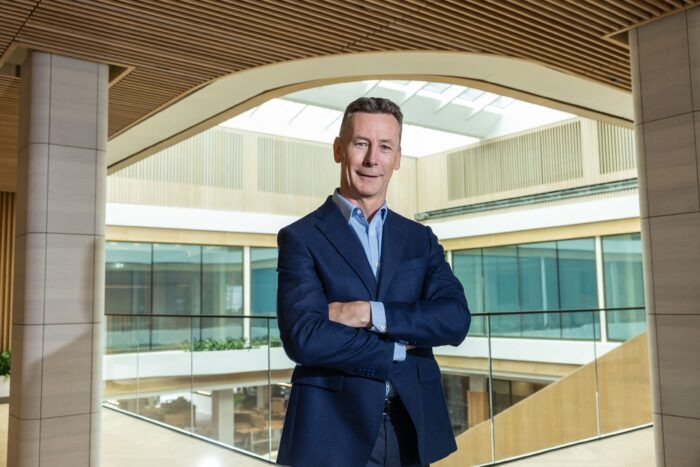
In a rare interview, David Widger, managing partner of A&L Goodbody, talked to Tom about the corporate deals that helped shape his career, working through boom and bust, and why he would like a second term as the firm’s managing partner.
He also spoke about the ebbs and flows of his life, and reflected on why A&L Goodbody has been around for so long.
“Fundamentally, what we’re about is being the number one or number two Irish law firm in the market at all times,” Widger said. “Every practice group has to perform exceptionally well.”
Curves and courage: Sinéad O’Brien on building a brand that empowers others
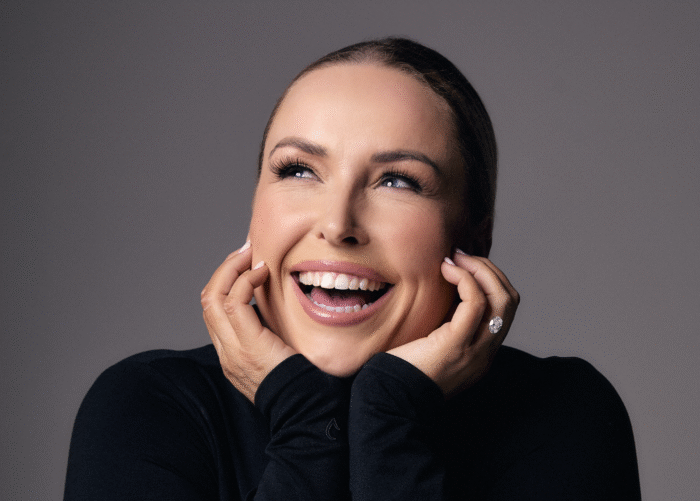
When influencer and entrepreneur Sinéad O’Brien was in the midst of her modelling career, she was one of the few so-called “plus-size” girls on Irish books.
“I hate that word,” she told Kate from her kitchen table in Limerick. “It feels, and felt, demeaning. Also, plus-size at that stage was anything from a size UK 10.”
O’Brien is a compelling character. A former wedding singer and body-positive blogger, she has gone on to found Ireland’s most inclusive shapewear brand, Vacious. She talked about her journey and what is coming next.
“No budget can do everything”: Paschal Donohoe on trade-offs, tariffs and Budget 2026
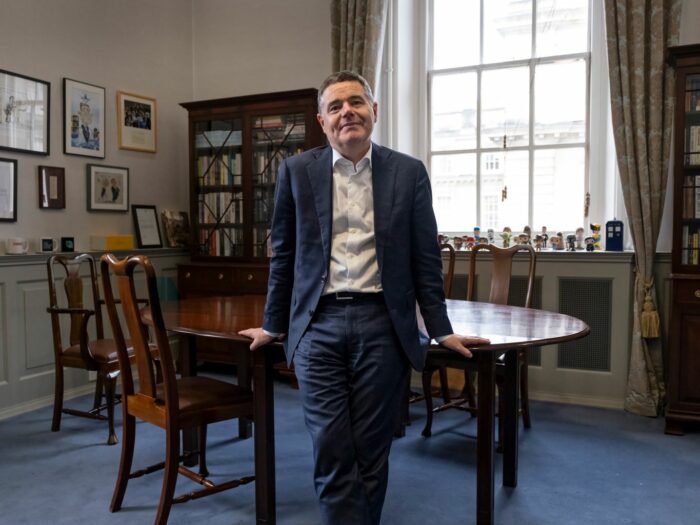
I have been fortunate to have interviewed Paschal Donohoe on many occasions over the years. Indeed, in the past four months, I sat down with him three times — pre-budget, post-budget, and for a public event organised in association with Cantor Fitzgerald.
After his departure to Washington, it would be remiss of me not to include one interview with the former finance minister. I have selected the one where he teed up Budget 2026, reflected on Trump and tariffs, and also spoke eloquently about populism, globalisation and society.
“What I think is more possible is that we’ll enter into a phase of globalisation where there is more of a focus on regions and more of a focus on trading alliances with deeper levels of economic integration within them,” he said.
Confessions of a coffee man: From the brink of bankruptcy to a €35m exit
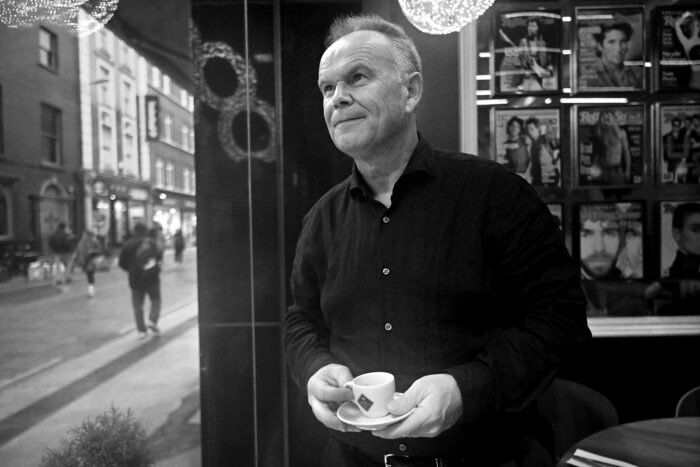
David McKernan was already seated at FX Buckley Steakhouse in Pembroke Street, Dublin last month, with a glass of white wine in front of him, when Alan arrived five minutes early.
For the next three hours, they chatted about how he somehow managed to keep the banks from closing down his Java Republic business, how Denis O’Brien offered to bail him out at his lowest point (he didn’t take the money), how he pulled off an emotionally overwhelming exit by selling to the Spanish coffee company Cafento the year before the pandemic struck, what he’s up to these days, and why he’s convinced AI is not a bubble.
“In the end, we got the result, but in between there were some bad days, bad weeks. I put a lot of people through a lot of shit and I’m not proud of that,” he told Alan of the sale.
Next stop, the US: Aimee Connolly prepares Sculpted by Aimee for its biggest challenge yet
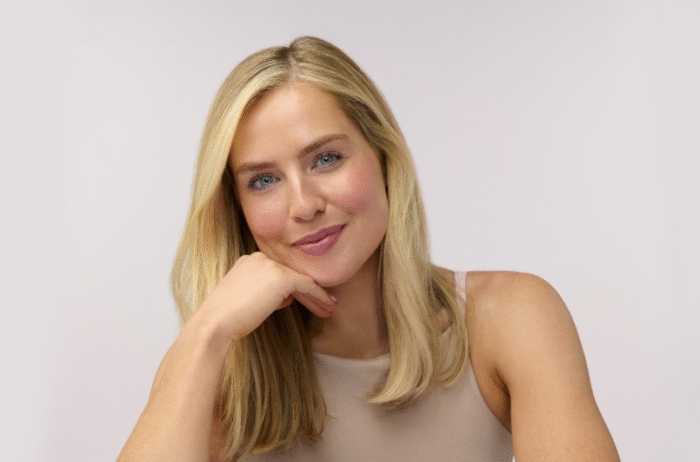
Aimee Connolly is the makeup artist-cum-founder behind fast-growing beauty brand Sculpted by Aimee, which she launched in 2016 at the age of 23.
Since then, the Sculpted by Aimee team has grown from just one woman (Connolly herself) to more than 100 people across the UK and Ireland nine years later.
So, what comes next? Earlier this year, she caught up with Alice to discuss her big push into the US, with the award-winning entrepreneur also veering into other topics such as colour-matching, course-correcting, and trend-forecasting years in advance.
The property technocrat: John Bruder’s path through Ireland’s boom, bust and recovery

John Bruder grew up in Tallaght during the 1960s and 1970s, when it was still a rural village, surrounded by open fields. Bruder remembers first hearing about the ambitious plan to create a town centre in southwestern Dublin — laying the foundations for a new suburb that would one day be home to 100,000 people.
“It probably gave me my first interest in property,” he told Tom earlier this year.
From AIB to Treasury Holdings to Gresham House, Bruder has been at the coalface of the industry for decades. In a sense, Bruder’s trajectory mirrors the property market itself, moving through boom, bust, and recovery.
Now within the Gresham House fold, he wants to keep building, investing, and perhaps even turn his attention to housing.
“Snakes and ladders”: Jacobs on growth, complacency, and navigating Irish planning
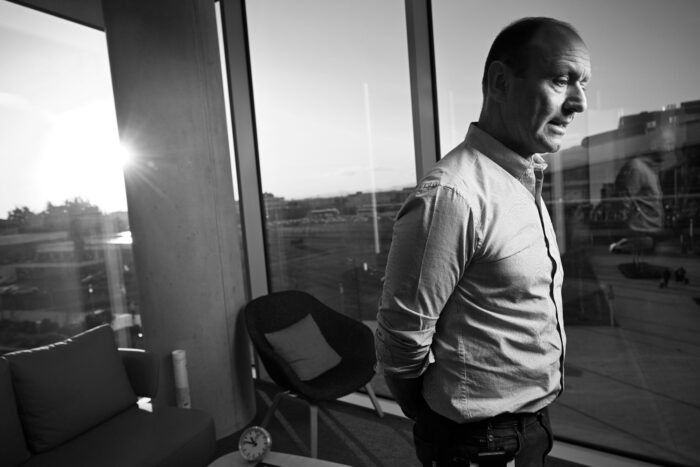
The boardroom fracture at the Dublin Airport Authority (DAA) has been one of the major corporate stories of the year. However, before the disharmony broke out, Tom sat down with chief executive Kenny Jacobs, who discussed growth, complacency, and navigating Irish planning.
Over the course of 45 minutes, he covered a lot of ground, including plans to launch a new app, expand business services, add more retail, grow Cork airport, and expand the DAA’s international retail business (which already stretches from Vancouver to Jakarta). He also discussed his goal of operating more airports overseas, including in the Middle East and North America.
As the dispute rumbles on, it is well worth reading, as it offers a fine portrait of the CEO and his vision.
Trusting instinct: Philippe Sands on following the threads of history, justice and family
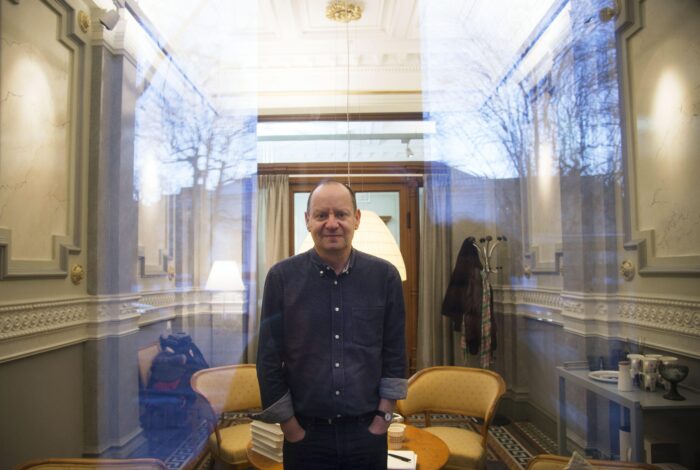
Speaking to Francesca, renowned lawyer and author Philippe Sands reflected on justice, history and instinct.
He also talked about his latest book, which explores the links between the Pinochet dictatorship and a former Nazi running a crab cannery in Chile.
He discusses impunity, accountability, and the enduring power of law and literature to confront past atrocities, while drawing unsettling parallels between Pinochet’s era and today’s rise in authoritarianism.
“I don’t judge anybody, I don’t criticise anybody,” he told Francesca.
In his own words: Keith O’Loughlin on life, loss, and rewriting the odds
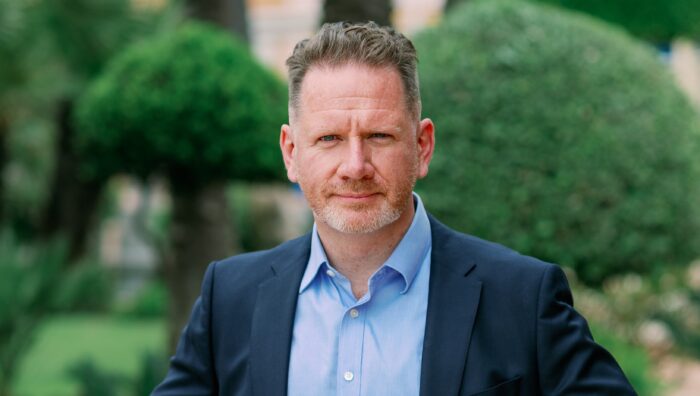
Last year, Keith O’Loughlin lost his best friend and business partner, Eddie Jordan. To celebrate the tycoon, he wrote a book and launched a foundation. But this is just one part of O’Loughlin’s story, which has seen him move from fixer to company builder.
He told me his own story — from helping gambling companies grow online, to multi-million euro deals, to the hard reality of building a business.
He’s now assembling his own portfolio under a new Irish-based holding company called Everlock. It includes a 40-year-old IT procurement firm, a Spanish road bike manufacturer, a pharmaceutical distributor launching in the UK, a Malta-based casino, a betting company, and multiple AI start-ups.
“I was tired of fixing everybody else’s businesses,” he told me. “I’d made piles of money for people.”
Designing Alfrank 3.0: “The last 40 years must count for something”
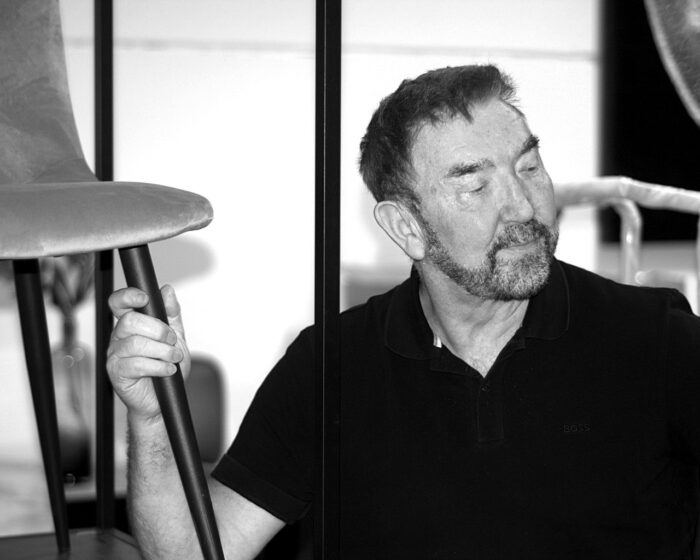
Having spent most of the past 20 years in China, furniture designer Frank Carroll saw his company Alfrank Designs face insolvency last year. Aged 71, he was asked, “Do you still want to do it?”
The answer was yes.
Having brought his company back from the brink, he sat down with Thomas to talk through the company’s backstory — and how it survived financial woes.
“A lot of people seem to think that it’s about ego,” he told Thomas. “For me, it is that I would like to see the business continue. And my son works in the business now. There are people here a long time, and you make a lot of contacts, and you gain a lot of kudos and respect from other people.”
John Reynolds on Cairn Homes, Irish housing, and the relentless pursuit of scale
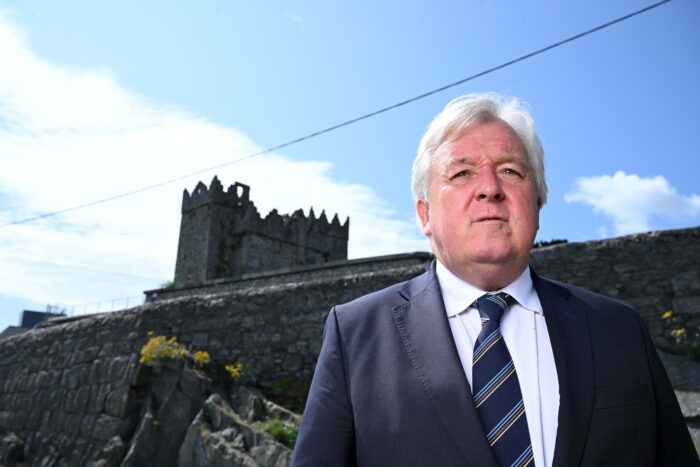
Born above a Donegal pub and having made his name in Irish banking, John Reynolds brought governance, scale and vision to Cairn Homes. As he departed the chair, he talked to Tom in July about what Ireland must fix — and why the private sector can still lead the way.
“I am hugely grateful for my 10 years with Cairn. I loved it, it was really exciting,” he said.
“I’ve always been a wee bit lucky. I fell into different things. I fell into banking, and then into housebuilding. I didn’t come from either world.”
“Sport is drama where nobody knows the ending. With The Traitors, it’s the same thing”
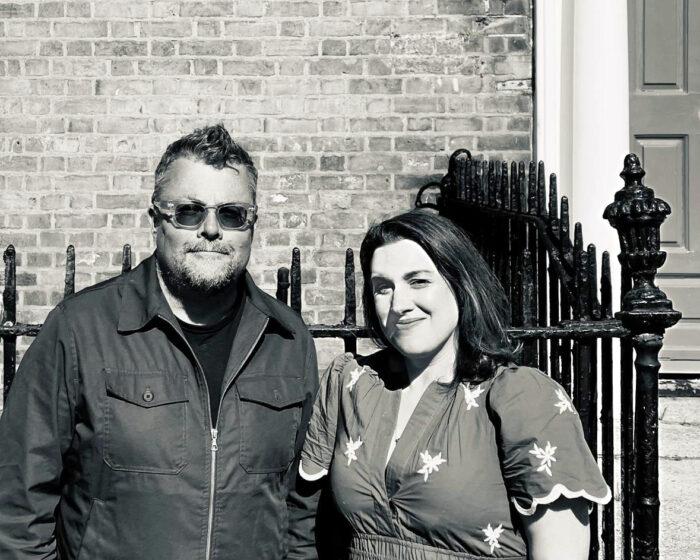
The Irish version of The Traitors was one of the break-out television hits of the year. It was also a rare occasion when an Irish remake of a global format was arguably better than other versions.
Prior to its release, Alice met with the executives behind it, Darren Smith and Mairéad Whelan of Kite Entertainment. They explained why it took five years to get The Traitors Ireland into being, the perilous nature of independent productions, and what streaming has done to their industry.
Small team, big impact: How Tapestry VC is competing with the world’s venture giants
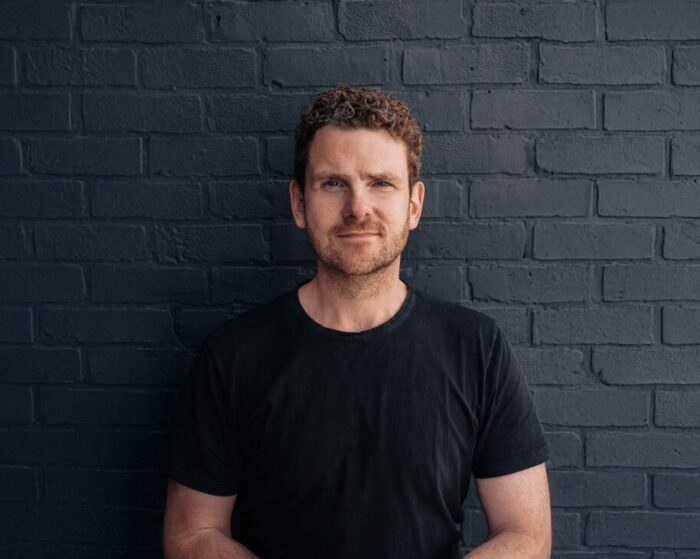
When Patrick Murphy talks about Blackrock or St Mary’s College, he doesn’t mean the private schools in Dublin. Instead, he’s reflecting on his hometown in Co Louth and the Dundalk secondary school he attended.
It was, by his own admission, a bit of a “culture shock” when he went to UCD to study mechanical engineering. “Blackrock and St Mary’s meant different things in Dublin,” he says.
Yet, through his entrepreneurial initiative and business nous, Murphy has built a VC that is experiencing significant success. The companies his funds invest in are regularly namechecked in Fortune, Techcrunch and The Information. They include Nothing, a consumer technology company that raised $200 million last month at a $1.3 billion valuation.
There’s also Zapp, an on-demand delivery app unicorn backed by Formula 1 champion Lewis Hamilton, and Ladder, a strength-training app which raised over $100 million last year.
But who is Patrick Murphy? And how has he climbed so high on the West Coast? He told his story to Tom.
From fintech to flight path: Stripe’s John Collison charts a new course at Weston
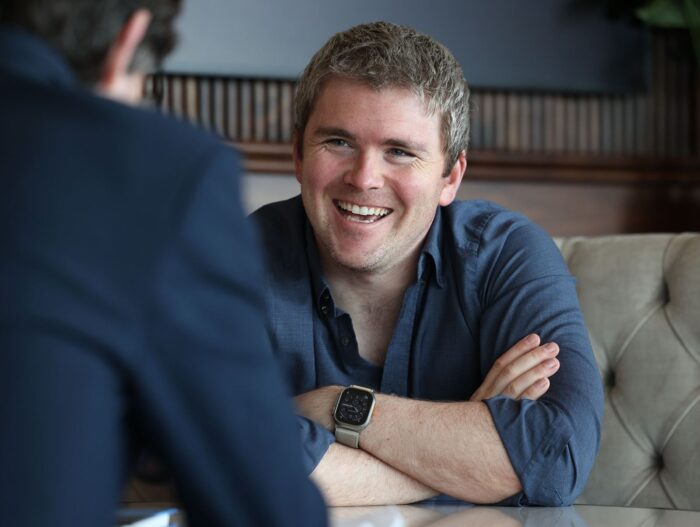
In April, John Collison, the billionaire co-founder of Stripe, took me on a tour of Weston Airport, which he owns. His passion for aviation was clear — he spoke with reverence about Captain Darby Kennedy, who founded the aerodrome in 1931, paused to point out vintage kerosene lights once used to guide planes in at night, and talked in detail about the different planes on the tarmac.
Over coffee in H&L at Weston, an increasingly busy restaurant overlooking the runway, Collison explained what first attracted him to acquiring Weston and also about his plans for the future.
“I think places like Weston need some kind of long-term stewardship,” Collison says, adding: “We want to be the hub for light aviation activity in Dublin.”
Later that day, I interviewed him for a public event organised by the Kildare Chamber of Commerce, where he reflected on Stripe’s journey, the company’s philosophy, and the broader economic and infrastructural challenges — and opportunities — facing Ireland today.
After the exit: How Susan Spence sold her business and found her next purpose
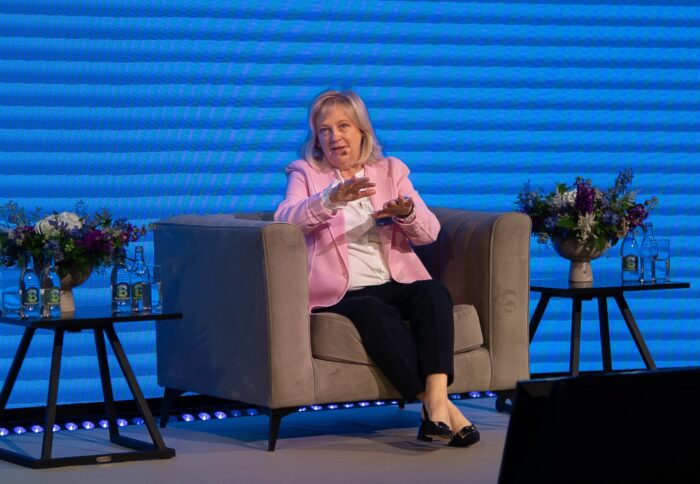
Earlier this year, Susan Spence recalled the moment she sold Softco to a European private equity firm, Keensight, for more than €100 million. Spence was funny, open and honest. “I had to get a glass of wine,” Spence laughed. “You can’t sign a deal like this without a glass of wine in front of you.”
Spence said the sale to Keensight was the right one for the business and its founders. “The deal was fantastic and the structure of the deal was even better,” she said. “It allowed myself and Jim to literally exit on a Friday.”
She told Tom the story of how the siblings built and sold the business.
For love and local news: The couple behind the Dublin Inquirer on keeping “a terrible idea” alive for 10 years
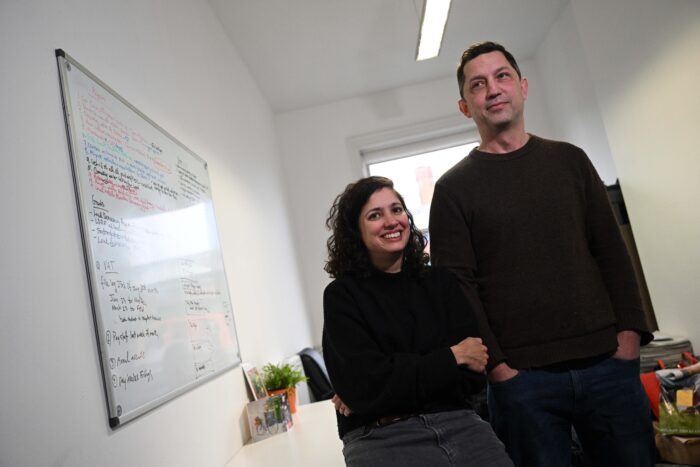
The seeds of the Dublin Inquirer were planted at a dinner party in Kyrgyzstan in 2009.
Sam Tranum was teaching journalism at the American University of Central Asia in Bishkek when a colleague invited him to his home. Lois Kapila was working as a journalist in the city. Neither remembers how Kapila ended up at the party, but the pair met and were married within months.
Sixteen years later, they share a house in Inchicore, twin four-year-old boys, and a local newspaper.
Last year, the independent city newspaper made enough to pay its founders a living wage. Lois Kapila and Sam Tranum explain how they got here.