Stories

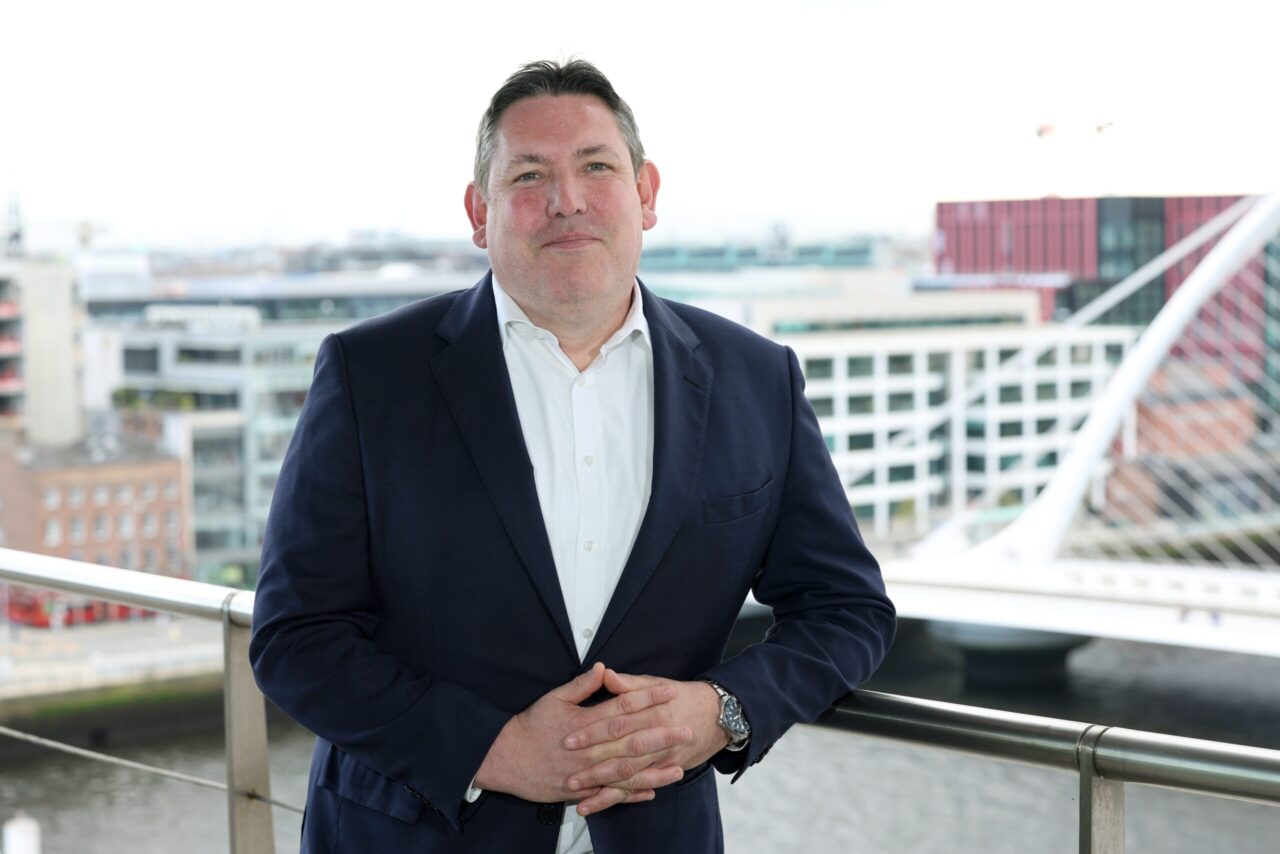
Enda McDonagh has the results of PwC’s 29th Global CEO Survey spread out before him, but he rarely looks down. A frequent traveller to the United States, Britain and other key markets, McDonagh sits in his corner office overlooking the River Liffey, talking me through the topline findings. The headline is stark: just a quarter of Irish chief executives — 26 per cent — are confident about revenue growth.
Irish CEO confidence in their company’s revenue prospects for the year ahead has more than halved since 2022. Their biggest concern, cited by 51 per cent, is whether they are transforming quickly enough to keep pace with technological change, particularly artificial intelligence.
According to the report, more than a quarter (27 per cent) of Irish CEOs believe that their organisation is extremely or highly exposed to macroeconomic volatility, with one in five (21 per cent) concerned about the impact of geopolitical conflict. The number was 13 per cent last year.
“It is not surprising in many respects,” McDonagh, PwC’s managing partner, said. “We have never seen the level of macro uncertainty that we have at the moment, particularly geopolitically. And then you lay alongside that very, very significant technological change, and AI-led disruption.”
McDonagh said that meeting CEOs across its client base this year, both in Ireland and overseas, brought home the sheer range of challenges they face.
“You really get the sense of how much is on the CEO table at the moment to think about strategically,” he said. “There are the inherent challenges of running a business well today while at the same time trying to change it and reposition it for tomorrow.”
Time is also a major constraint. Irish chief executives report spending more than half of their time (58 per cent) on issues with a horizon of less than one year, compared with 47 per cent globally. Just 10 per cent of their time is devoted to decisions looking more than five years ahead, versus 16 per cent among their international peers.
“Creating time, and having the space to think ahead when there is so much short-term uncertainty and volatility, makes it really difficult,” McDonagh said.
“I don’t think that in any way reflects that CEOs don’t understand the importance of five years’ time, and the need to change. One of the absolute themes of our survey is a recognition by CEOs that they need to reconfigure and reinvent their own businesses.”
He added: “But there is just so much on their plate on a day-to-day basis. Geopolitics in a very real way impacts business when it feeds through to uncertainty. The new US administration coming in, the imposition of tariffs, and everything that has followed on from that has introduced different variables that make decision-making processes for CEOs and their boards a lot more complicated.”
When uncertainty becomes structural
Enda McDonagh said part of his job is listening to PwC’s Irish clients and travelling to key markets to meet CEOs, helping him stay ahead of the curve.
“PwC has global relationships with clients,” he said. “I’m spending time in PwC organised environments in order to try and understand what’s going on outside Ireland that might be relevant to bring back and share within our own market, both with our team and clients.”
Irish CEOs have faced a succession of shocks in a short period, from Brexit and the pandemic to rising interest rates, inflation and now AI.
“By and large, CEOs of Irish businesses have demonstrated tremendous resilience,” he said. “Uncertainty has become structural for businesses. It is very human for sentiment to be down, but I wouldn’t translate that as inaction from CEOs. They are generally doing a really good job in a tough environment.”
AI and strategy
When I spoke to Enda McDonagh in February 2024, he noted that generative AI barely featured on his agenda when he was elected managing partner of PwC in 2022. Now, it has become a central focus for PwC and for leading businesses everywhere.
The survey shows that just 17 per cent of Irish CEOs say AI has boosted revenues in the past year, compared with 29 per cent globally, while 23 per cent report cost savings. The impact is real, but AI is not yet reshaping Irish business at scale.
“Obviously, there has been a lot of hype about AI, but PwC’s view – and I think it’s an informed view – is that it is very real. It is part of the suite of disruptive technologies that are there to transform how businesses operate,” McDonagh said, adding that companies were looking for quick use cases for AI at the beginning.
“I think what we are seeing now, is that companies that are embedding AI, and technology, and innovation into the core of their strategy, and thinking about how that moves their business model forward, are starting to see differential returns to those who have maybe been a little bit more cautious about it.”
McDonagh said AI is also prompting CEOs to think differently — about how it could enable them to pivot into new areas, and where M&A might be used to bring new skills into the business.
“I think what we’ll see in 2026 and beyond is an increased separation in the companies that really embed AI in their strategic thinking and innovate around that, versus maybe more tactical uses of it,” he said, adding that he could see this in how PwC had changed in the last four years.
“AI is very to the fore now of what we’re trying to do in PwC. We want to become an AI enabled professional services firm, we’re getting there.”
“Ireland is holding up well”
Confidence about Ireland’s future economic growth has fallen compared to last year. Some 63 per cent of Irish chief executives believe that Ireland’s economy will improve in the year ahead, down from 74 per cent last year. This is, however, more optimistic than 61 per cent of global CEOs say the global economy will improve compared to 58 per cent in 2025.
The PwC survey indicates that Irish chief executives may be more optimistic about Ireland growing than their own business.
“Confidence is about sentiment,” McDonagh said. “This is a complex environment, so leaders are more concerned about growing in uncertain times but when you move to the economy and how leaders look at Ireland most remain positive. I think that is consistent with what the IDA said in its annual report and what the ESRI says.
“Ireland is holding up pretty well at the moment. There is a structural dependency in Ireland on a number of the very large US multinationals. I think that’s well understood and recognised as a risk. I think people feel that the Irish economy in the short term, at least, feels okay, notwithstanding what’s going on around the world. I think when you go out to the medium term it becomes a little bit less sure.”
While the survey does not examine how Ireland can prepare for the future, McDonagh said conversations with chief executives inevitably return to geopolitics and the State’s infrastructure deficit.
“There has been some really good work done in 2025, and the infrastructure taskforce promotes the sense of urgency we really need in Ireland,” he said. “Deploying capital against really high-risk strategies in an uncertain environment is a really difficult thing to do.”
Cyberattacks and geopolitics
With cyberattacks becoming more sophisticated, cybersecurity remains a priority. Eighty-two per cent of Irish chief executives say they plan to strengthen enterprise-wide cybersecurity as part of their response to geopolitical risk, broadly in line with the global average of 84 per cent.
“There’s an intersection there between technology itself, and some of the other things that are going on geopolitically,” McDonagh said. “The threats can be state sponsored as well as from other sources. You can’t be inert about this risk and have to manage your exposure and invest in protecting your business. We are seeing a lot more spending going into cyberdefence.”
More than two-thirds (68 per cent) of Irish CEOs plan to make international investments in the year ahead, significantly ahead of 51 per cent globally. Britain remains the top destination with 62 per cent ranking it among their top three markets, followed by the US (44 per cent) and Germany (23 per cent). Globally, the US remains the top destination (35 per cent), followed by the UK and Germany at 13 per cent and the Chinese mainland (11 per cent.)
“The geopolitical world we’re in, in some respects, is forcing companies to really look structurally at their supply chain. There is more localisation and onshoring. In Ireland, people are trying to diversify into other markets but the UK and US are still very much dominant,” McDonagh said.
The fusion of technology and industry
Enda McDonagh said Irish chief executives understood the need to innovate and pivot: “Irish CEOs understand that business models that we have today are not going to be the business models that are going to endure in five or 10-years’ time.”
He said that this was balanced with caution as nearly one-in-three (29 per cent) of Irish leaders revealed in the survey that they would make fewer new large investments compared to last year due to geopolitical uncertainty versus globally 32 per cent. “Companies are being careful about allocating capital in an uncertain environment – which is not the same as not knowing that they need to innovate.”
McDonagh said the era of digital innovation is now entering a new economic lifecycle, a shift that is reflected in PwC’s survey.
“We’re in what we call the intelligence age, where actually the technology now is such that when you combine it with traditional industry and human capability, you’ve a really catalytic chance to do different things with your business,” he said. “I think that applies to all business models. You have to see what’s the opportunity in your area to do things differently, and deliver greater value and opportunity,” he said.
I ask how it is impacting PwC. “All the things we’ve talked about apply equally to PwC but if you just take technology in a services business like ours, technology has had a profound impact,” he said. “We are, and always will be, human-led, but are focused on upskilling our workforce to become AI native and giving them the best enabling technologies to work with to serve our clients.”
“What CEOs have to do and are doing is figuring out what’s their north star and what are the strategic things we need to take to get there.”.
McDonagh said this involves integrating new technologies into established businesses. “The fusion of technology and traditional industry is happening at an increasing pace around us.”
This article is partner content and has been produced in association with PwC.