Stories

The question keeps surfacing in boardrooms.
Not always explicitly. Not always in those exact words. But it hangs there, nonetheless.
Are we moving fast enough?
Irish chief executives are operating in what many describe as the most complex external environment in years. Geopolitical volatility persists. Supply chains remain fragile. Regulatory scrutiny is intensifying. Markets feel less predictable.
And then there is artificial intelligence.
New models are released almost weekly. Productivity tools are embedded into enterprise software. Competitors are announcing AI partnerships. Private equity investors are factoring AI capability into transaction valuations.
The pace is relentless.
PwC’s latest Irish CEO survey captures the inherent tension.
While almost half of Irish CEOs have begun competing in new sectors and 68 per cent plan international investments in the year ahead – well above the global average – many are uncertain whether their organisations are transforming quickly enough to keep pace with technological change.
The returns from AI, so far, are modest. Just 17 per cent of Irish CEOs report increased revenues from AI initiatives. Some 23 per cent report cost reductions. And yet companies that have embedded AI extensively across their businesses are two to three times more likely to report both cost and revenue gains. Globally, organisations with strong AI foundations are three times more likely to see meaningful financial returns.
The divide is emerging.
Some companies are experimenting. Others are scaling.
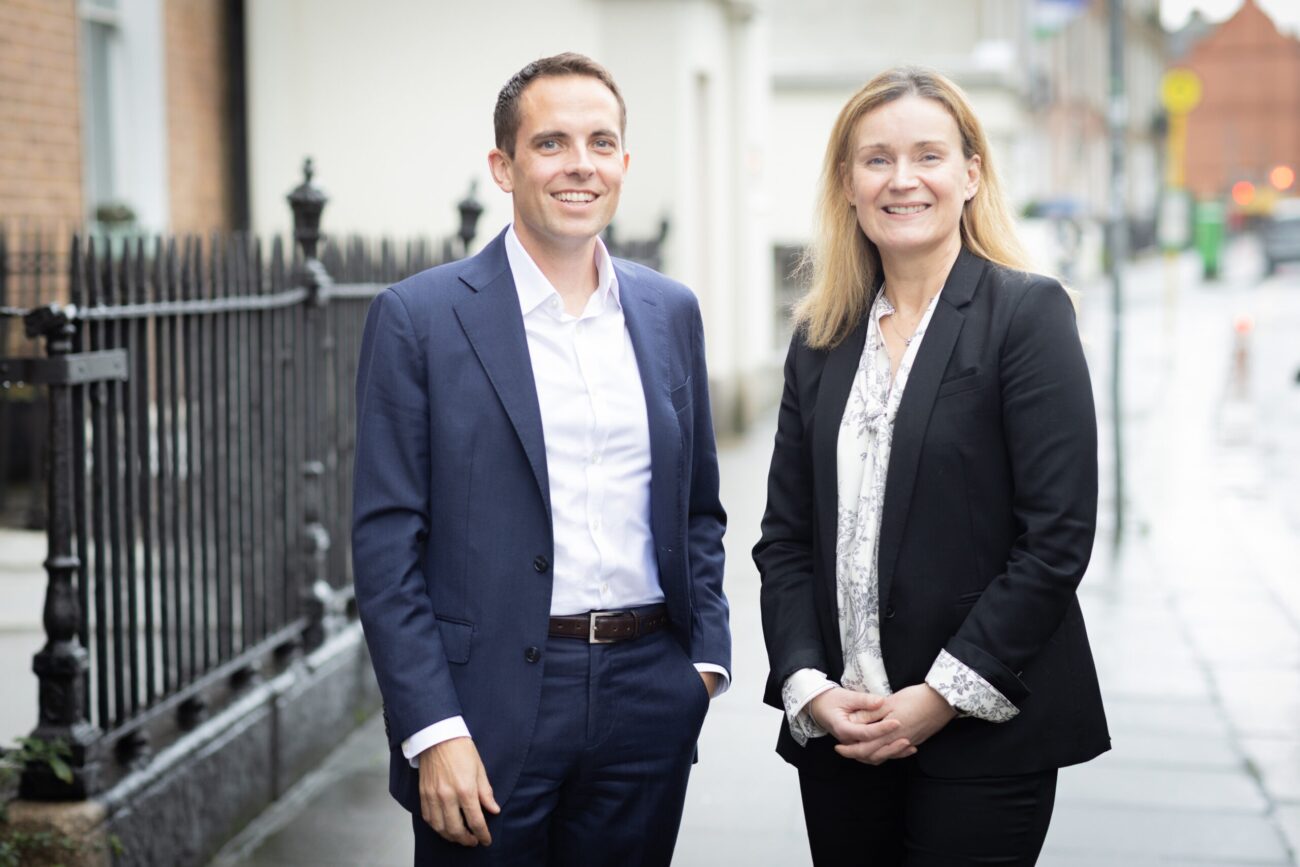
To explore what “tech-driven reinvention” actually means – and why it has moved from buzzword to boardroom priority – I sat down with Amy Ball, Partner and Reinvention Leader at PwC Ireland, and Kieran Little, a Partner with PwC’s Strategy& practice at PwC Ireland for the latest episode of The Tech Agenda podcast.
From transformation to reinvention
For years, corporate Ireland has spoken about “digital transformation”. But Ball argues the language – and the ambition – needs to shift.
“So, in the past, we would have talked about business transformation enabled by technology. And that as a proposition or a theory is still very valid but with the pace of change, political uncertainty, post-Covid reaction, AI now at scale,” she says.
She continues: “But we are now moving into a phase where businesses actually need to reinvent themselves from front to back. So, transformation might have focused in the past on the back office, maybe the middle office, reinvention is now in the front office, looking at markets, looking at adjacencies, looking at revenue streams and thinking about where the next disruption is coming from.”
Reinvention, she says, is fundamental.
“It means how we operate in the market, what we sell, what prices we charge, what our competitive landscape looks like, and how we operate in that competitive landscape, what our employees do, how they do it,” according to Ball.
Little, through his work with PwC’s Strategy& consulting division, sees the same shift in conversations with clients.
“We are seeing reinvention become more at the core and focus of where CEOs are looking to for the next five years,” he says.
“We are seeing from our CEO survey an increasing amount of focus on new markets, diversification and that’s both international and into new segments, but also then how technology changes the businesses, effectively.”
The survey supports that view. Forty-seven per cent of Irish CEOs have begun competing in new sectors or industries. The appetite to diversify and internationalise is real.
But, according to both Ball and Little, ambition and execution are not the same thing.
The fault line
Little describes a clear divide in how companies are approaching AI.
“There’s kind of two ways of taking this. Some are looking at it as, ‘How do I take some cost out of the business?’ And we would see that as pretty short-term, using the tools today, or going with a faster horse to use the Ford idea,” he says.
“CEOs are looking at the next five years to transform the business and their industry, and asking how they can change how they communicate with their customers, what the proposition is and how they then communicate that.”
That tension – between short-term optimisation and long-term reinvention – runs throughout the survey.
Irish CEOs report spending just 10 per cent of their time on decisions looking more than five years ahead. Globally, the figure is 16 per cent. Quarterly performance pressures continue to dominate executive attention.
Ball acknowledges the compression of time horizons.
“Not every organisation thinks five years ahead. They might work to their Q1, Q2 forecast,” she says.
But she argues that business cycles are accelerating: “I think that five years is compressing. We’re seeing every business cycle move faster, the timelines are more compressed and the speed to execute is faster, needing outcomes now.”
The challenge is strategic discipline amid operational noise.
Ireland’s risk dilemma
The survey exposes another tension: risk appetite.
Irish CEOs are more cautious than their global peers. Just nine per cent say their organisation tolerates high risk in innovation projects, compared with 24 per cent globally.
Ball does not shy away from the issue.
“I think Irish CEOs have a lower risk appetite than their global peers. We found in our CEO survey that nine per cent of CEOs versus 24 per cent at a global level are saying that their organisation tolerates high risk. There’s still a perception that AI is risky but it doesn’t need to be,” she says.
Little frames it more broadly.
“There are lots of reasons for it, but I think in general, there is a lower entrepreneurial tolerance for risk. That is part of the corporate landscape of Ireland,” Little says.
That concern is not theoretical. In transaction markets, AI capability has moved to the centre of due diligence.
“Every transaction that’s gone through where one company is buying another in the last year, a key question has been, ‘What is the impact for AI?’” Little says.
The way Little sees it, the difficulty is uncertainty.
“The right answer on AI at the moment is, ‘I don’t know’, and everyone’s afraid to say, ‘I don’t know what the answer is’. And you need to proceed with that uncertainty and that’s the real difficulty.”
Pilots versus scale
Most organisations are experimenting. Fewer are scaling. Ball describes the pattern.
“The pilots helped people get comfortable, helped CEOs get a little bit more comfortable with the deployment of AI within their ecosystem. But what we have found is that some pilots never really went anywhere; they just became almost a pet project,” she says.
Little is blunt about underinvestment: “We’ll say we’re doing something in an area, but we will give it so little investment or so little focus, that it’s kind of doomed to failure because it gets strangled for lack of oxygen of investment.”
Scaling, he argues, requires three pillars: governance, people and alignment.
“The first thing they’re looking at is the governance framework for AI. The second is upskilling… And then the third is that the strategy for where they’re going for the next five years matches the framework that they have for the rest of the organisation,” he says.
Both Ball and Little argue that boards are beginning to demand evidence.
“We are now coming to the stage where boards are looking at the CEO and saying, ‘Right, you told us last year about AI. What’s the return on the investment we put through?” according to Little.
Returns remain early-stage. But Ball points to a telling statistic.
“Global CEOs who have established strong AI foundations are three times more likely to report meaningful financial returns in the short term,” she says.
People, culture and capacity
The way Ball sees it, reinvention is not solely technical. It is cultural.
“It isn’t about job losses,” Ball says. “I think in the past, companies would have added to their head count base as they scaled… I think with AI you could have a better engine to serve the needs of the company and that will be a mixture of your existing employee base with the aid of agents or AI.”
Little describes it as a shift toward higher value activity.
“It’s having a radical change on how people do their work day-to-day.”
The transition, however, requires deliberate change management.
“There is a people aspect to this, you can’t just throw licences of whatever the new technology is, you’ve got a whole transformation to go through with your people.”
Where to begin
For smaller enterprises, the question is practical: what do we do first?
“I would always start in the delivery layer of the organisation… companies need to identify and map [processes] out, take out as much inefficiency as they can. And then look at AI, look at agents because agents are very effective in terms of optimising a process,” Ball says.
Little begins externally – benchmarking competitors and identifying business model shifts.
Both emphasise governance and responsible AI as non-negotiable foundations.
Time for bigger bets
“It’s a time for big bets; you can’t sit on the fence on these,” Little says.
Ball agrees.
“I think CEOs have to think big now… and bake those outcomes into the P&L for the next five years, make it happen.”
Reinvention can sound abstract. But the data suggests the risk of incrementalism is rising.
The companies that embed AI deeply are pulling ahead.
Those who hesitate may not fail immediately.
But, according to both Ball and Little, they may find that, in a market reshaped by technology, relevance erodes quietly – until it is too late.

The Tech Agenda with Ian Kehoe podcast series is sponsored by PwC.