Voices

There are more than 500 books out there in the category of “sport lessons for business”, with titles like The Captain Class, Relentless and The Score Takes Care of Itself. Plenty of these sell well because business leaders are always looking for an edge – and many find inspiration in the stories of elite sports stars. Call it a win-win for publishers.
Andy Farrell hasn’t written a book like that. The Ireland rugby head coach’s bestselling memoir, The Only Way I Know, is a highly engaging account of his evolution from an uncompromising, physically dominant rugby league player of true brilliance to a thoughtful but no less driven leader of men.
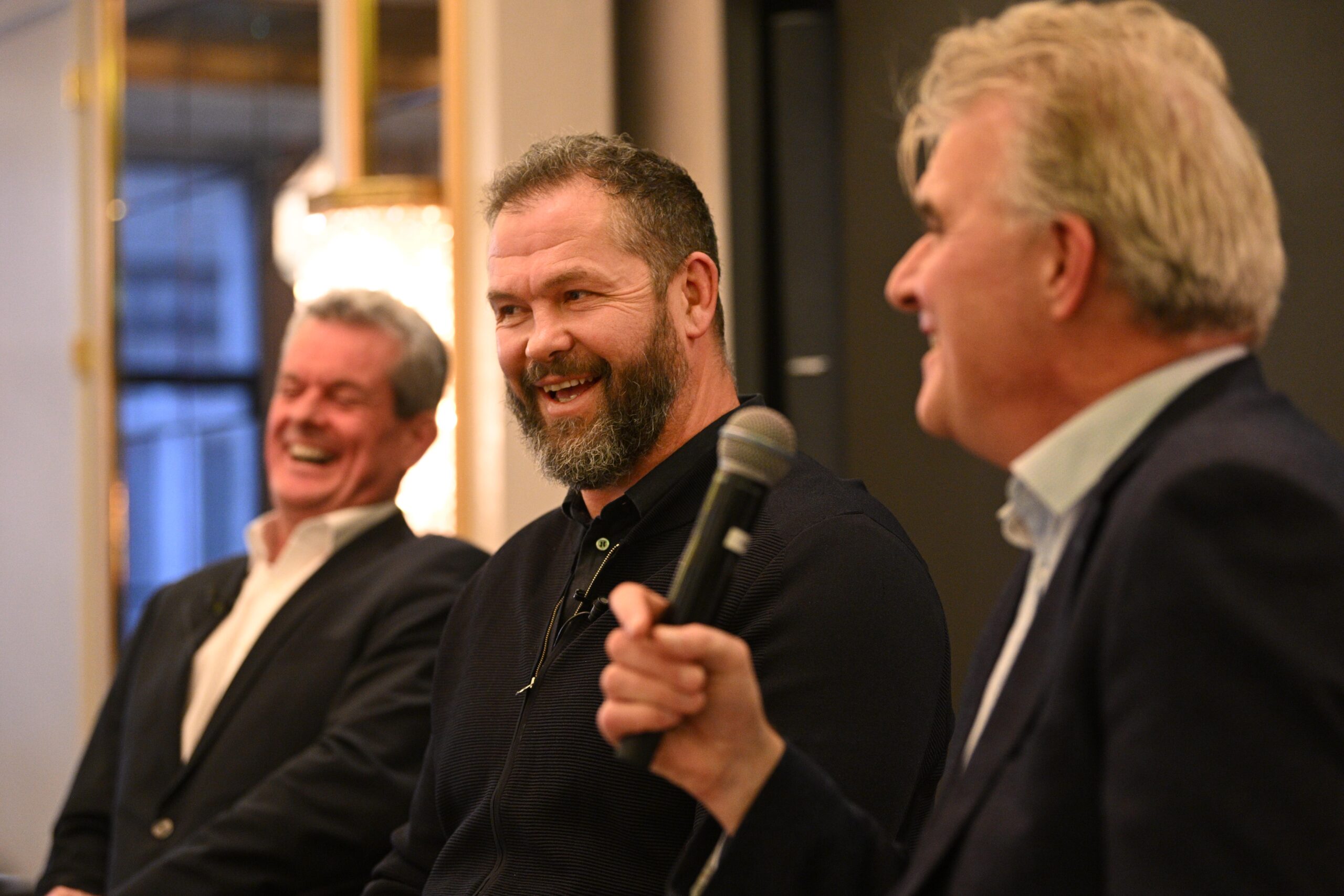
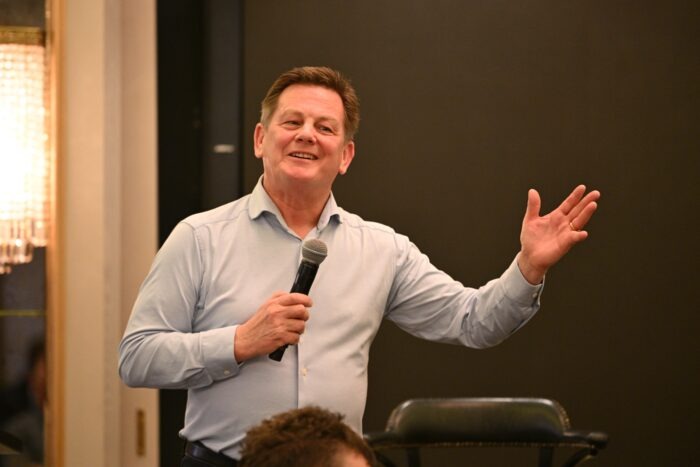
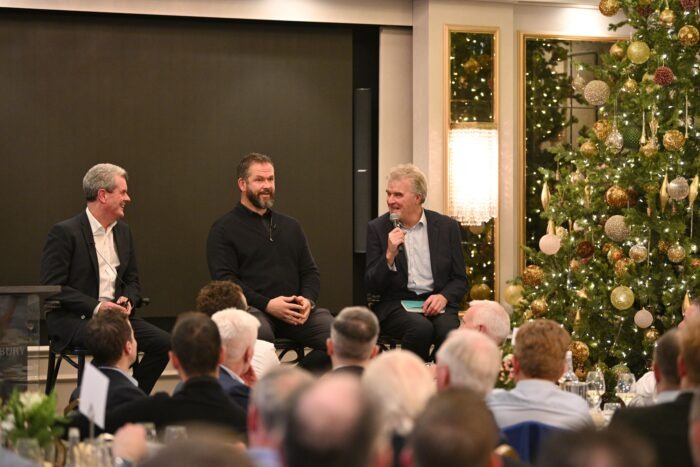
On Wednesday at Dublin’s Westbury Hotel, at a Christmas lunch hosted for clients of the non-bank lender Capitalflow, a long-time supporter of The Currency, I had the pleasure of interviewing Farrell on stage. We were joined by Feargal O’Rourke, the former managing partner of PwC in this country, and, these days, the chair of IDA Ireland.
So far, so “sport lessons for business”.
But that would do a disservice to the authenticity with which Farrell answered every one of my questions.
Farrell is still as hard as they come, but he’s also a master of what’s called “soft skills management”.
I’d only come across him once before, at a press conference in 2019, shortly before the Rugby World Cup in Japan. I wasn’t a proper rugby journalist and didn’t know there were live TV cameras trained on Farrell as he took his seat at the top table. As I wandered aimlessly towards my seat, blocking the view of the cameras, the IRFU comms guy hissed at me to sit down. Embarrassed, I looked towards Farrell. He caught my eye, and there was a kindness in his expression that stayed with me, as if he was saying “Don’t worry about it.”
A tiny thing, sure – but sometimes the smallest, unseen moments can point to character.
When I told Farrell about this at the Westbury, the man who would bawl out his fellow players at Wigan for not reaching the standards they demanded of themselves laughed and said: “See how much I’ve changed?”
Here is a flavour of the interview, an insight into that personal evolution. Farrell says he dreaded public speaking, but he’s actually an inspiring man to sit down with. And it’s very easy to see why his players respect him so much.
Q: Is the approach you have today very much informed by the experiences you had as a player, in terms of how you deal with people?
A: I’d say that’s 100 per cent spot on. But it’s also about understanding how society has changed for the people you’re trying to coach and nurture and make better. The accumulation of all your experiences is absolutely vital. But living in the here and now is just as important. I was brought up in a [Wigan] side that drove unbelievably hard to compete against one another. It was just about respect – and I liked that you had to gain respect off your peers the whole time. But when you fast forward, millennials have been brought up completely differently to us.
Q: So that’s where the softer management style comes from?
A: Yes. When we were brought up, the school teacher at the front of the class was the fountain of knowledge. You believed everything and you were unbelievably disciplined around that person. It was the same for the coaches, when I first started.
I was playing under the fear of failure because of the nature of the bollocking you’d get on a Monday morning. But these kids have had a different upbringing – so to get up and do what we did 30 years ago certainly wouldn’t land. If I was to stand up and bollock a player the whole time, you’ve completely lost him. So you advise and you nurture and bring people through. You have got to be able to adapt.
Q: Going back to your own career then. You switch to rugby union, become a coach and find yourself on the 2013 Lions tour as defence coach. You feel under pressure to justify the selection. And what do you do? You write yourself a speech. And it’s a blood-and-thunder type of speech, the kind that you’d have been brought up on in rugby league. What happened next?
A: Well again, fast-forward to where we are now and I’m a little embarrassed with that speech, but at the time I thought it was something that was needed.
Q: You said you wanted the Lions to put Australia into the pain zone?
A: That type of macho bullshit. I think a speech like that, you’re not actually being yourself, you know? When you sit up and write something, and you’re trying to memorise it word for word, that’s not you being your actual self. I would have come on leaps and bounds from that. Even though it still gets talked about to this day, for me it was a bit gimmicky. At the time, in 2013, it was what was needed. You judge yourself on how that came across to a group at that time. Was it okay? Maybe, yes. But would I do it again? No.
Q: A lot of people have talked about the change in the atmosphere of the Ireland camp when you took over from Joe Schmidt as head coach. What did you do that was different?
A: I think it actually pisses me off when people say publicly it’s a great place to be, a great culture to be part of – because that’s perceived on the outside that it’s just a bit of fun. And it’s a lot more than that. It’s built on people being able to have an opinion and us working through things together.
But at the same time, my job is to make sure that the individual can get better as a rugby player, but as a person as well. And the team is at the centre of all that. We’re a team-first organisation; that’s 100 per cent bottom line. But to do all that, you’ve got to have a bit of trust – and to get that trust, you’ve got to be honest with people.
Q: Because you’re asking them to put their bodies on the line?
A: Yeah, but also, you’ve got to tell them things with one hundred per cent honesty. For men growing up in my day, it was hard enough to take a bollocking, but it was even harder to take praise, because you felt a little bit uncomfortable. And we do all of that today – because the only thing that matters is telling the truth. If you let things slide, then you’re wasting time.
The way we started this off is that we wanted feedback in real time, the whole time. I hate reviews three months after, because what a waste of time.
We need to know in real time how people are thinking, feeling, whether they’ve been coached in a right manner, to cope with the pressure cooker of a Test match arena. So, you’ve got to be as honest and open as you can to make sure that they understand what it takes to be able to deal with the pressure of international rugby. That’s at the forefront of everything.
Q: You’ve said that if you don’t have pressure, life isn’t worth living?
A: I definitely believe that. If you don’t want challenge in your life, where are you going? You’re going backwards anyway. So, I think we’ve got to thrive on that and it’s something that we work unbelievably hard on, physically and mentally. Gary Keegan [performance coach] is at the forefront of all of that, with the mental side of the game.
The scrutiny that these guys have, from social media etcetera, has changed so much from my day, that’s for sure. When I first started coaching, the split between the physical and mental side would have been 70:30. I would definitely say it’s a 50-50 now, so being able to deal with that is a huge part of the game.
Q: There was a lot of commentary during the autumn internationals. I don’t know how much time you gave to reading it?
A: I read it all.
Q: You read it all?
A: I do, because it’s my job to understand what people think and where they’re at, so that you can put some reality on it. And not just that, but when I’m coming to a press conference, I need to know what people are thinking. I suppose you learn how to get better at that, as you go.
Q: And would it be true to say that sometimes you use those press conferences to talk indirectly to your own players?
A: One hundred per cent.
Q: How does that work?
A: Good – sometimes!
Q: In The Currency, after the South Africa game [Ireland lost 24-13], Brett Igoe wrote that Ireland are coached to play on the limits and that this is coming back to bite you in some respects. Is that fair commentary?
A: Well, it would have been if you’d watched that game. But we certainly don’t coach like that. We have never been a team that wants to push the boundaries, or live just over the other side, because we believe discipline is a huge part of it.
I think it’s more to do with the pressure of the game, how it unfolds and dealing with that. All teams go through different cycles, you know? People are always going to be injured, people are always going to retire, and you’re always going to have new people within a group.
This group is completely different to the one we’ve had over the last four or five years, where we’ve been through all the disappointments, we’ve learned, we’ve grown, and we’ve got to a place where we’ve been able to deal with that type of pressure.
This group was put under extreme pressure from a brilliant Springbok side and it accumulated into more ill-discipline. I don’t think we’re an ill-disciplined side, as such. It’s more about the new side of the group trying to deal with that type of pressure. They have to go through those type of experiences to feel what it’s like to get better at dealing with them. And that’s what we got from that game, more than anything.
Q: I think it is very interesting to get the views of the ghostwriter when a book comes out – how did they find the person with whom they were working? So, Gavin Mairs said of you: “What I learned most about Farrell’s evolution is the value he puts on a group of players reaching a peak that they never thought possible and creating memories.” Two questions from that. Do you, Andy Farrell, think it’s possible for Ireland to win the World Cup? And do you think the players think that?
A: If I don’t believe, there’s only one way it’s going. The job as a leader to make sure that you can instil confidence in people. And you do that not by talking bullshit; you do it by applying the right methods to be able to lead them down that path. And I certainly believe that in two years’ time, we will be pushing to win a World Cup. Otherwise, what’s the point? What’s the point in being part of it if you can’t aspire to be the best team in the world?
With what’s happened over the last 10 years, there’s an expectation now, but that’s what you want, that’s where you want to be. That’s the pressure you want to embrace and use to your advantage.
*****
There was plenty more – not least Farrell being keen to point out that Schmidt was “by a country mile the best coach that Ireland’s ever had – and in my opinion, he will always be that, simply because he changed the game and the attitude of the players. He made them the most diligent, most hardworking, the most detail-driven players.”
Feargal O’Rourke, a walking authority on the history of the Ireland rugby team, offered plenty of insights of his own. He saw parallels with today’s generation of rugby players and the new graduates coming into business
“You realise that they’re not like you, so to manage them you need the ability to adapt and change. Great managers, great coaches like Andy, can do that. Others can’t.”
O’Rourke also spoke about the infrastructure task force he’s a member of. He smiled when I put it to him that everyone’s talking about infrastructure these days, after the hard-hitting Irish Times piece by John Collison of Stripe.
“It’s funny,” said O’Rourke, “because when the minister [Jack Chambers] put the task force together back in May, I think only one paper covered it. Then John Collison comes out and says what we’ve been saying for months. But, in fairness, it was a helpful intervention. And some of the stories I’ve heard would make your hair turn grey, white, fall out, whatever.”
But like Farrell, O’Rourke finished on a positive note. Things will get better, he believes.
They’re two interesting high-achievers, perhaps equally driven, and time in their company is well spent.