Voices
For much of 2025, the prevailing view was that foreign investment would finally blink.
Trade tensions were flaring up, tariffs were hurtling back into the conversation, and geopolitical uncertainty was escalating.
It was no exaggeration to say that, in January, the expectation was that multinational investment would dry up – or at least slow down.
For a small open economy like Ireland, this posed significant questions about our industrial model and the river of tax receipts generated by that model.
Instead, IDA Ireland ended the year with some of the best results in its history.
The agency helped secure 323 investments over the course of 2025 — a 38 per cent increase on the previous year — with those projects expected to generate more than 15,300 new jobs.
Employment across IDA client companies rose to a new high of 312,400. Client expenditure in the Irish economy climbed to €40.7 billion, while capital spending remained robust at €12.8 billion. By any measure, it was an impressive year.
So, just what happened?
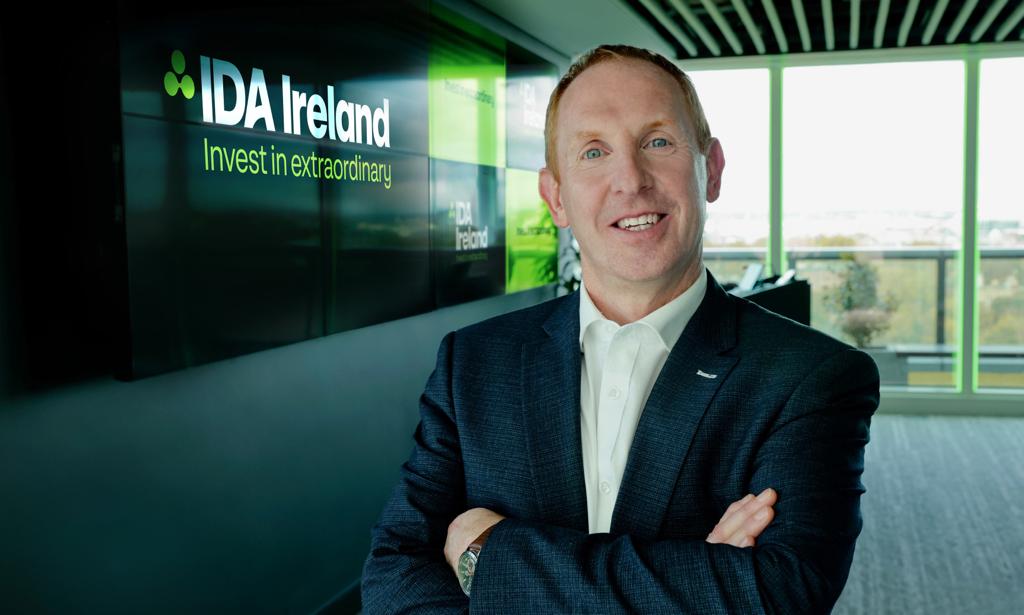
Michael Lohan, IDA Ireland’s chief executive, acknowledges that the outcome was not inevitable.
Discussing the numbers with me last week, he kept coming back to how unsettled the early part of the year felt.
“If we dial back to February, March and early April, obviously, we certainly had concerns… I think the word you can use is ‘uncertainty’ across the globe in terms of global trade and the tariffs,” he says.
At the time, the assumption was that uncertainty would put decision‑making on pause, and several government ministers seemed to agree. It was all about battening down the hatches, holding onto what we had, and simply waiting it out.
Instead, based on the IDA numbers, companies kept investing.
The way Lohan sees it, it was a case of companies focusing on their business – and not the noise.
“They have to continue to serve their markets, they have to continue to bring innovation forward,” he says.
In that context, he argued that locations that offered predictability began to stand out. And Ireland was one of those countries.
“In some ways, it put a premium, I believe, on locations that are stable and proven and trustworthy, and the numbers reflect my belief that Ireland’s strengths have really come to the fore during this period,” he says.
Asked what Ireland is actually selling to investors right now, Lohan talks less about tax or incentives and more about execution. “What are those strengths? Well, it is the strength of delivery and performance, and a proven track record,” he says.
He argues that Ireland’s past performance matters when companies are making long‑term bets.
“To know you have a track record of success, linked around your really key talent in the country, that’s so incredibly important,” Lohan says. “And it’s that certainty that comes from that, that certainty of delivery.”
Over the past year, Lohan points to significant signals from the Government around competitiveness, productivity and infrastructure delivery.
“The policies that we have brought in and continue to have from a pro‑enterprise policy and a renewal of those policies… A lot of those strong indicators from Government of their long‑term support and commitment to pro‑enterprise, that’s also important,” he says.
Of the 323 investments secured during the year, 78 came from companies investing in Ireland for the first time. Another 68 projects were expansions by existing clients. Research, development and innovation featured heavily, with 80 RD&I investments supporting €2.5 billion in client expenditure.
There is also a forward‑looking quality to the numbers that Lohan is keen to stress. During 2025, IDA clients committed to upskilling more than 33,000 employees – roughly three times the annual average of recent years.
Lohan describes the outlook as “quite strong and robust”. One metric he watches closely is the so-called new‑name investments.
“The pipeline actually in that space continues to remain strong and robust. And it’s diverse. It’s across the globe as well, which is important,” he says.
Research and innovation is another theme. “The second area where we see continued levels of engagement and forward planning is in the whole area of research and innovation,” he says, pointing to areas such as AI, semiconductors, health, and sustainability.
Nonetheless, he accepts that competition for FDI has increased, and Ireland is no longer competing only with the usual list of countries.
“We also need to be mindful that the level of competition for FDI has intensified,” he says. “And we’re going to have to ensure that we remain competitive.”
“It’s about controlling the controllables, to use that term,” Lohan says.
European industrial policy is also very much on Lohan’s mind. Ireland’s involvement in Important Projects of Common European Interest (IPCEIs), he believes, is essential to scaling innovation in areas that no single country can address on its own.
“That’s really critical, because that helps us to drive and scale R&D, and to do it both at an enterprise level, but at a collaborative level across Europe,” he says.
And then there is technology. “The last thing that, probably, we have to continue to do is we have to continue to prepare for the technological change that’s coming through digitalisation and AI,” Lohan says.
Despite the record figures, Lohan does not suggest the risks have gone away. “There is still a level of uncertainty in terms of global politics, global geopolitics,” he says.
With all the talk of Trump, trade and tariffs, it is easy to forget just how attractive Ireland is for foreign direct investment.
Yes, we need to sharpen our offer. And yes, we need to deliver more infrastructure and build more houses.
There are also more challenges on the horizon. Lohan mentioned talent earlier, but in its Medium-Term Fiscal and Structural Plan for the next five years, published on Friday under EU rules, the Department of Finance forecast that the growth in labour supply would slow down markedly in the second half of this decade.
As the population ages, just as many workers are expected to retire as young people will enter the workforce. With labour force participation already at a record rate, only inward migration is expected to contribute new workers. Instead of contributing 2.5 per cent in average annual economic growth in recent years, new labour supply is now forecast to add less than one per cent in the years ahead.
With other factors taken into account, this would leave the average annual growth rate in the domestic economy at 2.5 per cent in the next five years, down from 4.2 per cent since Covid. This outlook is the first example of recent Government research into the economic and fiscal impact of demographic trends, published in the Future Forty report, feeding directly into public-finance planning.
All this will be key for the next cycle of foreign investment. While projects implemented this year were several years in the making, attention is now turning to those being designed in this new era of uncertainty – and whether they will continue to favour Ireland as a destination.
Elsewhere last week…
In the first interview he has given since joining the newspaper he read as a small boy in Swansea, Ben Taylor talked to Alan about his rise to the top job at The Sunday Times, reinvention, recommitting to the Irish market – and much more.
Rick Larkin is leading an ambitious plan to remake Phibsborough Shopping Centre. He talked to Tom about the Twinlite story, the stalled history of the site, and why building homes in Ireland “no longer works”.
The energy regulator has finally laid a pathway for data centres to get a grid connection in Ireland. Industry reactions are positive, but questions remain on what the policy will mean for construction – and its climate implications. Alice had the story.
James Govan, Ireland CEO for consulting and technology services giant Capgemini, has grown the Irish business by 20 per cent a year. Now he wants to lean into AI and go up against the big beasts. He sat down with Alan.