Voices

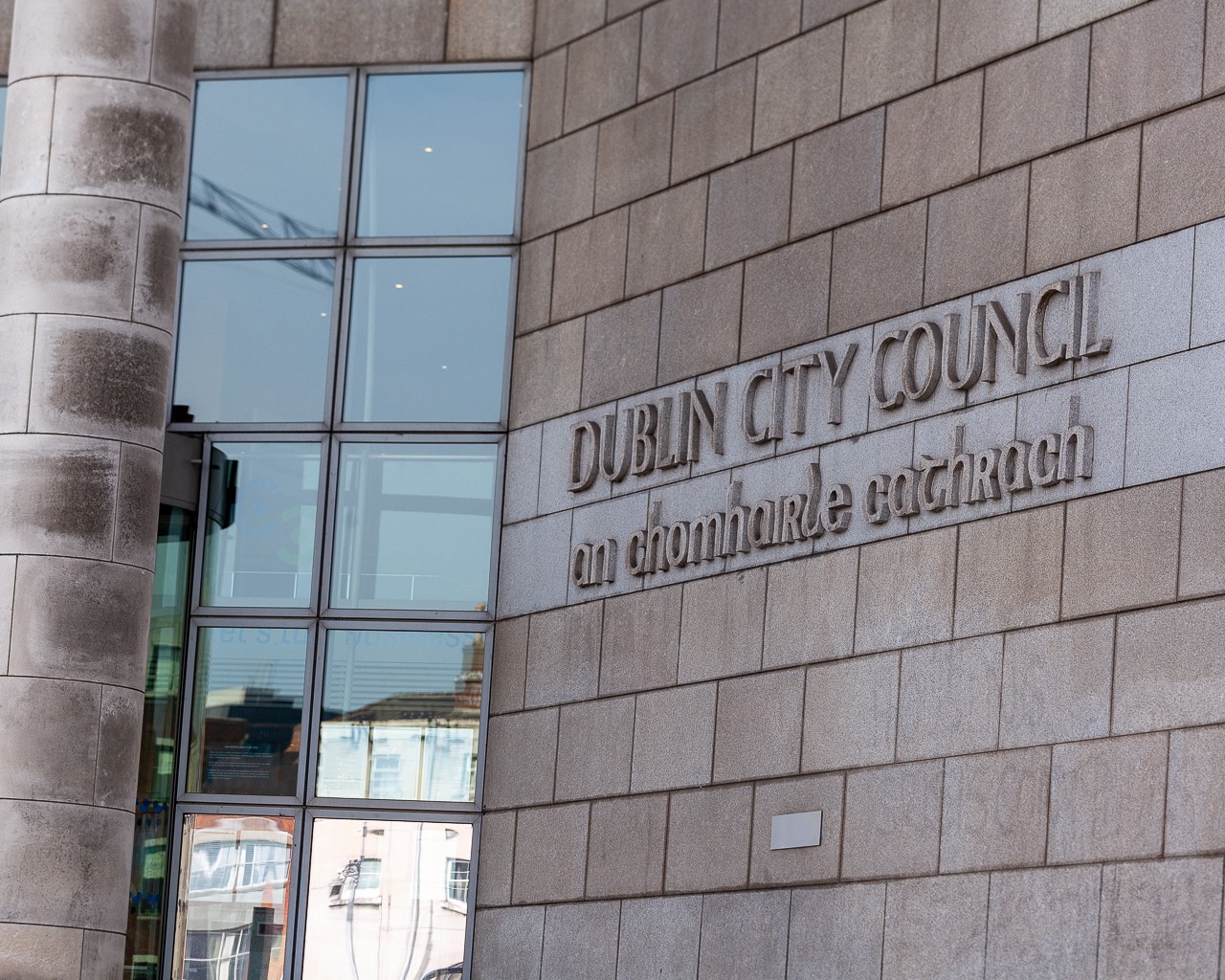
David Dickson’s magisterial Dublin: The Making of a Capital City traces the capital’s remarkable history from its medieval origins to the dawn of the new millennium. The final chapter of his 2014 tome reflects on Dublin City Council’s (DCC) decades-long struggle to construct its new headquarters on the Liffey at Wood Quay.
In assembling its site in the 1940s, the Council never really considered what treasures might lie beneath the ground.
“As it turned out, the alluvial clays of Wood Quay cloaked an even richer and older time capsule,” Dickson writes.
He describes how 10,000 people marched to try to stop the construction of DCC’s headquarters and how these delays ensured many important artefacts were rescued.
But it was not enough to stop construction, and to this day many of these artefacts are not shown publicly.
“Wood Quay was a defeat for archaeological conservationism,” Dickson concludes, before noting that the struggle nonetheless marked a turning point, making the protection of Dublin’s heritage a public priority for the first time.
Only two of four office blocks designed by architect Sam Stephenson were ever built.
These were nicknamed the “bunkers” by their critics, and the second phase of the development along the river was designed by Scott Tallon Walker in the 1990s.
These buildings are not entirely without merit, but they were not constructed to modern standards. Far from being zero-carbon, they are energy-inefficient and relatively sprawling for a workforce of 1,500.
Whatever happens, DCC will have to either leave its Wood Quay campus or it will have to invest €250 million in entirely upgrading its buildings by 2050 if it is to be compliant with EU environmental directives. This could take many years to do.
This is what makes the decision by DCC, led by its chief executive Richard Shakespeare, to enter exclusive talks to acquire the half-built site of a modern office and apartment complex development at Camden Yard so interesting.
This site was bought by private investors in 2019, and its construction has been stalled for just over a year. But a huge amount of work has been done. The site has a planning permission with a best-in-class green design. Works have been done to clear the site, foundations have been laid, and buildings are coming out of the ground.
DCC could leapfrog five years if it acquires this site, which is large enough for its needs. It will have to spend up to €100 million to buy the site and make some sort of settlement with various contractors who are owed fees. It then could take another €200 million to finish the office development and build out the 299 apartments the site also allows for.
A bold choice
Should DCC do this? Undoubtedly, the move will have its critics.
Why should our civil servants be allowed to move into expensive world-class buildings?
Don’t we have a history of usually getting bold moves wrong?
Surely, we could put DCC somewhere cheaper in a less prime location?
First, this is easier said than done: any proposal to relocate Dublin City Council far from its current base would face significant opposition from its unionised workforce.
Secondly, there are not that many alternative sites capable of accommodating an organisation of DCC’s scale, and none that are already partially developed.
Thirdly, there is a strong case for keeping 1,500 ordinary workers—most of them civil servants—based in the city centre. As the body responsible for governing Dublin, DCC arguably belongs at its very heart.
To make the move more politically palatable, there are a few things DCC could do.
It is already prepared to turn Camden’s Yard’s 299 luxury apartments into social housing.
This is a good idea, but why not go further?
To pick up on an argument long championed by the businessman Paschal Taggart, directly across the road from Camden Yard is Kevin Street Garda Station, the divisional headquarters of An Garda Siochana in the south inner city and a walk away is St James’s Hospital, Ireland’s largest acute academic teaching hospital.
Why not make say 200 of these apartments available to young Guards, nurses and other medical practitioners at a low rent so they can afford to get the most from their training?
And help ensure the safety of our city by having a significant number of key workers near where they might be needed urgently in the event of a major accident or attack on our capital?
Finally, there is also the opportunity to redo Wood Quay.
There is a four-acre site which DCC could redevelop. It could certainly put more social housing on the site, and bring alive a stretch of the Liffey which can be dangerous at night.
It also has the opportunity to right its previous wrongs against our Viking heritage.
Why not invest in a new centre that properly showcases this history and helps create a cultural link across the city—from the Book of Kells at Trinity College Dublin to the Guinness Storehouse?
There are many questions about moving DCC to Camden Yard. Let’s ask those questions openly, rather than dismissing the idea outright. This could be a good idea.