Voices

Let’s be honest, I didn’t have a great time this past winter. From November into the New Year, people close to me developed a habit of dying or falling ill. Days before Christmas, a friend’s business premises was destroyed in an arson attack, against the backdrop of anti-immigrant rabble-rousing in my town.
What saved me from this spiral was Irish music, with the medicine dispensed through a series of outstanding gigs in the weeks following Christmas.
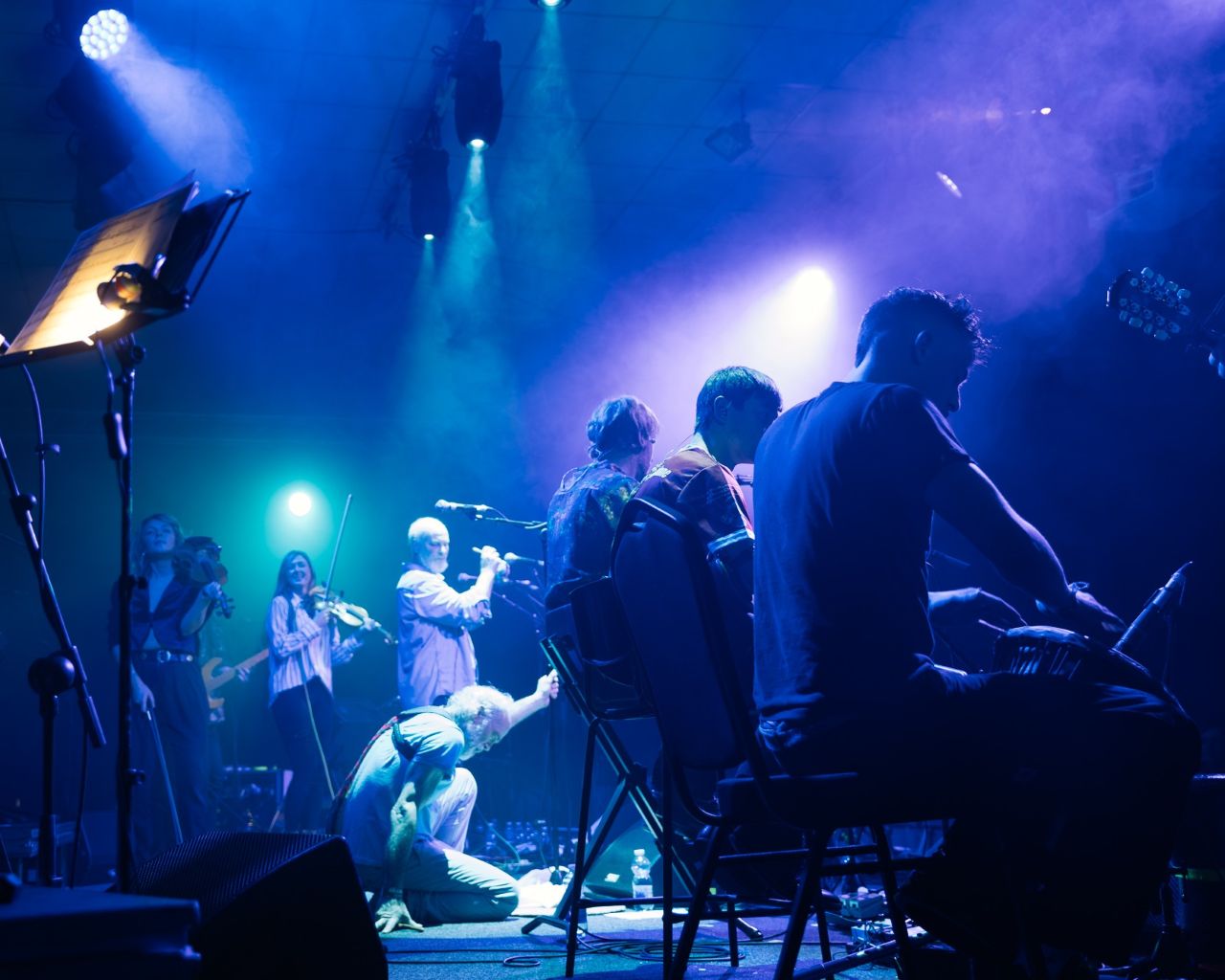
The first ray of light came on December 28. That night, The Scratch lit up the Imperial nightclub in Cavan on the last day of their 2025 tour. I’ve barely recovered but they’re already advertising the next one, on the back of their album Pull It Like a Dog to be released next month.
Some of that superhuman stamina rubbed off on me that night. Not exactly in the way that it hit the same-generation fans standing next to me on the platform safely overlooking the mosh pit. “Wouldn’t you love to be 20 years old again?” they said, gesturing at the constant crowdsurfing. Er, no, thanks.
There was something more profound to The Scratch’s raw energy. Percussionist Dan Lang hammered a cajon with weapons-grade sticks – something I had never witnessed before. His rapid-fire drumming carried both punk-metal anger and the rhythmic discipline of Celtic marching bands. Conor Dockery and Gary Regan’s guitar riffs wove effortlessly between rock and trad motifs.
Asked by someone who didn’t know The Scratch what band I was going to see, I described them as the 21st-century cross between Metallica and The Pogues. That was before I had even heard their stunning cover of Sally MacLennane, stretched over a lingering tempo to more than six minutes.
Their lyrics are a riot of Hiberno-English, with their latest single Pullin’ Teeth opening with the lines: “I was messing at a gathering atop a hill of brisk and shepherds morning, air so cold you could crack it on a knee…”. The Scratch are unmistakably Irish, but on their own terms. “Stick your harps up a yipaderry-o.”
A few weeks later, I launched into a marathon of gigs during Dublin’s ever-wonderful Tradfest. The one that really put me back on my feet was Women of Note, an annual opener to the festival where Aoife Scott brings together fellow female musicians (Irish or not) in St Patrick’s Cathedral.
Just like Scott herself, who told the audience how she could track her escape from depression to the time she listened to a particular song, I came out of the cathedral suddenly feeling able to face the world again.
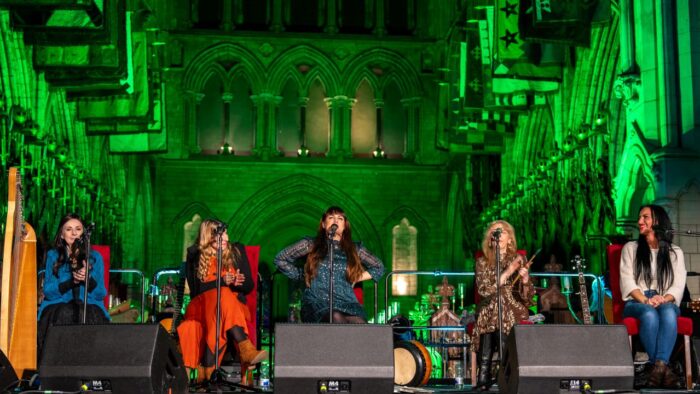
This was in no small part thanks to Sharyn Ward’s performance of her new song chronicling incessant insomnia and the strange solace she finds in wandering through the deserted night (I didn’t write down its title, but look out for it on her upcoming album). Ward’s unstoppable voice and attitude previously made her a rare Traveller woman to reach the final of Ireland’s Got Talent. She could also power through sleepless nights, and gave me the energy to do the same.
Next, Kíla put up a féile in the National Stadium. Before them, the Yankari Afrobeat Collective got the party going. There were kids dancing with their parents, mammies serving hot dogs and tea out of massive tin teapots at the back of the hall, and my seat was surrounded by a group of Scandinavian tourists.
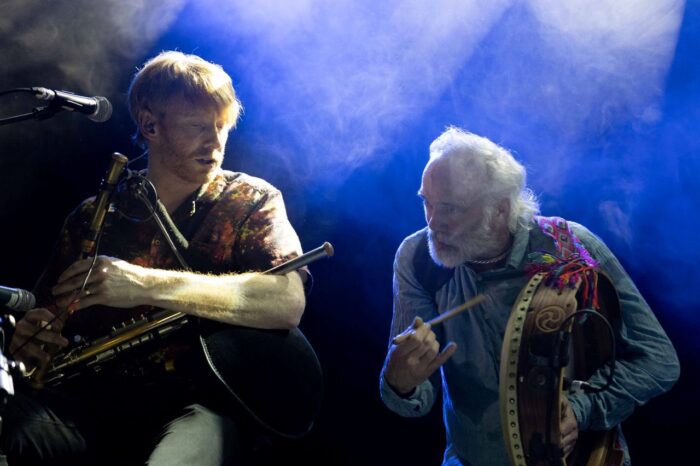
Rónán Ó Snodaigh was flirting with hip-hop as Gaeilge when he wasn’t leaping around while playing the bodhrán. James Mahon coaxed sounds out of uileann pipes like nobody’s heard since Jimi Hendrix. And that was all before the Paul Frost Brass Band joined in – jigs and reels on the trombone, anyone?
Emma Langford’s Tradfest gig, too, included some bilingual singing in Irish and English. Langford performed Abigail (Tomhas Ghobnatan), a warm, soaring song inspired by the Irish goddess Gobnait. She explained how she wrote her hit single The Winding Way Down to Kells Bay so that she would have a local song to perform when invited to the village’s session by her grand-uncle’s friends after he died in Co Kerry.
Again, there was an international audience in the small, beautiful chapel of Swords Castle where Langford sang. Some of the visitors were American, and so was the cellist accompanying her – Arkansas-born, Limerick-based Alec Browne.
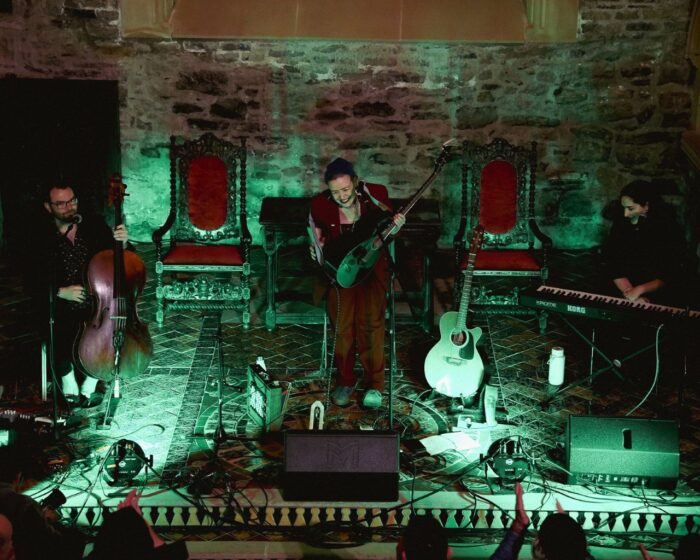
The ability displayed by Langford and her generation’s musicians to tap into the Irish tradition and turn it into new, modern forms that say “We’re Irish and you’re welcome” proved contagious. Browne ended the show leading a rendition of The Crawdad Song, my first time hearing American country in a cello-and-keyboard arrangement.
My music marathon ended (for this time) with Ispíní na hÉireann, taking me right back to the punk-folk frenzy that had started it with The Scratch. In a sold-out Button Factory, the Dublin band dialled up Irishness to the max with Talk to Joe (inspired by Liveline) and Come Out Ye Black and Tans.
The republican rebel song, however, sounded nothing like the Wolfe Tones version. There was palpable irony in Tomás Mulligan and Paahto Cummins’s barking of the warmongering lyrics. Then came the diddly-eye bits – out of Pádraig Óg Mac Aodhagáin’s saxophone, which would have been right at home in a jazz club.
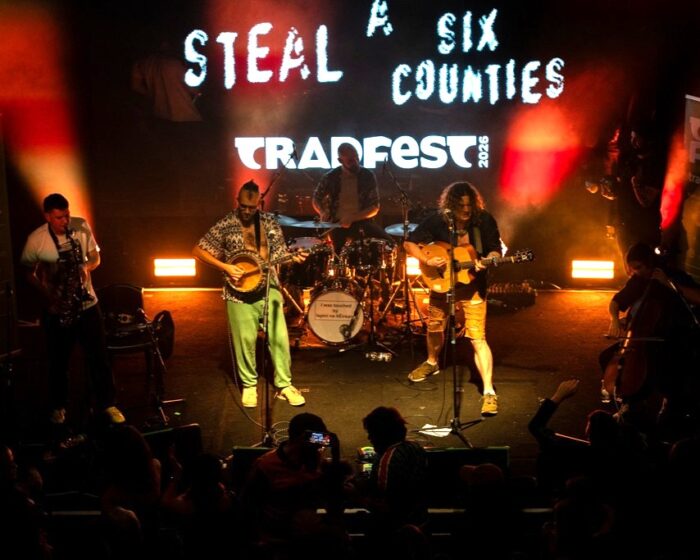
Aongus MacAmhlaigh’s cello (again) was there throughout to balance Cummins’s banjo and Mulligan’s pub-rousing voice. Then MacAmhlaigh dropped his instrument and sang An Poc ar Buile in a pure trad way, joined by the roaring crowd.
This was Mac Aodhagáin and MacAmhlaigh’s last gig with the band, they said, as they move on to other projects. I hope Ispíní will find worthy replacements soon.
Restoring faith
By the end of January, I was restored in the faith that there was a lot more fun to be had, including by attending as many live music gigs as possible. It also struck me that the confident Irish way in which this country’s musical tradition is reinventing itself, embracing the future, and conquering audiences around the world goes in the polar opposite direction to that of narrow-minded nationalistic tropes.
The artists I saw perform during those few weeks are uniquely Irish but they don’t feel the need to fly any flags – if they do, they are more likely to be Palestinian ones. They don’t pretend everything is going well in Ireland. Some of their songs are angry and their gigs routinely feature – sometimes awkward – talking points about social issues like the housing crisis. This, too, feels reassuring. Here is a proudly Irish way of being I can embrace without at any point facing the risk of exclusionary ideology.
As I tried to articulate these thoughts, I had a chat with Professor PJ Mathews, director of the UCD Creative Futures Academy and author of books and documentaries on Irish culture and music.
Mathews likened my exploration of the Irish music scene to that of his own children, now aged around 20. This is flattering as they’re half my age, but probably has more to do with the fact that I only became introduced to Irish culture as I travelled and then moved here in the second half of my life.
While the cultural revival that accompanied Irish independence focused on literature and theatre, music was initially left behind, Mathews told me. But it has been catching up since the 1950s. He sees céili bands as the answer to American dance culture and big bands, and Seán Ó Riada as the musician who pulled Irish music out of the cottage and onto the concert-hall stage, opening it to outside influences.
From that early stage, Irish music’s revival was always open to the world, Mathews pointed out. Planxty’s Andy Irvine travelled extensively in Hungary and eastern Europe, bringing back previously unknown rhythms. Dónal Lunny imported the Greek bouzouki, now a regular instrument at trad sessions.
In fact, traditional Irish music itself was never homogeneous, with many differences between regional styles. There is, comfortingly, nothing pure about it.
As I spoke with Mathews, I realised that I had unconsciously followed some of these meanderings. The connection between The Pogues and The Scratch came to me naturally. It must be 25 years since I first saw Riverdance on stage – in Paris, in a version of the show heavily influenced by Spanish flamenco.
As I grew up in 1990s France listening to The Corrs, Sinéad O’Connor or even U2, they had integrated so well into global pop that I didn’t realise they were Irish, nor that they were borrowing from their country’s tradition (which I now do).
It was there all along: Kíla have been at it for nearly 40 years. The Chieftains, Horslips, Paul Brady and many more pioneered the open, confident and inclusive Irish music I’m enjoying today. To all these musicians, go raibh maith agaibh.
*****
Elsewhere this week, Michael interviewed British Airways’ Irish CEO Sean Doyle. He spoke about growing up in Youghal, Co Cork, overseeing a £7 billion transformation plan, the rise of Chinese manufacturers, and why Ireland needs to improve at “actually getting things done”.
As Ukraine marked four years since the full-scale invasion launched by Russian, I met Alex McWhorter, the head of Citi’s Ukrainian business. Having turned its vault into a bomb shelter, the bank is now growing along with the country’s economy – but real prosperity depends on peace, he told me.
Jonathan tracked the curious case in which the Co Louth-based aircraft engine trading firm Logix Aero has been trying to recover a claim, linked to a hacking attack, from a Thai supplier – only to see it sanctioned in the UK this week for alleged trade with Russia in its war effort.
In Cork, Alan sat down with Kevin Canning for an in-depth interview. The CEO of Quintas Capital doesn’t miss a trick when it comes to talking about his private-market investment business, but the story he hadn’t told, until now, was his own.