Stories

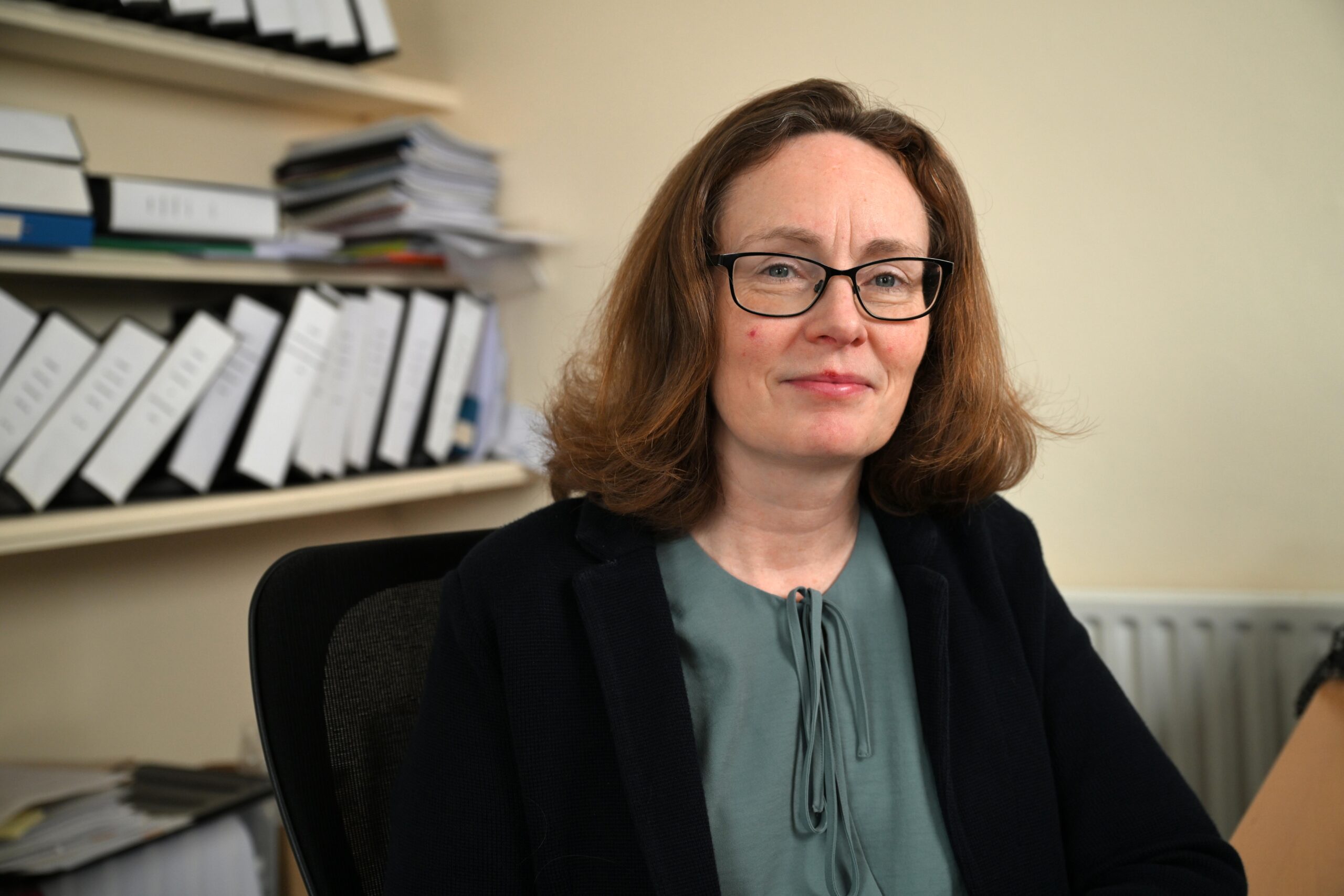
Dr Susan Brannick is a warm and engaging presence as she arrives for a first-floor meeting at Aware, the national mental health charity headquartered on Leeson Street Upper. As clinical director, she oversees the clinical governance of volunteer, counselling, education and information mental health services that are delivered to approximately 40,000 people each year.
The organisation’s work has a significant national impact and is sustained through an ongoing programme of fundraising initiatives. Each year, more than 3,000 participants take part in the Harbour2Harbour Walk, a 26-kilometre route from Dún Laoghaire to Howth on St Patrick’s Day.
Additional initiatives—including the five-kilometre Liffey Loop and a summer luncheon at Fitzwilliam Lawn Tennis Club—form part of a diversified fundraising strategy that supports the continued delivery of essential services.
“Corporate sponsorship is huge for us,” Brannick says. “Depression, anxiety, mental health can impact anyone, whether that is directly or through a partner or family. It would be very hard to find a family in Ireland that has not been impacted in some way. We could not help as many people as we do without corporate support.”
Key corporate partners include Home Secure, Fidelis Partnership, Mercury Engineering, Tirlán and The Address Collective.
Brannick notes that Aware works closely with its corporate partners to deliver workplace wellness workshops, helping to raise awareness of mental health and wellbeing across their organisations.
“We are very passionate about building relationships with our partners and helping them educate and support their workforces,” she says.
Aware has an annual budget of €3 million, of which the state provides 30 per cent. Having strong links with business is vital, Brannick says.
“We are really grateful to our corporate partners and are always looking for more,” she says. “For us, we want to be able to offer support to all people who need it, regardless of whether they can afford to pay for it. We want to make sure that anyone who might benefit from our support can access it.”
“No wrong door policy”
Dr Susan Brannick has deep expertise in her field, underpinned by a doctorate in clinical psychology from the University of Surrey and a master’s degree in neuroscience from King’s College London.
“I worked in the UK in primary care, secondary care and specialist mental health services,” she said. In 2016, Britain voted to leave the European Union, so Brannick decided to move home.
“Things really changed around then,” she said.
Brannick joined St Vincent’s University Hospital as a Senior Clinical Psychologist supporting patients in the gastroenterology department. “I was working with people with inflammatory bowel disease,” she said. “There’s a really strong psychology service in that hospital. We know that the mind and the body are really linked. A lot of people experience psychological distress physically, and physical issues can contribute to depression and anxiety.”
Brannick joined Aware in 2023 and is a strong advocate for destigmatising mental health, with a particular interest in how social and environmental factors influence psychological wellbeing. She was drawn to the organisation by the opportunity to make an impact at scale.
“I felt it was a way to support a bigger number of people and to take a strategic approach in a leadership role,” she says. “I also really wanted to bring in some elements from clinical psychology in terms of monitoring outcomes, developing audit and doing research.”
Aware offers its services for free, another thing that attracted Brannick to the role“The service you get, whether you’re paying for it or whether it is free, should be really good regardless,” she says. “The same processes should underlie it, and it should always be evidence-based. We are interested in approaches that help people do better for longer. I felt that Aware was already doing that and I felt that I could add to that.”
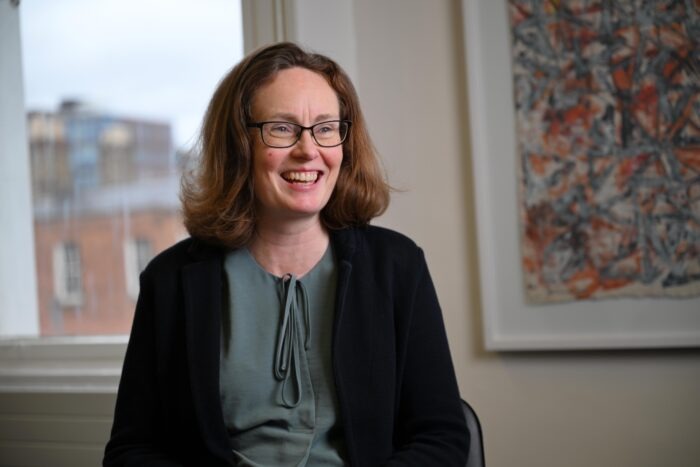
Brannick joined Aware not long after the pandemic, a challenging period for mental health services.
“Aware had to, like loads of different organisations, totally switch how they offered services,” she said. “I don’t think there were any virtual programmes and support groups prior to the pandemic, so that all changed.”
The pandemic permanently changed Aware’s service model. “Many of our services are now virtual,” according to Brannick.
“It is not necessarily because we are saying you should only have virtual, but people are voting with their feet. They want remote groups and remote education programmes. Most of our counselling – 60 per cent, I’d say – is delivered remotely.”
Offering remote services has helped Aware assist more people. “At a societal level, rates of depression, anxiety and mental health challenges are relatively high,” she said. “People are facing lots of different social challenges, and there is not always an accompanying increase in statutory funding to support that.”
Aware is different from other mental health services, she says: “We have a no wrong door policy, so anyone who wants help, we will do our best to offer them something or signpost to another service that can help. In a statutory service, you might be told this isn’t the right service for you. In Aware, anyone can come to a support group or ring the phone line. We don’t exclude people.”
Helping people help themselves
The way Brannick sees it, awareness of mental health has increased after the pandemic. “Mental health is much more on the agenda,” she said. “But I don’t think we’re still talking about it enough. It has had a huge impact, for example, on younger people who did the Leaving Cert in their bedroom, and then their first year of college. It has had an impact on how they interact with people and how comfortable they feel socially.”
Last year, Aware interacted with around 40,000 people. “Our interactions are quite broad,” she said. “People have different challenges. Some people who come to us might never have talked to someone before for mental health support.
“We aim to offer a package of services to people. But crucially, that has their choice in it. They can choose what they want to do, what they want to work on. The reason someone like me is in this role with a clinical psychology background is to ensure that our services are evidence-based.”
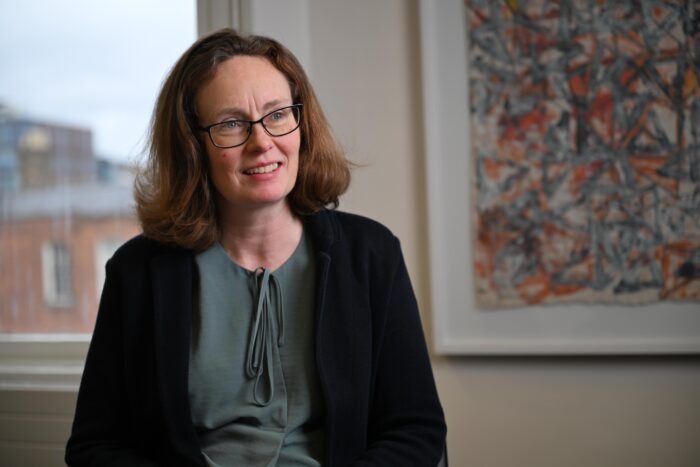
Aware runs two Solace Cafés as free out-of-hours friendly and supportive community spaces for people experiencing a mental health crisis. Based in Blackrock, Co Dublin, and Waterford, the two cafes open between 5pm and 10pm Thursday to Sunday. “They’re crisis cafés for people who are experiencing overwhelming or difficult moments in relation to mental health,” Brannick says.
“They’re linked to crisis resolution teams. Again, a lot of people who would come to those cafés may never had any contact with mental health services.
“This is their first time, and they might be in their 40s or 50s. Or we might have someone who has had a lot of therapy, a lot of groups, and they might come along to our counselling service as well, so it’s really quite a range of people who use our services.”
Aware’s team is trained to help people if they need additional health care. “Mental health is on a spectrum. Certainly, in our counselling service, we would refer onwards if we thought, actually, this service may not be the right one for now,” she said.
“Maybe a community mental health team is going to be more helpful in the longer term than a short term therapy approach. Equally, we might be a complement to other levels of care. People might attend our support groups who are also attending mental health services for instance. We support people who might be experiencing depression, might have had depression or anxiety in the past. We are more in the mild to moderate kind of range with regard to the counselling and education services that we offer.”
Wellness in the workplace
For employers, the rate of mental health challenges is rising over time. “The World Health Organisation says depression will be a leading cause of disability by 2030,” she says.
Aware carried out its own surveys about the prevalence of depression in Ireland. “We do one every year, and we’re looking at three in five people saying they’ve had an experience of depression.”
“In our workplace wellness talks, there’s a real fear of getting it wrong,” Brannick says. “Not wanting to say the wrong thing or not wanting to get it wrong or upset someone. But sometimes that can mean the person impacted has been left out of conversations about capacity and planning which is not the right outcome for anyone.
“In the workplace, we want to educate around what mental health is, what depression looks like and what it might look like in work. It doesn’t always look like sadness. Depression can manifest as anger, irritability or even feeling numb. Curiosity is crucial, with appropriate boundaries at work.
“We want to start a conversation about what kind of support someone might need at work,” she said. “It can be quite difficult, I think, if you’re not so sure about the wording or the language, like what’s okay to say, what’s not okay to say.
“These are all the conversations we support people in. We have an introduction to mental health for everyone in a workplace and then we have a half day session for senior leaders. It’s not a HR talk necessarily. It’s more about, how are you going to go about having conversations about mental health at work.
“What’s the legislation you need to be aware of, but also what are the mental health concepts you need to know? There’s still a lot of stigma but our job is to help support people back into work and support people in work. That’s something we support organisations with, too – helping leaders and managers to have conversations and ensure their people get the right support.
“We’re at the point now you can’t avoid it. People are going to be coming with challenges that are going to impact their work. You can’t ignore it.”
The Currency is a media partner for Aware supporting its summer resilience Lunch at Fitzwilliam LTC on Friday, June 5. To book a table, please contact [email protected] or call Drew at 0866069736 .