Stories
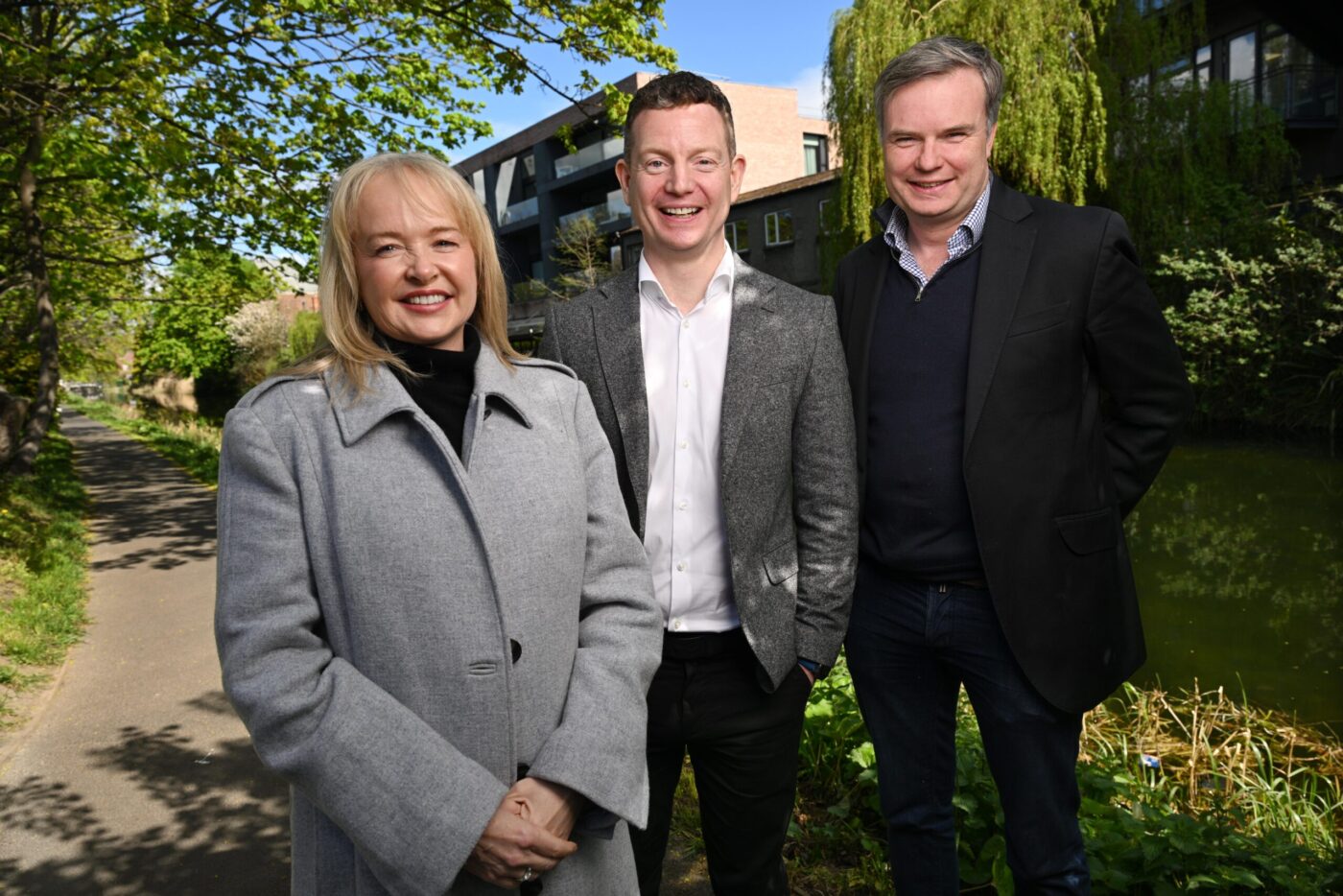
Each year, The Real Deal brings together more than a thousand entrepreneurs, dealmakers, and investors at Goffs in Co Kildare. The room, a mix between an amphitheatre and a trading floor, fills early.
Founders, advisers, and financiers drift between conversations, reacquainting themselves with old contacts or quietly sounding out new ones.
By the time the lights dim and the first speakers walk on stage, the sense of expectation is already there.
“It’s unique, isn’t it?” says Stuart Fitzgerald, chief executive of accountancy firm Fitzgerald Power and one of the event’s founders.
“The amphitheatre is unique. When the event is about to kick off, the electricity in the room is unbelievable. The energy in the room is unbelievable.”
Fitzgerald is not, by his own admission, an event organiser. Neither is Mark Flood, co-founder of private equity firm Renatus Capital Partners, who is another co-founder of The Real Deal.
“Nobody’s trying to make money, it costs us all money. And there’s absolute purity to it. It’s much more BBC than Channel 4. There’s no ads,” Flood says.
“There was a set of values from the outset, which was that players want to hear from players, and we were absolutely non-negotiable on that.”
Another non-negotiable was a decision to limit the number of speakers so that their stoies and views would get more time – plus, it gives the attendees more time to mingle and network.
“It’s been hard – to get that level of calibre of speaker is very hard, and we’ve never, ever compromised on that,” Flood says.
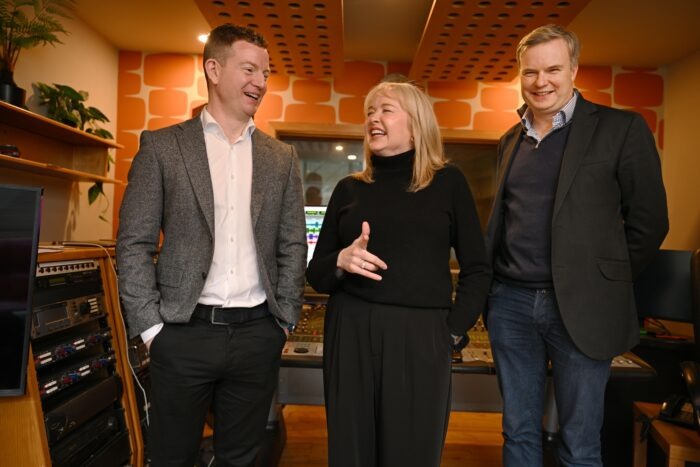
Ahead of this year’s event on May 6, Flood and Fitzgerald joined me in Beacon Studios in Dublin to discuss The Real Deal. They were joined by June Butler, head of corporate and SME banking at Bank of Ireland, a longtime supporter and sponsor of the event.
For Butler, the rationale for Bank of Ireland’s involvement is simple.
“We take our purpose of supporting SMEs and businesses in Ireland very seriously. And we see this event as very much aligned to that purpose,” says Butler, who previously led the Strategic Banking Corporation of Ireland.
“It brings a thousand businesses into the room together with advisors. It’s a brilliant way for businesses to get insights or learnings from other organisations in the room that they can take back to their own business. And it’s just a wonderful way for us to support enabling businesses to thrive,” she says.
Stories that carry weight
The 2026 line-up reflects how the event – and the broader Irish business ecosystem – has evolved.
There is Sean O’Connor of STATSports, a company embedded in elite sport globally. Last October, the Northern Irish wearable tech company announced it had been acquired by Sony in a deal that will see StatSports become part of Sony’s sports business.
No financial terms were disclosed but Sony will acquire a majority share of a business with more than €20 million in revenue.
Áine Denn, who co-founded Altify and scaled it to an $84 million exit, will also tell her story, as will Mickey O’Rourke, founder of Setanta Sports and Premier Sports – and one of Ireland’s most successful media entrepreneurs.
Tommy Kelly will also share his story, one that saw him sell his e-commerce and logistics business ESW for more than €1 billion. He will talk about the journey – and the businesses he has bought and backed since the deal.
“It’s a stellar line-up,” says Fitzgerald. “Tommy’s is a fascinating piece. Because it’s sort of the maturation of Ireland Inc. So, it’s the entrepreneurial story, the great exit, and now he’s an equity player in the market supporting other businesses.”
Each story is different. That is the point.
Some are defined by timing.
“[Mickey O’Rourke] was beaming the Premier League matches to the UK, and that was the business that did not succeed. And what did he go on to do? He went beaming the Premier League matches to the rest of the world – and he’s gone on to sell Setanta Canada, Setanta Africa, there was an Australian leg to the business, Eurasian part where he sold the Ukrainian business two months before the war,” Flood says.
“And then he set up the Irish business again, sold it to Eir – got it back, and Premier Sports in the UK. Then he went the other way to take international sports into the UK. It is one of the best media survivor stories.”
According to Fitzgerald, it is the diversity of the speakers that marks out the event.
“They’re all different. They’re all unique businesses – and the entrepreneurs behind them are exceptional. Áine Denn’s session is all about SaaS – so, the journey as a SaaS entrepreneur all the way through to exit. Sean and Mickey in relation to M&A in sport. And then Tommy is our legend of business,” he says.
The way Butler sees it, those stories are “the essence of The Real Deal because it showcases the very best of Irish businesses”.
“That tenacity, that resilience. We’ve jumped from one crisis to the other, and through it all, Irish businesses have shown that passion and that resilience. And I think that’s what people get to see on the day – and I’m lucky enough to get to see every day. So, it’s inspiring,” Butler says.
A market that keeps moving
Beyond the stage, the conversations reflect a broader reality: Irish business remains active, even in uncertain conditions.
“It’s probably a bit of both,” Butler says, when asked about the outlook.
“So look, Irish businesses have come through a lot. I’ve been working with businesses for 10 years now – Brexit was the kind of first crisis we encountered. Jump from that to Covid, then to the war in Ukraine, then to the tariff crisis,” she says.
Through that, she says businesses have adapted.
“They have dealt with increased costs – they have dealt with some unpredictability in interest rates – but they have built up pretty resilient businesses during that time,” Butler says.
At the same time, deal activity has remained robust.
“We averaged last year, an average of 10 a week, 500 deals. It’s phenomenal,” Flood says.
“And this year’s looking higher so far based on Q1,” he adds.
The drivers are structural.
“There’s a lot of cash-rich balance sheets internationally that need to work their capital – and in order to work their capital, they drive the consolidation,” Flood says.
Banks remain supportive, Butler says.
“We put out about half a billion in M&A finance just in the last 12 months alone,” Butler says.
And the pipeline shows little sign of slowing.
“So, right now, we’re not seeing any slowdown or any immediate threat,” she says.
The ecosystem beneath it
The way Fitzgerald sees it, what underpins that activity is a broader shift in how Irish SMEs operate.
“There’s a diversity in capital, there’s a diversity to capital that’s available in the market now,” Fitzgerald says.
“You have people who have had material liquidity events. Family offices. You have diversity in the lending market – there’s private credit… there’s lots of different sources,” he adds.
That has consequences.
“In the past, were we running our businesses with the degree of sophistication that SME owners are now? No,” Fitzgerald says. “And is that, in part, driven by the sophistication of capital providers in the market? In my view, yes,” he says.
There is also a cultural dimension.
“We are possibly one of the best countries in the world per capita for self-made entrepreneurs who are givers,” Flood says.
That willingness to share – time, insight, experience – is part of what sustains the ecosystem.
Remembering John Purdy
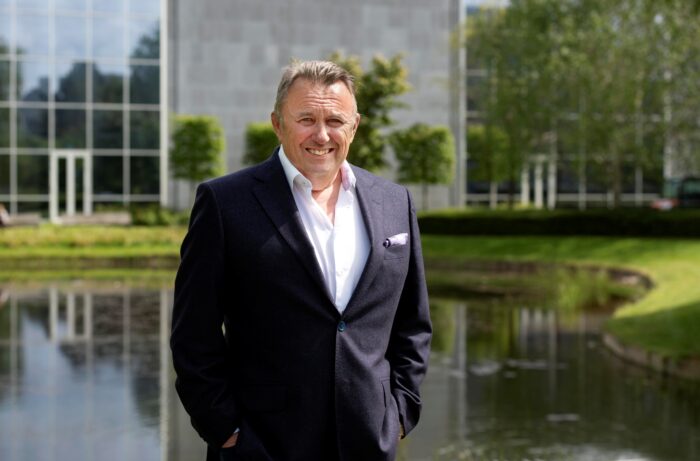
Few embodied Irish entrepreneurship more than John Purdy, a former panellist at the event who sadly passed away last year.
“John was an incredible entrepreneur, an incredible story, an incredible story of resilience,” Fitzgerald says.
His contribution went beyond his own businesses.
“He has so many mentees around town, you hear from so many people – and he was just so supportive and he’s a big loss to the business community in Ireland,” Fitzgerald says.
For Butler, the memory is more personal.
“I met him a couple of times just for a coffee and to share feedback on what was going on in the market, what businesses needed – for a man who was so busy, he was so kind and generous with his time,” she says.
And for Flood, it comes back to motivation.
“He loved the game — and you could get it from John that he loved the game — and that’s why he was involved,” he says.
What people take away
For all the macro discussion, the value of The Real Deal is often more immediate.
“It is an unrivalled learning experience if you’re running a business,” Fitzgerald says.
“They can expect honesty from the people that are sitting on the stage and there will be insights to take back to your business that you will just not glean anywhere else,” he adds.
Flood breaks it down further.
“I don’t think anyone will come away with any less than four great things – and some will come away with a lot more,” he says.
Those include insight, reconnection, and new relationships.
“Nothing beats face to face,” he says.
And sometimes, something more intangible.
“Maybe a bit of hope,” Butler says. “Because when you hear some of those stories and some of the maybe battles or ups and downs that entrepreneurs have gone through, they’ll take that back and maybe it’ll inspire some of them to keep going.”
“Founders, business owners, investors, and advisors”
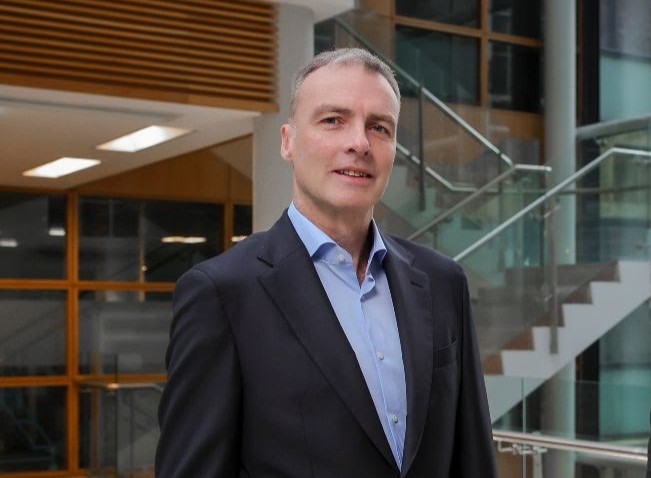
“Byrne Wallace Shields LLP has been proud to sponsor The Real Deal for a number of years because this unique event continuously brings together top calibre speakers and is attended by the main players in the Irish corporate finance and private equity market across founders, business owners, investors and advisors. This event aligns directly with the deep expertise that Byrne Wallace Shields LLP has across M&A, private equity and venture capital transactions.”
Feargal Brennan, managing partner, Byrne Wallace Shields LLP
The Real Deal partners are Renatus, Fitzgerald Power, and Bank of Ireland. The Currency is media partner, with Silver sponsors Byrne Wallace Shields LLP and additional sponsors The Panel, Davy, Nostra, Howden Ireland, and Polestar Ireland.
With tickets now almost sold out, this is a final opportunity to secure a place. Those still looking to attend can do so at therealdealevent.com/tickets/.