Stories

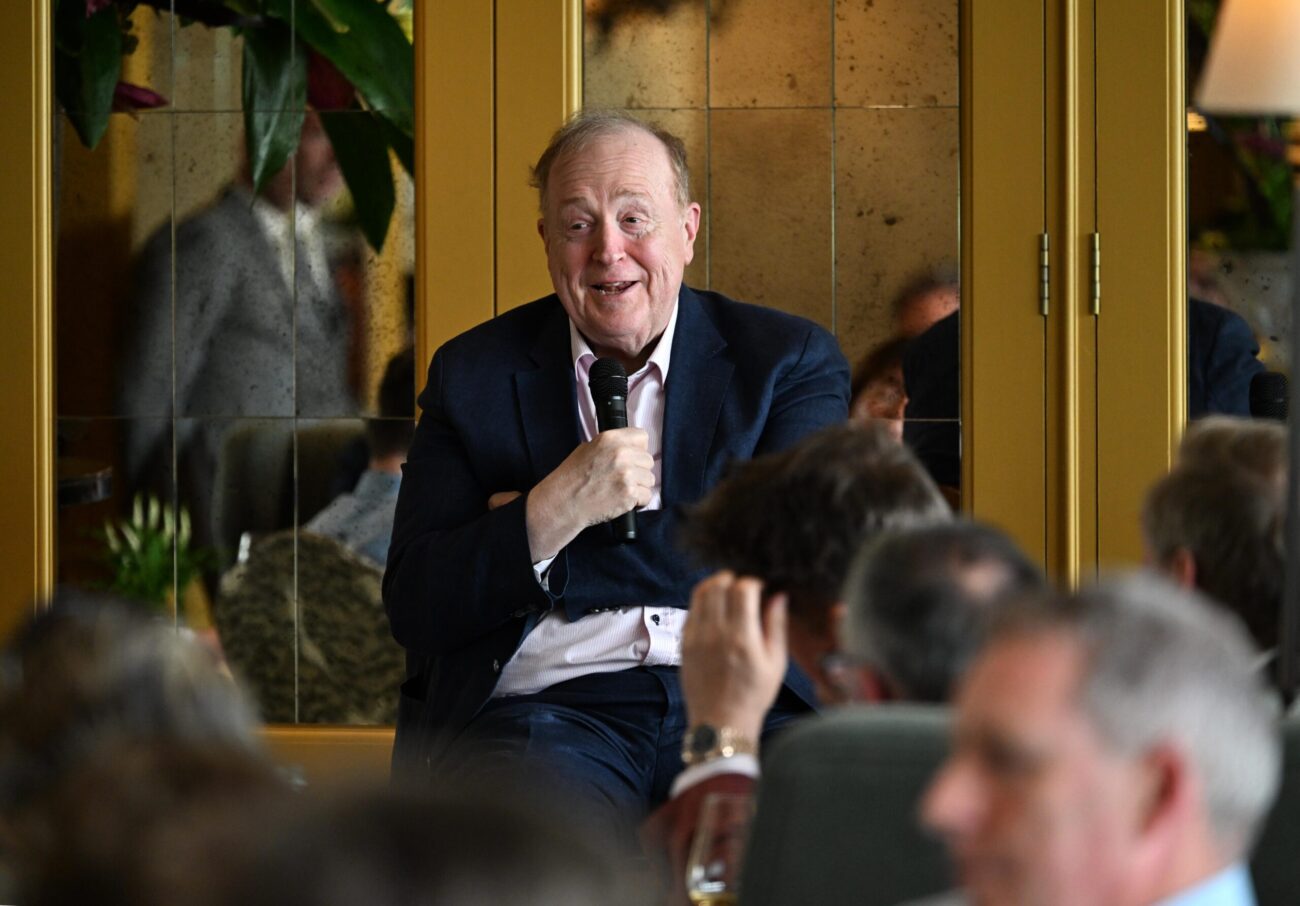
Mark FitzGerald had just finished a reflection on how and why he launched the property business Sherry FitzGerald, when Michael McDowell, a former Tánaiste, Minister for Justice, and Attorney General, raised his hand.
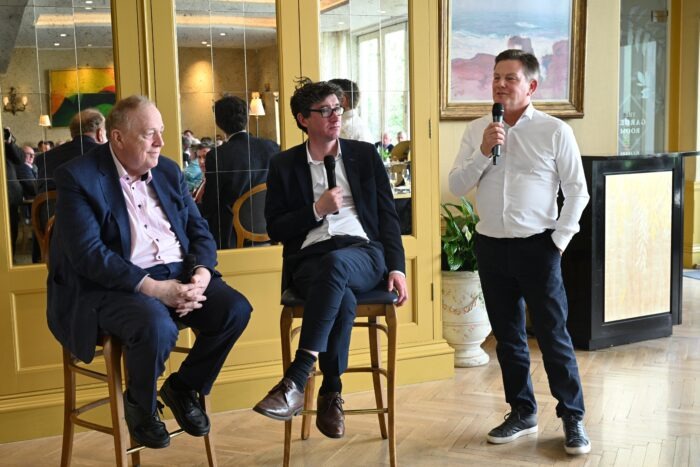
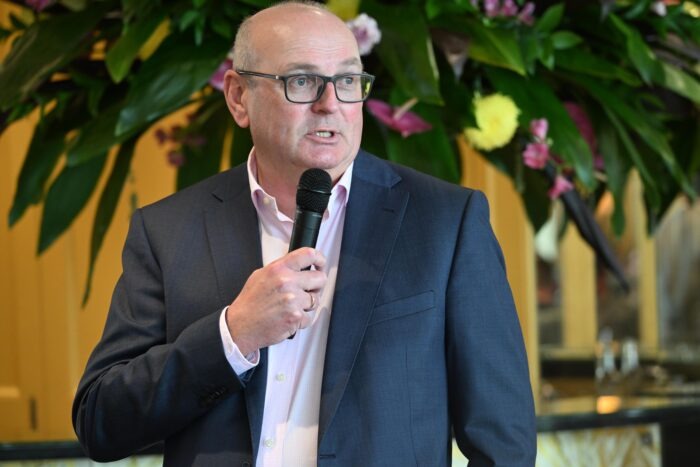
FitzGerald was a keynote speaker at an event organised by the alternative property lender Capitalflow. The other speaker was McDowell. What no one, bar both men, knew was how well they knew each other.
McDowell leaned forward and asked a cryptic question: “What do the letters NZI 655 mean to you?”
The answer triggered laughter across the room. It was the registration plate of McDowell’s Suzuki motorbike – secretly deposited to a teenage FitzGerald decades earlier after McDowell’s mother ordered him to get rid of it. FitzGerald, then barely in his teens, promptly began driving it around the back garden of the family home on Eglinton Road. “Michael led me astray basically,” he joked.
The longstanding relationship between the two was evident during the Capitalflow event, hosted in the Merrion Hotel in Dublin this month.
McDowell became Tánaiste. FitzGerald’s father, Garret, was previously Taoiseach.
“Michael was in our house a lot; he hung around with my elder brother and sister, and my parents liked him. So, Michael has been part of the family,” FitzGerald said.
“My father always said Michael was radical. And in fairness to Michael, he still is radical because he challenges the orthodoxy every week, and that’s what you need to do in life when you’re involved in public service. But it was certainly, obviously, an interesting house to grow up in.”
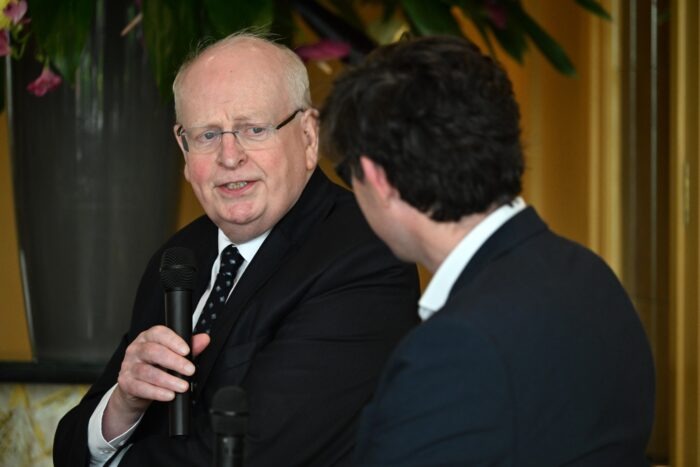
Before the fireside conversation with FitzGerald turned to property, I began by asking why he avoided following his father and his friend McDowell into politics.
“By that time, I was kind of emotionally tied with the people in Sherry FitzGerald, and it was also producing a living, which, to be honest with you, politics wasn’t going to do, and we kept having children,” he said.
The room, a mix of Capitalflow clients and property industry professionals, laughed. FitzGerald, however, kept a straight face. “That is an honest answer,” he said.
*****
Over four decades, FitzGerald built Sherry FitzGerald from the ground up.
But that was only part of the story. He took the company public. Then he took it private. He launched an online portal. He built a national franchise. Then he sold out and retired, only to return as a non-executive director.
He remains deeply interested in politics, but much of his life has been consumed by property. It began early.
“Mt father had a study in the house, and there was a 1926 Thoms directory, the year he was born, sitting on a bookshelf,” FitzGerald told the Capitalflow event. “And I took it down one day and I started looking at the road we lived in, which is Eglington Road in Donnybrook.
“And I looked at all the houses and who was still there, not many people obviously, but I just got intrigued by it. And then I started looking at auctioneers’ boards, and I decided I liked houses and liked people. So, I don’t know where they got me from, but I just decided when I was ten, I wanted to be an auctioneer. That was it.”
FitzGerald began working in property in the 1970s. The country was much different, so too was the property market. He relied on being disruptive, being more agile, and hiring the best people.
“I had a passion for the business, and that always helps if you choose good people,” he said, before picking out several people in the room, such as Jill O’Neill and David Lewis, who worked with him during the 1980s.
“In the 1980s, there were not a lot of options career-wise, in terms of the variety of careers. And of course, the economy was on its knees. So, it was easy, much easier to recruit smart people, which I did, and so I didn’t just start at the property agencies,” he said.
“I looked at the universities as well, and from other aspects of life. So, I was on a march to get smart people. They were both intellectually with it but also emotionally with it because that’s the key thing about property.”
FitzGerald also felt he benefited from a compliant competition.
“My competition was fairly asleep. They didn’t have a strategy; they simply wanted to fund their lifestyle. And I had my future ahead of us, and my generation had its future ahead, so I kind of sold a story, ‘Listen, we’re going to go on a journey here, we’re going to take on the establishment, and see how we get on.’ We didn’t know where it was going to end up, but we had a hunger, and I was prepared to offer directorships and career opportunities when the other firms weren’t,” he said.
This forward thinking was central to its future business and also its IPO at the turn of the century. At the event, I asked FitzGerald why he floated the business at a relatively modest £20 million valuation.
“It was to raise our profile. At the time, I wanted to acquire other firms and launch a franchise. So, it was to make a noise and to raise capital. The reality is that the float was too small. So, after four years, we took it back off the market and paid back the price we floated it at,” he said.
“But it wasn’t a success in an orthodox PLC sense, but it was a success in the sense that the media started paying a lot more attention to us, and it differentiated us from our competition, and it helped us recruit the franchises and make the acquisitions. So, we were left with a legacy.”
Mark FitzGerald on lessons from his career
“At 40, you can make a mistake, and you can recover, but at 60, you can’t. So, I began to follow that later in life, trying to make fewer mistakes. The one thing with an entrepreneur is they’ve got great ideas and have more ideas than there are days in the week sometimes, and I would be guilty of that. But an entrepreneur often doesn’t see the downside. And that’s important – I’ve brought in financial people around me in business that actually helped me do two things. They helped me realise the dreams and the ambitions, but they also stopped me from making too many mistakes and running out of cash. And that’s pretty important.”
The housing crisis
The way Mark FitzGerald sees it, Ireland needs to be more entrepreneurial to solve the housing crisis. He argues the Government is making progress, but accepts that it is not dreaming big enough – or about the long term.
“We will solve a lot of the problems, it’ll take a while, but we need to be thinking about people who are four and five and six today,” he said.
“They are facing society, AI, and they’re facing a society of competition, and they’re facing a society where the generation ahead of them are having great problems getting housing and affordable rents. So, we need to think about that generation. So, we need to think really long term, 2040. So, what that means in the context, for instance, of Dublin, which is only the size of Carlow, it’s only 228,000 acres.
“We need to think about Dublin as, where are people who are seven and eight or five and six today going to live? And they’re not going to live in Dublin unless we change things because so much is already spoken for.”
He pointed to Dublin Port: “640 acres. If there was nothing there today, what would you do? Would you build a port or would you build housing? You’d build housing and associated community services. So, that’s the way we need to look at things.
“We need to think much longer term. So, we need to be managerial. We’re getting better at the managerial part, but we’re not yet being strategic.”
He also pointed to the issue of funding and the importance of lenders.
“I wouldn’t have succeeded in business if I didn’t have good banking partners, and banking partners who really saw the relationship. When we went public, the banks were always behind me,” he said. “When I had to go private the main banks didn’t want to know about it and it was actually, dare I say it, Anglo who backed me. That set me on another train and on to more success. Banks and lenders can be true partners.”
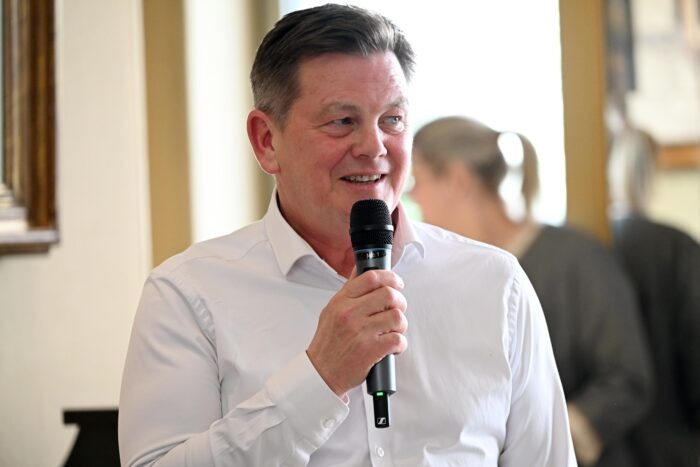
At the end of the event, Ronan Horgan, founder and chief executive of Capitalflow, thanked both McDowell and Fitzgerald and gave a brief overview of his company’s priorities.
“Our whole reason for being in business is to support other businesses. We have a tagline, ‘We are with you’, which means, ‘We’re with you in the good days and the bad days,’” he said. “We understand people go through difficult times; we want to support them. You have your ups and downs, but lenders are there to help you through both.”
The Currency was the media partner for the Capitalflow event.