Stories

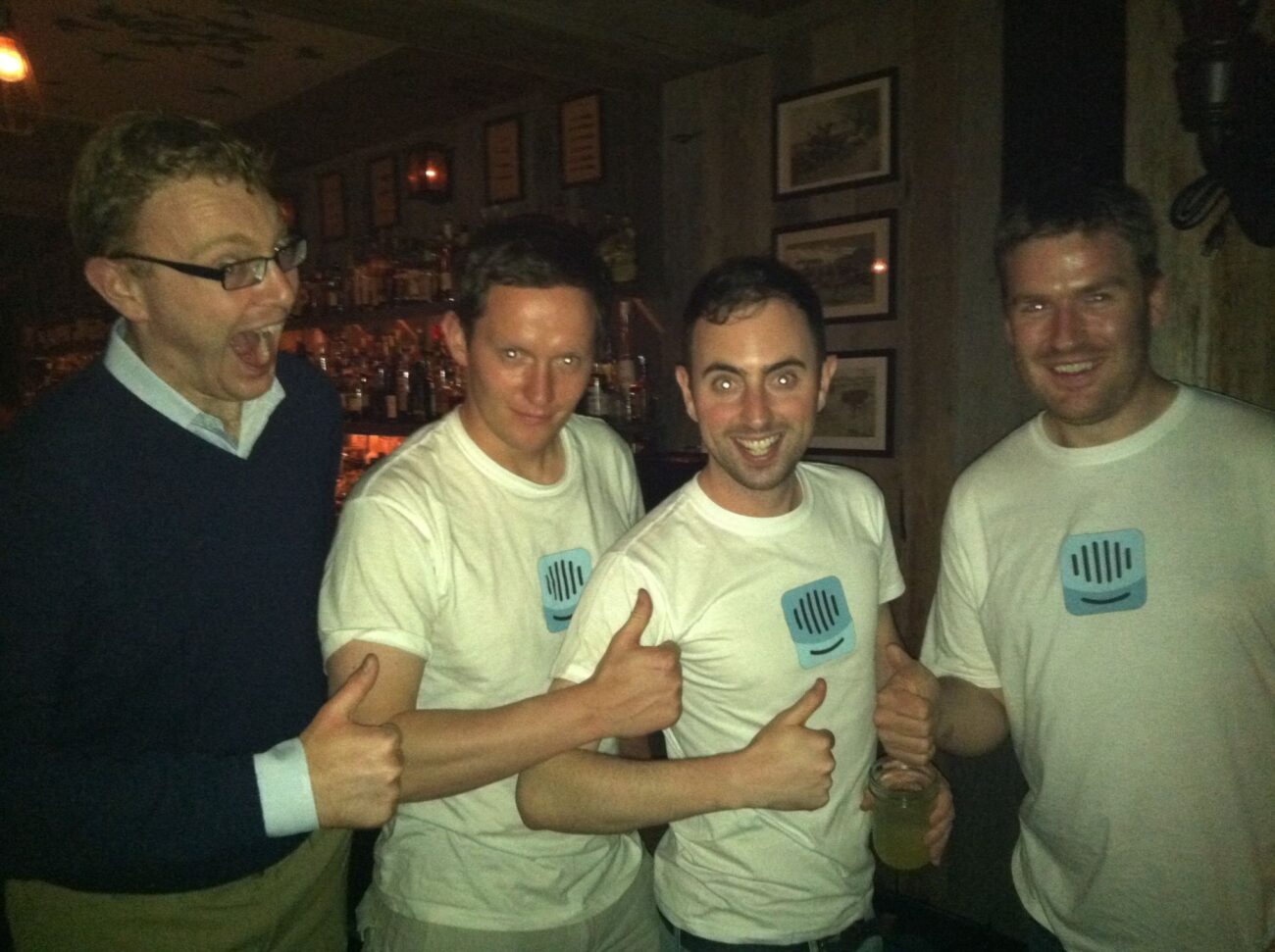
Back in August 2011, Ciaran Lee and Eoghan McCabe shared a beer in a dive bar called Club 93 in the South of Market neighbourhood in San Francisco. Along with two other friends, Des Traynor and David Barrett, they’d just incorporated a new company together.
At 30, Lee was the oldest of the four founders. A former Irish international skier, he was the chief technology officer. At 27, McCabe was the youngest, but energetic and creative, he was already the leader.
Traynor, a failed PhD researcher, was the expert in user experience, while Barrett was a front-end developer.
Four founders. One company. Intercom.
Lee told me in 2021 how he was blown away by America. “The level of ambition in America on the tech scene was intoxicating. I said to Eoghan, ‘if we nail this, in four years we can create a $10 million business’. I thought we’d no chance of doing it but I thought let’s just pick something crazy and let’s shoot for it,” he said.
Fifteen years later, the four friends have just sold what became an AI agent for customer service business for 360 times that early ambition. It is quite simply, one of the greatest ever Irish business stories.
The $3.6 billion sale to Salesforce is not just a huge sum of money, but it is also an incredible story of restarting a start-up that had plateaued by reinventing it for the AI-age.
Something changes
When I spoke to Lee in 2021, it was his last day at the company he loved. Ireland was in the middle of a heatwave, so we went for a sea swim. He spoke warmly and positively about Intercom, but it was clear he was burned out.
Intercom was preparing to IPO, and it was no longer the category-defining start-up it was when it launched. It had lost its direction.
McCabe too had drifted. He’d been hurt after “harassment allegations” were made against him in an article in May 2019. The alleged incidents occurred five years earlier when the business was much smaller, and an internal and external investigation had cleared McCabe of any wrongdoing.
But when the story resurfaced, a new investigation was ordered. Again, McCabe was cleared. McCabe had misread a situation on a night out, but he had not harassed anyone.
Nonetheless, he apologised for his “poor judgement.” His health continued to decline, prompting McCabe to take over as chair while he stepped back from day-to-day involvement, searching for answers about his condition.
Intercom now started trying to do too many things, as its sales plateaued. The company was comfortable, preparing to move into a palatial office in Dublin suitable for an investment bank.
It was still a business with hundreds of millions in recurring revenue, but it had started to slowly die.
Going all in
McCabe’s dramatic return in October 2022 as chief executive, with the backing of his co-founders and major shareholders, came as a soft coup.
“I am back here to make a lot of big changes and have a lot of fun. The plan I presented to the exec team and to Des [Traynor] and the others is a total night and day change,” he told me on the day this happened. “Everything is changing. That is part of the motivation. I couldn’t get excited about this if we weren’t really going to grow.”
Over the coming months, there was a cleanout of the business. Hundreds of people either left of their own accord or were fired.
McCabe fought to reset the business, and he was criticised for the way he did it. Like other tech companies there was a pullback on employee-focused initiatives like Pride, as McCabe tried to get Intercom focused on its product and the great risks facing the business.
McCabe wanted the business to rediscover its start-up spirit, and to do that he went in hard.
Then OpenAI launched ChatGPT 3.5 in November 2022, changing everything.
McCabe realised immediately it was going to wreck the business he was in, unless it changed immediately.
AI engineers were almost impossible to find in San Francisco, but Intercom had a good team in Dublin.
They were building rudimentary bots for customer service, but now they started to look at this new technology.
A week later, Traynor messaged McCabe to tell him: “The AI team has something interesting and they actually think we can make a product out of this.”
Six weeks later, Intercom had a beta version of an AI-driven customer agent solution called Fin.
Better yet, because Intercom was an old business it had 30,000 customers and hundreds of thousands of active individual users, and billions of data touch points it could use to train Fin.
McCabe decided to forget about iterative growth, but instead bet the entire company that Fin could work.
He took his team with him: the brilliant Traynor, a returned Lee, chief product officer Paul Adams, chief AI officer Fergal Reid, head of engineering Darragh Curran and more.
They went all in on Fin, even if it ended up killing Intercom and bankrupted the business.
Picking a lane
After Fin started to really deliver, reflecting on Lenny’s podcast, a very popular American tech podcast, in August 2025, McCabe said: “I won’t discount the fact that we were brave, but we were coming from a point of having nothing to lose.”
Fin became a very fast growing software business as revenues hit $100 million by March 2026. It changed its old unpopular pricing strategy for a new one that charged only on usage.

A company rebrand to Fin followed, and the business became exciting again, attracting the interest of Salesforce and others.
“We certainly are unique. I don’t know a single company of our size and age that has pivoted this hard to AI as we have,” McCabe said.
“But we also were screwed. We were in a really tough spot so had no choice.”
“There was an unwillingness to make bold decisions. Pick a lane and take pain in the short term for the longer term.”
Fin took the pain. Then it took the $3.6 billion gain.
Further reading:
Inside Intercom: 10 lessons from a front-row seat to an Irish tech success story