Stories

For much of the decade following the global financial crisis, inflation seemed like a problem that had been solved.
Interest rates hovered around zero. Cash deposits felt safe. Savers became accustomed to an environment where the cost of living rarely featured in financial conversations. In Ireland, the focus was on recovering from the banking crash, austerity and rebuilding the economy.
Then inflation returned.
Energy prices surged. Grocery bills climbed. Household budgets came under pressure. The phrase “cost-of-living crisis” entered everyday conversation.
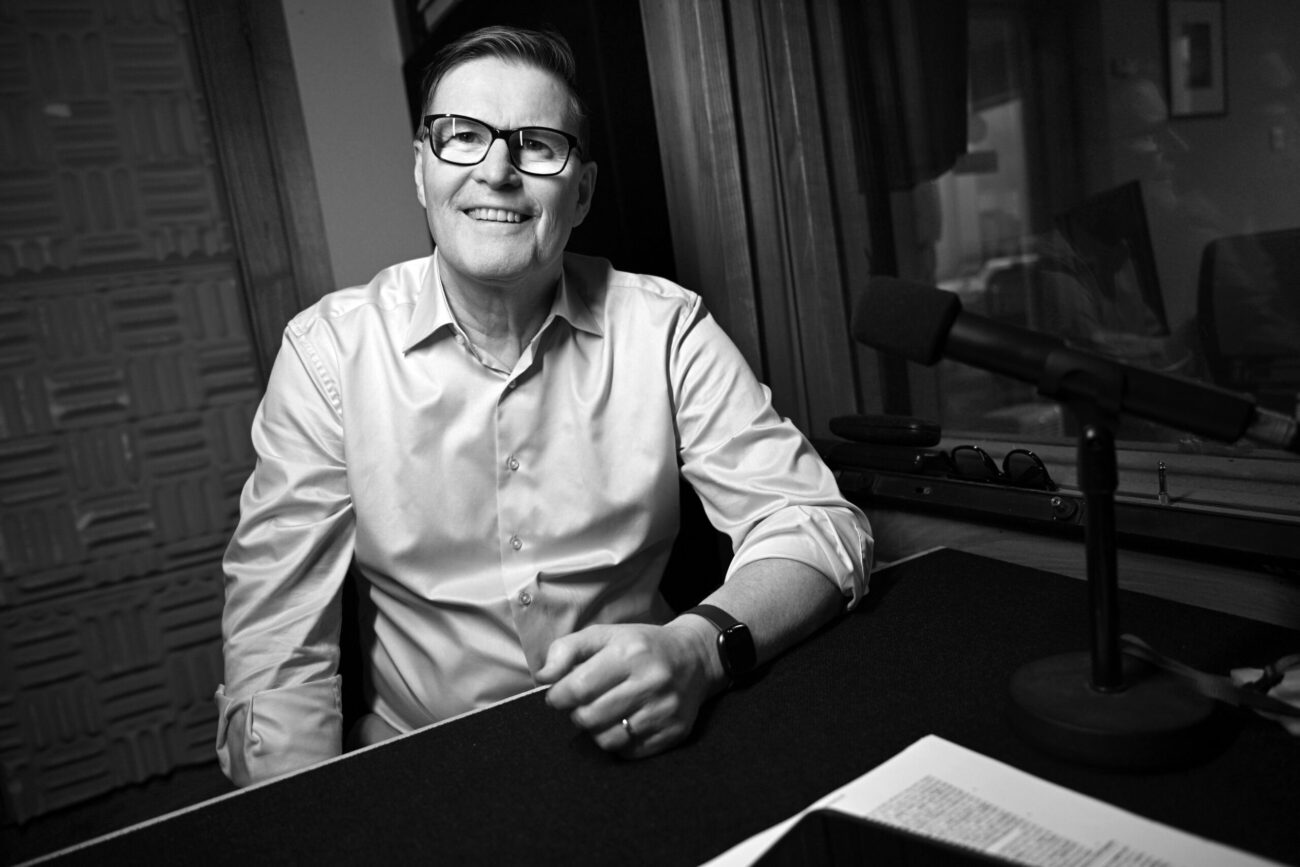
Yet according to Paul Callan, an investment strategist with Quilter Cheviot, many people still misunderstand inflation and, more importantly, the damage it can do over time.
“Inflation is one of the biggest threats of all,” he says.
Callan has spent more than four decades working in financial markets. He began his career in the early 1980s with what would later become Zurich Insurance, and has spent 30 years working across cash, currencies, bonds and equities.
After a brief retirement, he returned to the industry through NCB and later joined Quilter Cheviot, the wealth management firm which oversees billions in assets and has been expanding its presence in Ireland.
Over the course of his career, Callan has witnessed everything from the high-inflation era of the 1980s to the ultra-low inflation environment that followed the global financial crisis. Today, he believes many investors have become complacent about the threat inflation poses to their savings.
The way Callan sees it, the danger is not simply that prices rise. It is that inflation quietly erodes purchasing power year after year without people noticing.
As Callan points out, even one of the world’s most successful investors viewed inflation with suspicion.
“One of the better investors of all time, Warren Buffett, has called inflation a swindle,” he says.
“Basically, he says savers get short-changed because they don’t get a high enough interest rate to compensate them for inflation,” Callan says of Buffett’s view.
The hidden tax
When most people think about financial risk, they think about stock markets falling, house prices declining or investment values fluctuating.
Few consider the risk of doing nothing about rising prices.
Yet, according to Callan, that is precisely where inflation becomes so dangerous.
The numbers are stark.
Irish households continue to hold vast sums on deposit. According to Callan, much of that money earns little more than a fraction of one per cent in interest. Meanwhile, inflation continues to run significantly higher.
Money serves two basic functions. It is a medium of exchange and a store of value. Inflation attacks the second function.
With inflation in Ireland running at 3.7 per cent, a person who had €100 on deposit last year would need €103.70 today to buy the exact same goods and services. Put into bigger numbers, someone with €100,000 would need €103,700 to maintain the same purchasing power, Callan says.
“If someone is earning less than one-fifth of a per cent on deposit, as many in Ireland are, they have in fact lost 3.5 per cent,” he says.
Unlike a tax bill, however, inflation arrives silently. There is no annual statement showing exactly how much purchasing power has been lost. Instead, it is revealed gradually through higher prices and reduced spending power.
To many it is unseen, to others it is easy to ignore. That is why inflation is such a major risk, Callan says.
The anomaly
One reason many people underestimate inflation is that they spent much of their adult lives experiencing very little of it.
The years following the financial crisis were marked by weak economic growth, low interest rates and subdued inflation. For many investors, that became the norm.
Callan believes it was anything but.
“There just wasn’t that much of a “swindle” in Ireland after the global financial crisis, for the period up to Covid. But there has been a step change,” he says.
“Buffett’s “swindle” of interest rates lagging inflation has come back with a bang”
“The period of exceptionally low inflation after the global financial crisis, austerity and the Troika in Ireland, that was the anomaly,” he says.
This matters because central banks are not aiming for zero inflation. Most are targeting inflation of around 2 per cent.
Even at 2 per cent, inflation compounds powerfully over time, Callan says.
Time is precisely what many retirees now have much more of.
Living longer changes everything
A generation ago, retirement typically lasted a predictable 10 or fifteen years. Today, out of a couple retiring at 60 or 65, at least one partner can be expected to live for 30 years.
While this longevity is a triumph, leaving those retirement funds on deposit introduces a brutal reality.
With Irish inflation running at 3.7 per cent and standard accounts yielding just 0.2 per cent, capital faces a 3.5 per cent annual deficit. At this rate of continuous erosion, half of your money’s purchasing power vanishes in about 20 years.
“Longevity is good news, but a real challenge is to recognise that savings held on deposit alone will damage your wealth,” Callan says.
Inflation’s impact over a single year can seem modest. Over three decades, it becomes transformational.
Callan uses a simple example.
A child born during the first lockdown in 2020 is now approaching school age. During that relatively short period, cumulative inflation has already had a significant impact on purchasing power.
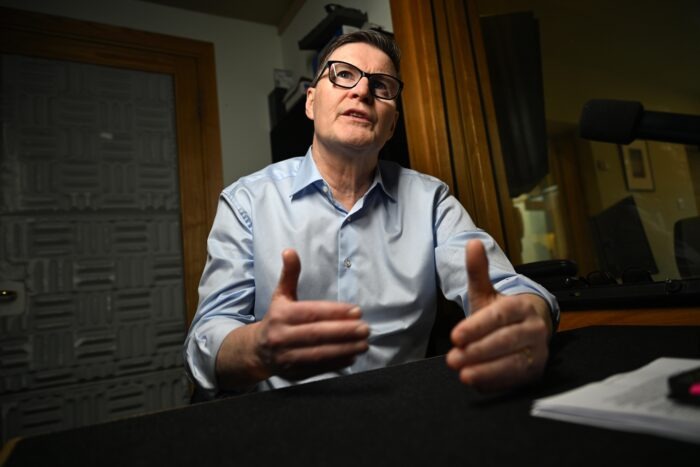
“If you had €100.00 on deposit in 2020, you now need about €125.00 today to maintain purchasing power,” he says. “It’s terrifying.”
The numbers become even more sobering over retirement timeframes.
“If inflation is just 2 per cent for 30 years, at the end of that period, you will need an extra 81 per cent capital to stand still in real terms,” according to Callan.
“But if inflation is marginally higher at 4 per cent and I use that term advisedly, you will need an extra 224 per cent extra capital to leave you in the same position, which is gargantuan.”
For retirees living on fixed incomes or relying heavily on cash savings, this presents a serious challenge.
Rethinking risk
Inflation forces investors to reconsider how they define risk.
Many people instinctively view cash as safe because its nominal value does not fluctuate.
An investment portfolio, by contrast, moves up and down in value from day to day.
Callan frequently encounters clients who see things exactly that way.
“I met one lovely lady recently and she said, ‘We’ve worked really, really hard for this money and we don’t want to risk it’.”
The challenge, he says, is helping people understand that inflation itself represents a risk.
“To her, the idea that the money on deposit was not at risk, was something that you had to deal with and try to explain the inflation risk to her,” Callan says.
The distinction is an important one.
Short-term market volatility may be uncomfortable, but it is not necessarily the greatest threat to long-term financial security.
“The real risk if you’ve got a nest egg, is that it won’t buy you what you need when you need it,” Callan argues.
That shift in perspective often forms the starting point for conversations with clients.
Rather than focusing solely on daily market movements, the discussion centres on purchasing power and future spending needs.
Building a plan
For Callan, financial planning begins not with products but with understanding the client.
How old are they?
What income sources do they have?
What are their spending requirements?
How long is their retirement likely to last?
Cashflow modelling often forms part of that process.
“We want to make sure that the client understands the various risks and often we will help clients with cashflow modelling,” he says.
That analysis takes into account assets, income, pensions, properties, tax, life events, liabilities, and of course inflation, he says.
Only then does the investment discussion begin.
The objective is straightforward.
“The goal is to build a portfolio that can sustainably support savers’ future spending needs,” Callan says.
Why diversification matters
No discussion about protecting wealth from inflation would be complete without mentioning diversification.
Callan describes it in simple terms: not having all your eggs in one basket.
Equities play an important role because successful companies can grow revenues, raise prices and increase profits over time.
Using the example of a teenager buying two Apple shares with confirmation money, Callan sees merit in the instinct.
“That’s a brilliant idea in terms of it should be a wealth-creating company over time.”
But concentration carries risks.
Diversification means spreading exposure across different companies, sectors, geographies and asset classes.
Property can play a role. So too can inflation-linked bonds and other assets capable of preserving purchasing power over long periods.
The aim is to ensure that a portfolio is positioned to withstand different economic environments while continuing to generate returns that exceed inflation over the long run of retirement.
A more inflationary world?
Perhaps the most important question is whether the inflation surge of recent years is a temporary shock or a more lasting shift.
Callan is cautious about making precise forecasts. Market expectations still suggest inflation in the eurozone will settle somewhere close to the central bank’s target over the medium term. But don’t forget even at that so-called modest inflation target, very real damage will be done to purchasing power over a retirement period.
“Market-based pricing suggests euro-area inflation is expected to average roughly 2 per cent–2.2 per cent over the medium term, but I worry that many of the forces that helped suppress inflation for decades are now in reverse.”
For much of the past 30 years, globalisation helped lower costs. Companies could source goods and labour from wherever it was cheapest. Governments were generally more fiscally restrained and geopolitical tensions were lower.
That picture has changed and not for the better.
“Globalisation is being rewired, resilience and national security are taking priority over efficiency, and rising spending on defence, energy security, infrastructure and the climate transition/crisis all point to a structurally more inflationary world.”
That does not necessarily mean a return to the double-digit inflation rates of previous decades.
But it may mean a world where inflation remains above the levels many investors became accustomed to following the financial crisis.
“Central banks may still aim for 2 per cent, but recent shocks show inflation can run well above that level for long periods of time — which is why overexposure to cash, or assets that look safe in nominal terms, can quietly and sometimes quickly damage living standards.”
This interview is a marketing communication and is for general information only. It’s not personal advice or a recommendation to invest. The value of investments can go down as well as up, and you may not get back what you invest. Past performance is not a reliable guide to future results. Quilter Cheviot Europe Limited is authorised and regulated by the Central Bank of Ireland.
This article is partner content and has been produced in association with Quilter Cheviot.