Stories
Every economic cycle eventually acquires its defining word.
During the Celtic Tiger years, it was growth. After the financial crash, it became austerity. More recently, economists have talked incessantly about inflation, supply chains and interest rates. The word crisis emerges a lot, also.
Now another word has crept into almost every economic forecast, research note and commentary: resilience.
Ireland has endured Brexit, navigated Covid-19, absorbed an energy shock following Russia’s invasion of Ukraine and is now operating in a world reshaped by geopolitical conflict, trade tensions and artificial intelligence.
Through it all, employment has continued to rise, public finances have strengthened, insolvencies have remained low, and dealmaking has remained high.
It is Ciarán Nevin’s job to look at these different trends and make sense of it all. As Economics Director, PwC Ireland, Nevin is tasked with bringing together disparate economic data and trends and determining what it means for Irish businesses.
And the more he looks at the various factors, the more the word resilience keeps cropping up.
“I am a child of the boom-and-bust cycle,” he says, “when Ireland was very much a taker of whatever crisis was going on globally, right up until 10 years ago when Brexit first happened.
“And there was a sense that things could get pretty bad for Ireland pretty quickly. And yet, Ireland’s economy proved resilient to that.”
That doesn’t mean the risks have disappeared.
Indeed, the data points to a growing disconnect between economic performance and public confidence.
Consumer confidence has improved in recent months but remains well below its long-term average, despite the strong performance of the economy.
Nevin believes households may simply have become conditioned to uncertainty.
“We have effectively internalised greater caution,” he says, adding: “I think what’s holding it down is what’s happening abroad,” he says.
“And obviously, as an export-driven economy, that has a significant implication for Ireland as well, because if people are feeling less confident in their own countries, they’re obviously not buying as much stuff. So, that has an impact. There’s also obviously the impact of inflation as well, and the uncertainty around how inflation will evolve, and how central banks will respond to that.”
The same resilience can be seen in the corporate sector.
“We’re not seeing the levels of insolvency that you might expect if the crisis is really hitting,” he says. “There has been an increase in retail insolvencies, but it is a very low number.
“Fundamentally, the economy appears to be remaining resilient.”
*****
Nevin was speaking to The Currency following the publication of PwC’s latest Ireland Economic Digest, which pointed to a period of moderation following an exceptional 2025.
PwC expects headline GDP to contract by 2.5 per cent in 2026 after last year’s extraordinary 8 12.3 per cent expansion – much of which was driven by rising pharmaceutical exports in advance of expected tariffs by the Trump administration.
Modified Domestic Demand (MDD) – widely regarded as a more accurate measure of underlying domestic activity – is expected to slow from 4.6 per cent to 2.7 per cent before settling around 2.5 per cent over the following two years. Inflation, meanwhile, is forecast to rise to 3.1 per cent before easing back towards euro area norms.
Rather than signalling a downturn, Nevin argues that the report suggests the Irish economy is entering a more measured phase after several years of exceptional growth.
“If you look at it at a GDP level, there are indications of a slowdown, but I think that is made look much worse by the base effects simply because we had very high GDP growth last year,” he says.
“And that was driven largely by the response of businesses trying to get their goods exported in advance of the tariffs.”
Instead, Nevin points to Modified Domestic Demand.
“I think we could be seeing a step change from four to five per cent growth year on year, to something we are forecasting around 2.5 per cent this year and over the next two. So, I guess you would describe it as a moderation,” he says.
After several years of extraordinary expansion, Nevin says that Ireland is entering a different phase of its economic story – one where growth may be less spectacular but the underlying economy remains strong.
The labour market
While unemployment remains close to historic lows, Nevin believes it deserves close attention over the coming year.
“We’re at almost 54 months where we’ve had the unemployment rate below or at five per cent, which is unprecedented in the history of the state,” he says.
Nevertheless, some cracks are beginning to appear.
“There has been some softening and that seems to be particularly the case for youth unemployment,” he says.
I ask if artificial intelligence is beginning to influence recruitment decisions and it remains unclear.
“It’s difficult to establish at this stage whether that’s, for example, a result of AI and companies potentially recruiting less,” he says, adding: “It’s difficult to tell what is really happening.”
He also cautions against assuming every hiring slowdown is technology-driven.
“Companies, for example, might find it to their advantage to report that it’s because of AI efficiencies that they’re not hiring more or that they’re downsizing, but that may not necessarily be the case. So, disentangling those things is quite difficult,” he said.
AI investments
Last year’s exceptional growth was fuelled by pharmaceutical exports as companies rushed shipments to the United States ahead of anticipated tariffs.
This year, the picture has changed.
“Last year, much of the growth was driven by pharma. This year, actually, the main driver of the economy has moved from consumption to investment,” he says, adding that this investment is increasingly being directed towards artificial intelligence infrastructure.
“It’s actually showing up in the modified investment figures in what is believed to be investment in hardware for AI, which has gone up 40 per cent on last year’s figures.”
While the exact classification is difficult to determine, Nevin believes it demonstrates once again the importance of multinational companies to Ireland’s economic model.
“You can see again that really the multinational sector is the engine of growth in Ireland,” he says.
That dependence, however, creates its own vulnerabilities.
“We are very reliant on it. It is a concern that the top 10 companies account for more than 50 per cent of all corporation tax, but they also account for 20 per cent of the entire tax intake of the country.”
He believes policymakers need to continue strengthening the indigenous economy alongside attracting foreign investment.
“There needs to be an effort made to obviously diversify,” he says.
Investing while the State can
Asked what stood out from the Summer Economic Statement and what should be prioritised ahead of Budget 2027, Nevin said the most important message was not the immediate fiscal measures but the Government’s acknowledgement of the longer-term challenges facing the economy.
He pointed to infrastructure, demographics and housing as the issues that would shape Ireland’s economic future, arguing that policymakers needed to look beyond the next budget cycle.
“I’m a child of the boom-bust cycle, and that’s something that we need to move away from. And I think certainly the language in the summer economic statement is about acknowledging that,” he says.
Nevin argues one of the most significant messages in the Summer Economic Statement was the Government’s acknowledgement that the greater economic risk lies in underinvesting rather than overinvesting. Years of delayed spending on housing and infrastructure have created bottlenecks across the economy, and he believes the statement signals a willingness to prioritise long-term investment, even if it requires significant upfront expenditure.
Turning to Budget 2027, Nevin said the continued growth in public spending would inevitably come under greater scrutiny. While much of the increase reflected Ireland’s expanding and ageing population, he questioned whether the additional expenditure was delivering the expected improvements in public services.
“Public spending has been increasing. The Central Bank has flagged this. It’s increasing at about a rate of 10 per cent per year over the last five years. Some of that is obviously to do with demographics. The population is growing, it’s ageing, and there is demand for services. But there would have to be questions then about what additionality has been delivered for that additional spend,” he says.
He says that debate was closely linked to concerns about the State’s underlying fiscal position and the need to ensure spending commitments remained sustainable over the long term.
“I think that’s one to watch, because going back to the point about that underlying deficit, we need to ensure that we are spending in a way that’s sustainable, because over the long term, if that deficit actually becomes a more obvious deficit, there are concerns there in terms of the sustainability of those commitments,” he says.
For Nevin, the solution lies in shifting more resources towards infrastructure that reduces the need for repeated government interventions. Energy is one example, where investment today could lessen the impact of future price shocks.
“If you think about the interventions to reduce fuel prices, etcetera, more investment in cheaper, greener energy is one way of protecting households from those sorts of energy shocks. And that needs to happen over the medium term,” he says.
What should business leaders be preparing for?
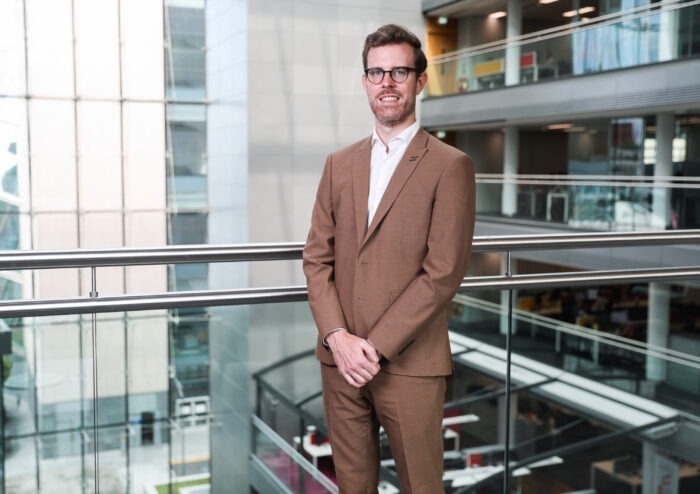
For Nevin, the biggest challenge facing executives is preparing for a world where many of the assumptions that underpinned business decisions over the past decade can no longer be taken for granted.
Trade relationships are becoming less predictable, borrowing costs could remain higher for longer, energy markets remain vulnerable to geopolitical shocks, and technological change is accelerating.
“Diversifying markets is something that would seem to me as something that is wise,” he says. “We can’t necessarily assume that the trading relationships that held for so long are going to necessarily be the most prosperous for the future.”
That means businesses should avoid becoming overly reliant on a single export market or customer base, particularly at a time when geopolitical tensions are reshaping international trade.
“Obviously doing what you can to build financial resilience, managing your debt effectively and getting advice around that, particularly if we’re going to see interest rates increasing,” he says.
Nevin also believes businesses should view artificial intelligence as an opportunity to improve productivity rather than simply a cost-saving exercise.
“On the labour side, I would think there is a transition happening in the economy one way or the other, and the emphasis on digitalisation and upskilling and ensuring the appropriate use of new tools to increase productivity seems key as well.”
Perhaps most importantly, Nevin argues that businesses should spend more time thinking about different scenarios rather than trying to predict a single outcome.
“So, we’re in an uncertain future, but at least through the use of scenario planning, you can try and pick the best route forward for your business.”
This is partner content and has been produced in association with PwC Ireland.