
Stories

Two things caused Ciara McEnteggart to tear up the business model of her mental health therapy start-up. The first was the Covid-19 pandemic. The second was the brutal honesty of a seasoned business leader, Frank Madden, at the annual Entrepreneur Experience in Cork.
McEnteggart returned from her weekend in Ballymaloe House Hotel last October “all fired up”, she says. On the Monday morning, she sat down with her business partner, Yvonne Barnes-Holmes: “We had a very long chat. We blocked out the day and we sat down together and just started reworking everything.”
McEnteggart is a prime example of how the Ballymaloe experience benefits emerging entrepreneurs, but she had already learned a lot of business lessons by the time she found herself sitting down with Madden and others – sometimes the hard way.
Before the pandemic forced the first big rethink, McEnteggart and Barnes-Holmes had started out with a clear idea of how their venture would develop.
They had already made one giant leap of faith by leaving good jobs in academia, a world they were both comfortable in, to start a business which became the Dundalk-based PBBT Institute. PBBT stands for process-based behaviour therapy – a model based on a deep understanding of human suffering. It’s a science-based approach that focuses on lasting behavioural change.
In the academic field, their idea for a new way of advancing the science of human behaviour, so that it could explain all mental health problems, was regarded as groundbreaking. So much so that they won a grant of €2.1 million to develop it at Ghent University and their eight-strong research team moved to Belgium for more than five years.
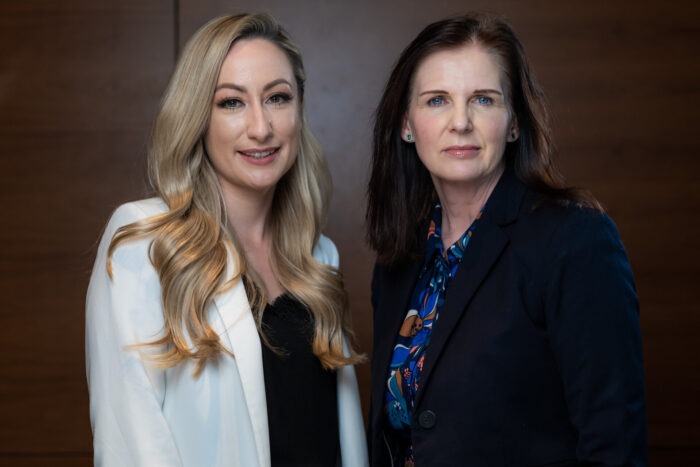
“Yvonne and I are both clinicians as well as as researchers – and in our field, that’s kind of unusual,” McEnteggart says. “Typically, you’re one or the other but we always wore the two hats. We’d feed our clinical observations into our research understanding, and vice versa.”
The progress the team made in Ghent excited them. There was, they thought, tangible evidence that their work could add to the sum of human knowledge and understanding by helping therapists to get to the crux of complex traumas.
“In terms of recovery rate, the industry standard is 50 per cent for all therapies worldwide. For our therapies we were seeing 70 per cent and upwards,” says McEnteggart. “When we started seeing that data come in, it really proved we’re doing something that can make an impact globally on the mental health crisis, which is growing exponentially.”
Leaving academia
When it came to putting what they had learned during the years in Belgium to good use, there were two routes open.
They could stay in the academic world and publish papers about their ongoing research findings. Or they could go into business for themselves and spread the word in a different way.
“We came to a crossroads because we knew we had something very special and very different,” says McEnteggart. “This really is the next generation of therapies – and a new therapy is hard to come by. So we had to make a decision about how we were going to disseminate it.”
Option one – staying in the traditional world of academia – was the safer choice but it also came with caveats.
One of the key metrics that universities are judged on – something that significantly affects their global rankings – is research citations. “In certain universities,” says McEnteggart, “you have hit certain impacts, including where to publish and how to publish. So you’re always under that kind of control.”
The jackpot is getting your work into a high-impact journal, where it can be cited by other academics in a rarefied world, thus giving your university more kudos. Barnes-Holmes is Ireland’s most highly cited female psychologist, having published more than 160 scientific articles and book chapters.
She and McEnteggart had first met when the latter was an undergraduate student of Barnes-Holmes at Maynooth University. These days, both women have PhDs from that university and they have invested huge time and energy in their work together. After much soul-searching, they came around to the conclusion that they didn’t want its potential to be limited by academic strictures.
“We felt what we were doing deserved to have a place in the world, but if we’d stayed [in academia] it would have meant continuing to chase grants and move to wherever the money led us.”
Finding freedom
Another reason for making the move was the feeling that they needed to train people directly in their new therapy, rather than write it all down and watch the power of it stagnate over time, something they’d witnessed with other therapies. “We felt that when we trained people directly on the ground we saw the biggest impact for them,” says McEnteggart.
They wanted “the freedom to do whatever we wanted with what we had developed”. So they decided to go home and start a business – something neither of them had any experience of.
Burnout is a major problem among therapists, with 90 per cent reporting some level of work-related stress. McEnteggart and Barnes-Holmes were emboldened by the feedback from those who embraced PBBT. “They were saying to us, ‘I used to turn down complex clients all the time. I would never see someone with a particular type of suffering, but now I feel like I can take on any client.’”
Face-to-face interaction was what they were used to – and they didn’t see distance as a barrier to learning.
“We saw it as a training company,” says McEnteggart. “We envisaged hopping on planes and going into rooms and workshops all over the world, teaching therapists how to do this.”
They returned to Ireland in 2020. But by then the country in lockdown and nobody was flying anywhere. McEnteggart had never heard of Zoom, but the pandemic soon forced a reimagining of their business and propelled it into the digital space.
“We had to start being creative very quickly and start doing our workshops online, so the pandemic made us a digital company, which we never really thought we would be. We have to thank it for that, because it allowed us to be much more accessible to people globally who have full-time jobs. They can do the training when it suits them.”
Becoming more bold
The challenges came at them fast.
“We had to learn how the world of business works – it was a steep learning curve. We had to ask ourselves, ‘Are we cut out for being entrepreneurs?’ There was a big jump to go from a training company to an institute with formalised qualifications and all of that.
“I was a confident academic, but I wasn’t a confident businesswoman. At the start, we did things very conservatively, in the way academics do. We were probably too conservative, but over time I think we found the courage to take the steps we needed to. We became more bold – and our growth went from being very small to quite big in a short space of time.”
The PBBT Institute has a board of experts and strategic advisers and offers a professional diploma with seven modules. Most of the psychologists and psychotherapists who have signed up are from outside the country, but McEnteggart says they’re getting “more and more” interest in the diploma from within Ireland.
With the growth came funding worries. Between them, they still own 100 per cent of the business, but how to fund their expansion?
They decided not to give themselves job titles, but McEnteggart takes the lead in business development. Before she took part in The Entrepreneur Experience, she had spent a year “being really focused on investment and fundraising”.
That meant less time for the business itself and uncertainty about the way forward. It all came to a head in Ballymaloe.
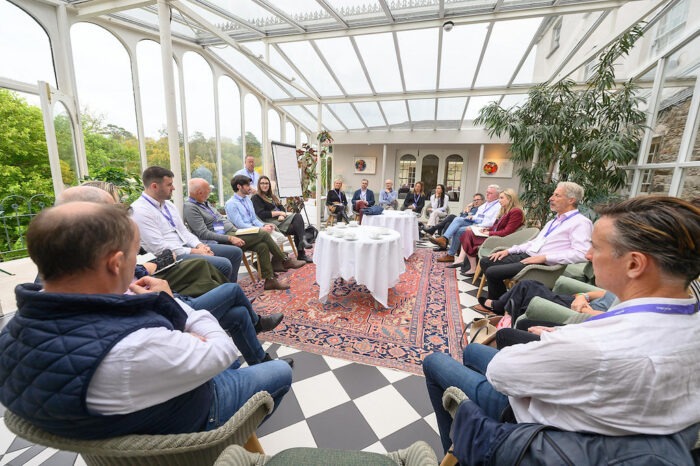
The idea behind the weekend is that 24 emerging entrepreneurs at different stages of their journey are paired with 24 seasoned business leaders. They also break off into a number of small groups, depending on how far advanced they are. Some are at the point where they just need to be funded, others are still figuring out their business models.
McEnteggart was mentored by Julian Costley, an investor in technology and media companies. “One of the most valuable parts of the Entrepreneur Experience for me was the depth of the mentoring,” she says. “Julian really got under the bonnet of the company. Because the one-to-one sessions followed each group session, every conversation built on the last and we were able to go progressively deeper into the business.”
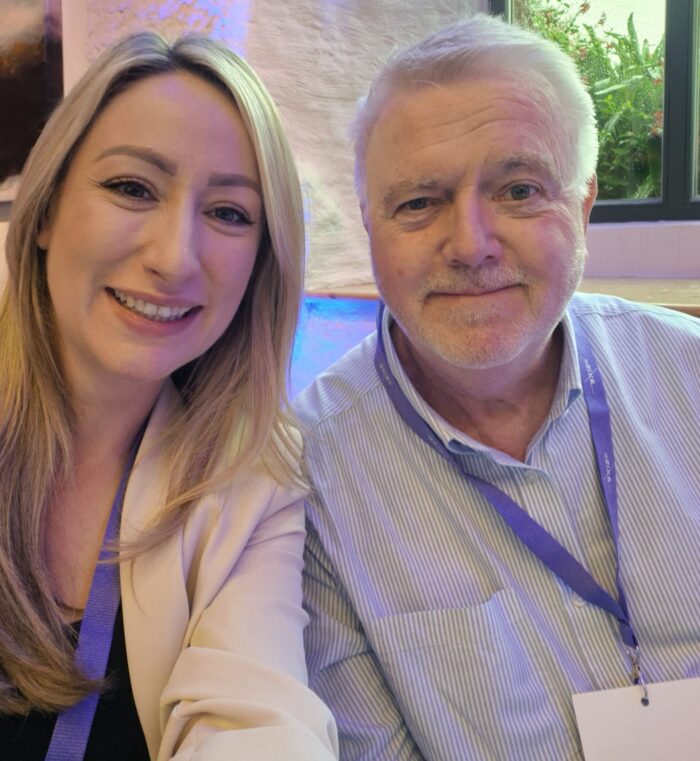
With Costley alongside her, McEnteggart was part of the small group sessions chaired by Frank Madden, founder of the Cork-based automation and services provider Crest Solutions. Crest later became CXV Global and the business now trades under the Catalyx brand name. Madden’s own remarkable story was told in The Currency a few years back.
“Frank was putting a big, big emphasis on services – ‘Don’t forget about services, if you have them to offer.’ It came up again and again in the small group and it really stuck with me. I knew we had the opportunity and the means to offer services to new clients, beyond what we were already doing.”
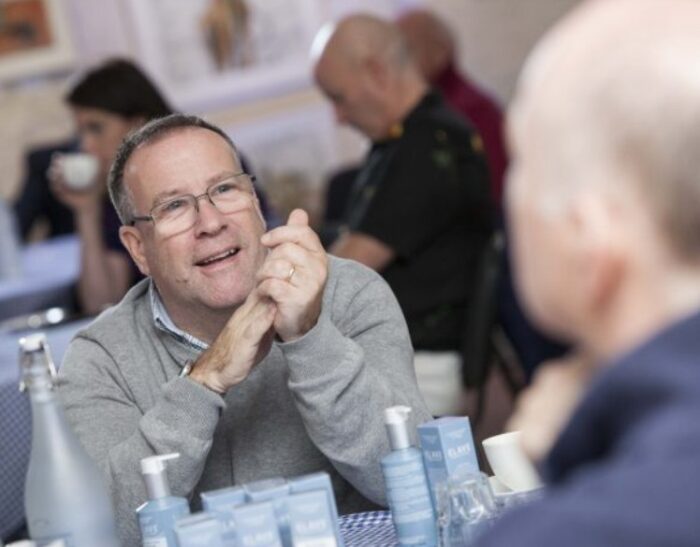
The result was that all-day meeting with Barnes-Holmes and a decision to spend less time chasing investment money and more on bringing in new revenues to grow the business in a self-sustaining way.
“We immediately launched two new products off the back of things that had been said in Cork. We then felt we could recruit and deliver therapy in-house – and in September, we’re launching a PBBT clinic, delivering the therapy ourselves on an online platform through people we have directly trained. So the revenue from the clinic can fund other elements of growth.”
“We are more courageous now”
The business is now close to being profitable and McEnteggart expects the launch of the new clinic to push it into the black. She has some advice for those who make it through to the 2026 Entrepreneur Experience, applications for which are now open.
“When you come away from these things you’re all fired up. But if you let it slide, and don’t do anything straight after it, that feeling of excitement will go. You’ll lose some of the enthusiasm and the motivation. So do something while it’s fresh in your head, you know? The notes were sitting in front of me and I was still excited after the weekend – so straight away was the best time for us to start making changes.”
She also feels more confident as a businesswoman, after the hesitant start. “We are definitely more courageous now. We’ve realised over the last couple of years that even if you make a wrong move, it’s not a disaster. You just go back and try something else.”
Behind everything is the core mission of helping therapists to alleviate people’s suffering, something that is always front of mind for McEnteggart.
“There’s a really humbling, warm piece that comes with the work,” she says. “It’s not just the growth of the business, but the impact of it, too.”
Applications for the 2026 Entrepreneur Experience – organised by Axis BIC in partnership with Cork City Council, Cork County Council, Broadlake, Quintas Capital and The Currency – can be made here.