Stories
The figures paint a clear picture.
Five months ago, TensorX had no annual recurring revenue. Today, the Dublin-founded AI infrastructure company has €5 million.
It has around 3,500 customers, ranging from people spending €10 a month to large corporates signing dedicated contracts worth €15,000 a month.
And according to Tim Grant, executive chairman of TensorX, the business has barely started.
“Ultimately, if we’re not a multibillion-dollar company globally and aiming to try and get on, like, a listing on the Nasdaq, we haven’t done it right,” he says.
It is an ambitious statement for a company that did not exist until recently. But the speed with which TensorX, which runs open-source models on Nvidia GPUs with zero data retention, has grown reflects the speed with which the AI market itself is changing.
Only a year ago, the phrase “sovereign AI” was barely part of the business lexicon. Now it is becoming a significant consideration for companies that want to use AI without giving up control over their data, security or infrastructure.
For Grant and TensorX, that is where Dell Technologies comes in.
The US technology giant has been in Ireland for more than 36 years, with operations in Cork, Dublin and Limerick. Its Irish business sits at the centre of a global push into AI, while its customer solutions centres in Cork and Limerick are being used to demonstrate how AI can move from experimentation into production.
But the relationship with TensorX goes beyond Dell supplying hardware to a fast-growing start-up.
Dell is providing the servers and infrastructure on which TensorX’s sovereign AI inference platform is being built. TensorX, in turn, is using that infrastructure to offer companies an alternative way of running powerful AI models while retaining greater control over their data, security and governance.
For Grant, the partnership was central to the company’s ability to move so quickly.
“To go from zero five months ago to five million now, we could not have done it had we not partnered with Dell to do this. That’s the speed, the quality of the service, the support,” he says.
The collaboration is taking place as businesses move from asking what AI might do for them to working out how they can actually deploy it.
For Mark Hopkins, managing director of Dell Technologies Ireland, the gap between experimentation and implementation of AI is closing quickly.
“We’ve probably seen that divergence speed up more toward implementation in the last 12 months as people have got more comfortable either through pilots, their own research, and actually starting to roll these things out,” Hopkins says.
*****
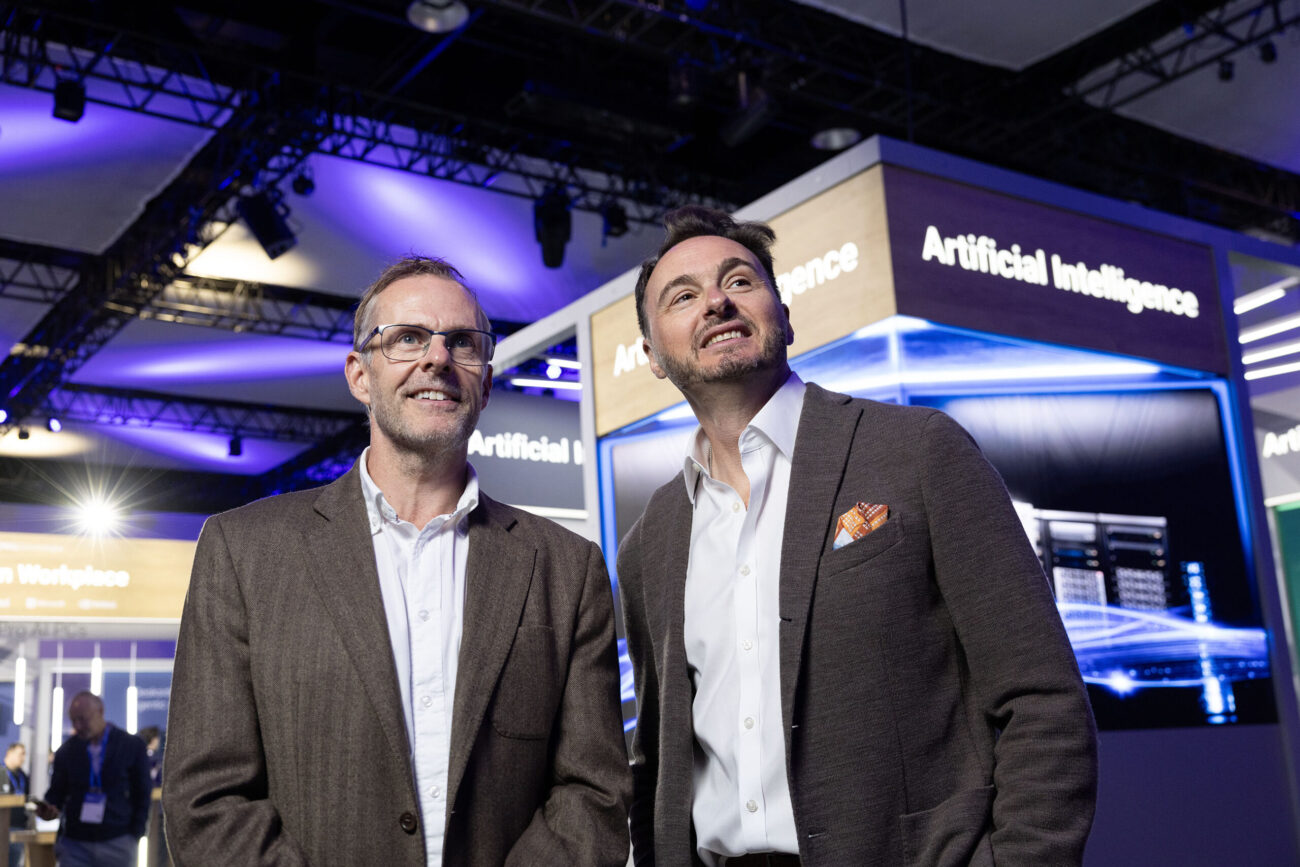
I sat down with Hopkins and Grant on the third floor of the Convention Centre Dublin, on the margins of the Dell Technologies Forum 2026, the first European stop in a series of 23 events taking place around the world.
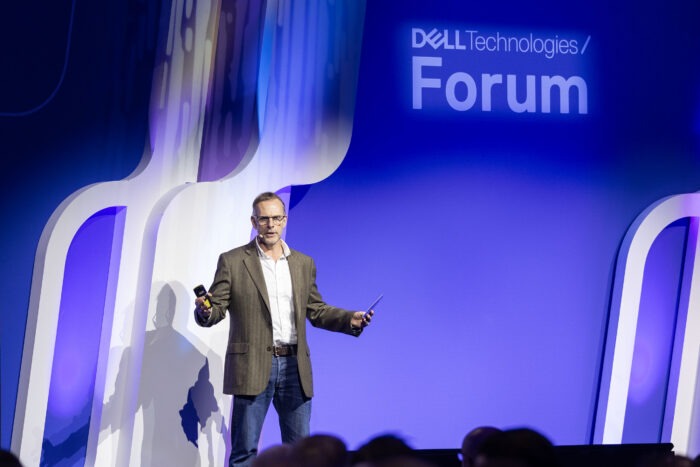
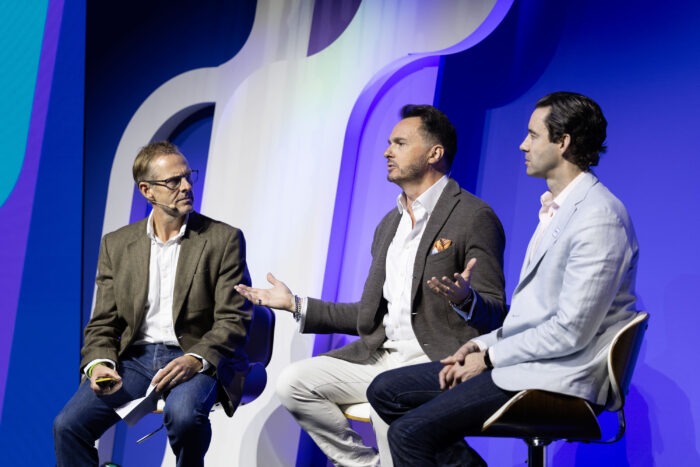
The Dublin event brought together more than 700 business and IT leaders.. Both men have just come from the main stage, where they discussed the future of AI, the growth of TensorX and Dell’s role in helping clients advance their AI offering.
On stage, Grant had explained why TensorX had opted to order computing hardware from Dell, while Hopkins had outlined how Dell was working with clients – large and small – on their AI journey. “We are on that journey ourselves,” he says.
The Dell-TensorX relationship is already moving quickly.
TensorX has made a significant initial order from Dell. Now, Grant reveals, it will seek to expand its collaboration with Dell as it works to meet commitments to its growing customer base.
It is a useful illustration of the relationship between the two companies: TensorX needs the computing infrastructure to support its rapidly expanding platform, while Dell is providing the hardware, technical expertise and support needed to build it out.
From pilots to production
Hopkins believes that showing companies what is actually possible is one way of addressing some of the anxiety around AI. He points to the Dell Technologies Forum as evidence of what the multinational is trying to achieve.
“We use these events to actually show those practical limitations and take some of that fear and build confidence back,” he says.
“It’s another reason why some of the sovereign AI messaging has become so relevant, because it takes some of that fear out,” Hopkins says.
“Whether it’s our work with Studio Ulster to use AI to pioneer advancements in filmmaking, whether it’s our sovereign AI collaboration with TensorX in more recent times, you can see the ideas from development of idea to execution and implementation. TensorX is the quickest I’ve seen in an Irish context, and it’s incredible.”
Grant’s starting point was different.
He had spent much of his career in financial services and the digital asset industry, where questions around data are not theoretical. They are part of the way businesses operate.
He believes the same realisation is now happening across the AI market.
“I come from the digital asset space where everyone knows where they got into the space, and I think we’re all going to do the same thing in AI,” he says.
The scale of the change was becoming impossible to ignore.
“When 100% of the audience puts their hands up and says that they’re going to be affected by AI within the next few years, you know something’s happened,” he says, referencing a question he posed at the conference.
The pace of technological change has also been unusual. A year ago, Grant says, sovereign AI was barely part of the conversation.
“Only a year ago before sovereign AI was at all a kind of common parlance, people weren’t saying it. You’d go and search a year ago and it wasn’t there.”
TensorX was built on the belief that this would change, he says.
But speed alone was not enough. TensorX needed infrastructure capable of supporting the platform as demand grew.
The relationship with Dell therefore starts before a customer ever sees the finished product.
“This is frontier stuff. It’s not like everybody knows how to optimise for the latest models that are coming out thick and fast and putting them into production,” he says.
There is already evidence of how quickly that learning curve can change.
“We were advised by Dell on our first order to do some things that we were like, nah. And now we’re like, oh yeah, we probably should do that,” he says.
Grant says the value is having a partner that can anticipate those problems.
“You want a partner who’s going to get ahead of it and tell you what you need. But then the other end is you want a partner who we’re going to be able to call up and say, ‘We’re stuck. Something’s going on here that we’ve never seen before’.
“And that journey is what allows us to go out and deploy at the speed that we’ve deployed at.”
The €10 customer and the €15,000 contract
The speed of TensorX’s growth has not come from one large customer.
Grant says the business has grown organically, with customers arriving without the company having to actively seek them out.
“This has all been organic and it’s all been inbound. We have not actively had to go out and seek a client yet, which I’ve never experienced in my 26-year career. This is extraordinary,” he says.
There are about 3,500 customers.
Some are paying just a few euro. But Grant says those small customers can include decision-makers inside much larger organisations.
The trigger for moving from a small subscription to a significant corporate contract can be straightforward.. “I want to free myself from that price volatility. I want to make sure it’s performing and when I want it, and I want it to be sovereign.”
The movement can be rapid, he says: “Ten euros to suddenly have a €15,000 a month contract. That’s what we’re seeing.”
What does sovereign AI actually mean?
For all the talk about sovereign AI, the term can sound abstract.
Grant points back to the early days of the internet and the realisation that came with the rise of platforms such as Facebook and Google.
“We all woke up one day and realised that Facebook and Google had taken all of our data and we’d signed off on that. We all did,” he says. “And then we’re like, ‘I’ve just given all that away. I can’t take that back now.’”
For him, the same basic question is now emerging around AI.
“It’s a very human thing, this notion of privacy and data control. It’s no longer the preserve of pure corporates.”
Hopkins sees a parallel with the rise of public cloud.
Dell, he says, was never opposed to public cloud. Instead, it has sought to provide customers with options around how they deploy technology.
“We’ve always been pro public cloud, pro-choice, pro-opensource, and to provide the infrastructure and services around whichever of those journeys that you want to go down.”
AI is creating a similar choice, he says.
“We don’t have to have the same discussion the same way we did with the public cloud. I think people understand that maybe because we’ve been through that public cloud cycle and some of those theories behind that are the same,” Hopkins says.
One of the biggest changes Hopkins is seeing is that AI is becoming more accessible.
The industry has spent much of the past few years talking about enormous investments in computing infrastructure. But that can give a misleading impression of what is required to use AI.
“I think we as an industry have probably over-indexed on some of the big numbers,” Hopkins says.
“Adopting and using AI is doable whether you’re a small-medium-sized enterprise or one of the biggest billion-dollar hedge funds or financial companies,” he says.
The TensorX story also gives Hopkins a chance to make a broader point about Dell’s Irish operation. Its role in the global AI build-out is already significant.
“At Dell, we’ve delivered the Dell AI Factory to more than 5,000 customers,” Hopkins says.
“The EMEA ones of those are all assembled and produced in Cork.”
Meanwhile, Limerick is home to Dell’s EMEA supply chain headquarters, while its cyber resilience operation is also based there. Customer support and sales functions are based in Dublin.
Getting the data right
The infrastructure may be changing quickly, but the old problem of data remains.
It is one thing to have the computing power and the AI model. It is another to have the right data, properly organised and governed, to feed into it.
For Hopkins of Dell, companies need to think about the whole system rather than treating AI, infrastructure and data as separate projects.
“Don’t see them as separate pieces of a different jigsaw,” he says.
Hopkins says customers are increasingly considering security alongside availability and price. For Dell, this is not a new area. The company has long operated in data backup, security and recovery, areas that are now becoming increasingly important as AI becomes embedded in business systems.
“From an Irish context I’m hugely proud of what we’ve done because there’s an awful lot of critical national infrastructure on this island that is already covered by Dell data protection and cyber recovery solutions in there,” he says.
Aiming for billions
The immediate numbers are impressive, but Grant is not particularly interested in stopping at €5 million.
Asked about the scale of TensorX’s ambition, his answer is blunt.
“Billions,” he says.
He says the team behind the company understands what it takes to build a business at that scale.
“We’re investors and operators. We’re not just a bunch of guys who rocked up and decided to found a company,” he says. “When we say we want to get to billions, we know what that journey looks like.”
There is a financing challenge involved in building AI infrastructure at scale, particularly where GPUs are concerned.
“In a neocloud play, you’re also relying on hundreds of millions of funding to back the GPU, right? That’s a non-trivial thing to do,” he says.
“This is something that we’re very facile with. Our collective knowledge knows how to go on that journey.”
For Hopkins, there is something bigger in the story than the growth of one Irish start-up.
“I think it’s lovely hearing Irish companies have that ambition,” he says.
And as the argument over who controls AI moves from the technology industry into boardrooms and governments, both men believe Ireland has an opportunity to play a role.
Hopkins points to the wider geopolitical debate taking place in Europe.
“As governments and organisations think more carefully about where their data sits, who controls it and how AI is deployed, there’s a real opportunity for Ireland to be a leader in sovereign AI,” he says.
Dell, he argues, has a role to play in helping harness that opportunity.
“Whether that’s helping customers build AI factories, modernise their data infrastructure or deploy AI closer to where their data resides, we’re focused on helping organisations turn ambition into reality. The same ambition we’re seeing from companies like TensorX is what can help position Ireland as a leader in sovereign AI, and Dell is ready to help power that next phase of growth.”
This is commercial content and has been produced in partnership with Dell Technologies Ireland.