Stories
The numbers tell their own story.
Only one in five workers now expect to follow the traditional path of working until a fixed retirement age and then stopping.
Three in four expect people will need to work for longer.
And 95% believe organisations will need to adapt as people work for longer.
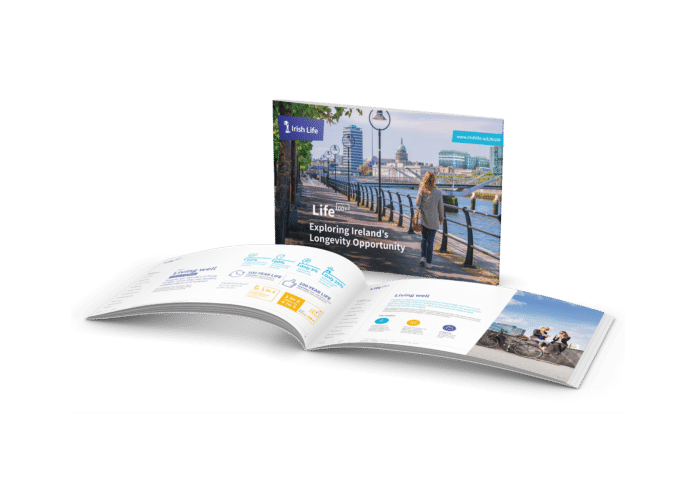
The numbers come from Irish Life’s new Life100+ report, which looks at what a longer life could mean for people, employers, and society.
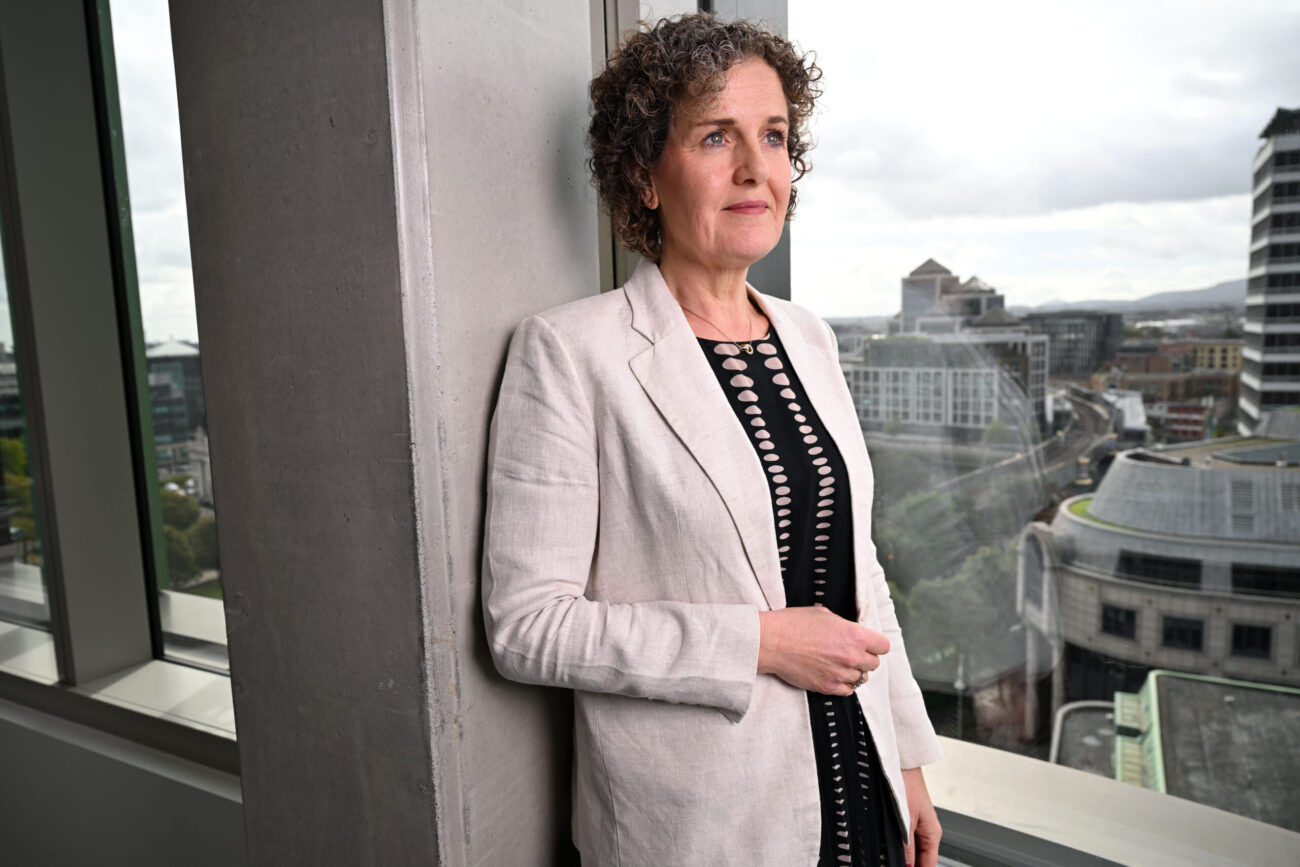
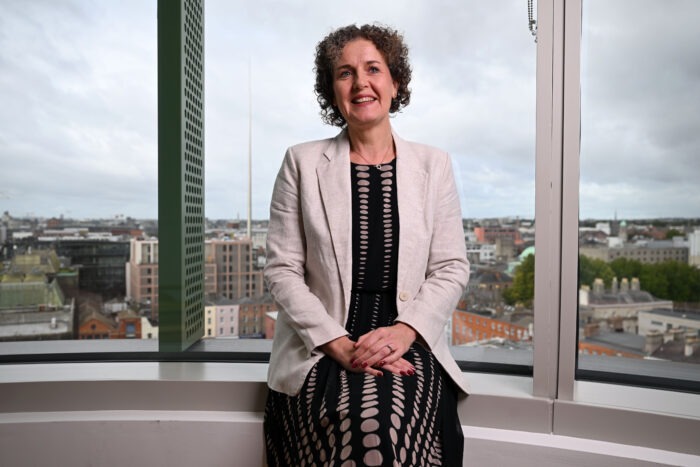
For Roisin Kelly, Director of Marketing and Communications at Employer Solutions at Irish Life, the implications for businesses go well beyond retirement planning.
The traditional model is relatively straightforward. Study for 20 years, work for 40, and then retire for the final 20 or 25.
But what happens when that model starts to break down?
“It’s challenging our traditional assumptions of life and the way that people think about that kind of linear life,” Kelly says, adding: “People need to really rethink how they view their lives, their work, how they’re planning for their future, thinking about their health.
“So, it is moving away from a linear kind of working life model into something more, and that changes things for employees and employers.”
The demographic backdrop is changing too.
Ireland’s 65-plus population is projected to double by 2057. Today, life expectancy is around 80 for men and 84 for women.
And the research suggests employees’ expectations are moving faster than some of the structures around them.
“We did a number of interviews with employers and had a roundtable, and it was clear that people are already fielding requests from people to work longer, and they’re probably being managed on a more kind of case-by-case basis,” Kelly says.
“The real challenge for employers is everybody knows this is coming, but how do they scale up for it?”
The multigenerational workplace
That question of scale is important.
An organisation might be able to accommodate one employee who wants to work beyond the traditional retirement point. It is a different proposition when longer working lives become a feature of the workforce rather than an exception.
“It is quite a different model,” Kelly says. “It’s going to lead to much more multigenerational workforces. Employers will need to think about how they adapt their culture to that.”
The Irish Life report found that 79% of people believe workplaces will need to adapt to the needs of older workers.
There is also a strong expectation that the way people work will change more generally. Some 74% believe people will need to continually acquire new skills throughout their careers, while 73% believe people will need to adopt more flexible ways of working.
“You’ll have a scenario where you have potentially a 22-year-old or a 24-year-old graduate working with two or three people in their team into their 60’s. What does that culture look like for people?” Kelly says.
Kelly says that this creates questions for management as well as recruitment, arguing that what motivates a 25-year-old may not be what motivates somebody approaching 65.
The Irish Life report found that the motivations around work change over the course of people’s careers. Salary and career development become less dominant and factors such as personal values and social connection become more important.
What happens to experience?
The report found that 82% of people believe older workers bring valuable experience to the workplace. Yet fewer than two in five believe organisations are actively recruiting older workers.
Kelly says employees themselves do not necessarily see a longer working life as meaning they want to continue doing exactly the same job, in exactly the same way, for longer.
“I think a lot of feedback that we had from employees was ‘Yes, I can see that I’m going to need to work longer, particularly if a 100-year life is a scenario, but it’s not that I want to continue working necessarily in the same way that I am today. I want to do that differently,” she says.
The report’s research with employers suggests some of those changes are already being considered.
Employers discussed phased retirement, consultancy work, mentoring, and project-based roles as ways of allowing experienced employees to continue contributing while reducing their working commitments.
For Kelly, one of the most interesting possibilities is the transfer of knowledge between generations.
“We talk about it in the report around institutional knowledge – the concept of sharing of knowledge and lived experiences from older to younger generations,” she says.
That can change the role of an older employee within an organisation.
“I think employers have the opportunity to think about that from the perspective of older people being maybe more a coaching and a mentoring and a support role as they move on in their years and their career and so on, and how they’re helping the younger employees in the organisation,” she says.
Among people aged 65 and over, 27% say they would gradually reduce their hours, while 24% would continue working part-time. Some 17% would consider transitioning to a less demanding role, and 12 % would work occasionally.
Only 19% expect to fully retire and stop working in the traditional way.
Kelly says employers are positive about the value older workers can bring – and it can work both ways.
“Older workers get to scale back, and businesses get to capture that crystallised intelligence and pass it onto the next generations instead of it simply disappearing with the retiree,” Kelly says, adding that the challenge is making those arrangements work beyond individual cases.
“There’s a lot to unpack and a lot for employers to consider, and there are some challenges around it in terms of contractual arrangements, retirement ages and policies that are in place,” she says.
The squeezed middle
There is another group that employers need to think about.
The report identifies what it calls the “squeezed middle” — broadly those aged 35 to 64.
This group reports lower levels of satisfaction and control than younger adults and those aged 65 and over. They are often progressing their careers while also dealing with young children, older parents, and financial pressures.
“These are the employees who are in that squeezed middle with the most financial pressures, caring responsibilities for young children, older parents, and so on, and also trying to progress their career,” Kelly says.
For employers, the implication is that a standard set of benefits may not work equally well for every stage of someone’s working life.
“There’s a real opportunity for employers to support that group, and to consider the benefit strategies that you have in place, and what’s suitable for people based on where they are in their work-life cycle,” Kelly says.
The report provides some useful detail on what that might mean.
Flexible working hours, paid leave, and employer pension contributions are currently the three benefits most commonly ranked in people’s top five, each at 37%.
However, priorities vary considerably by age.
Employer pension contributions, for example, are in the top five for 52% of people aged 55 to 64, compared with 20% of those aged 18 to 24.
For older employees, other forms of support become more significant too.
Employee assistance programmes rank in the top five for 29% of people aged 65 and over, compared with 13% of those aged 18 to 24.
“As you get older and you move to 65, you might be more like 65-plus, and you’re still working, you might be interested in different types of benefits,” Kelly says.
Health becomes a workplace issue
That leads into one of the strongest themes in the report. Health.
Some 85% of people say maintaining physical and mental wellbeing will be essential to working for longer. The same proportion believe their ability to keep working depends on their health.
The report also found that 83% see health as important to securing financial wellbeing in later life. For Kelly, the connection between the two is central to the longer-life question.
“Employees talk about that relationship between health and wealth, so that if they are in a position to remain healthy and work longer, they therefore are more financially secure, and ultimately, they feel more confident and in control of where their life is going, and they’re more up for living longer,” Kelly says.
Sixty per cent of people see the idea of a 100-year life positively. But only 25% say they definitely want to live to 100 themselves. Some 41% are concerned about ill health when thinking about living longer, while 86% say health is essential to a fulfilling longer life.
For employers, that makes health and wellbeing part of a much bigger workforce conversation.
And employees clearly expect employers and government to play a role: 77 per cent believe they will need greater support to help remain healthy and economically active for longer.
There is no template yet
According to Kelly, for corporate leaders, the challenge is broader than changing a retirement policy.
The way she sees it, it is about asking what the workforce will look like when careers become less linear, and age becomes less of a reliable proxy for someone’s role, ambitions, or contribution.
Kelly’s advice is to start thinking about it now. “From the employer perspective, it is giving this the time to set out a clear and actionable longevity plan, and a manageable one.
“I think the components of that are the culture element, that mixing of multi-generations and so on, alongside providing the supports and the strategies and the benefits that people are going to need depending on where they are.”
The report points to four broad areas for employers: more flexible career design, an age-friendly workplace culture, continued learning and an integrated benefit strategy that respond to changing health and financial needs.
For Kelly, the business case is not simply about accommodating employees for longer.
“I would see this as a brilliant opportunity for employees and employers. So, sticking with the employers, there’s a real opportunity here around building thriving workforces and workplaces – really getting that right, attracting talent into your organisation, retaining the talent you have and using the power of institutional knowledge to everyone’s benefit. .
“So, that’s really important. You can reap the rewards of having multiple generations working together, and that shared knowledge from one generation to the next and so on. There is a real, tangible commercial benefit for your business.”
The way Kelly sees it, it is a win-win for both employers and employees. By harnessing the power of older workers, companies can plan for the next generation without losing the institutional knowledge.
For Kelly, that means moving beyond the idea that a career has a beginning, middle and end.
“The opportunity is to stop thinking about longevity as a challenge that we have to solve, and start thinking about it as an opportunity to do things differently,” she says. “We can create workplaces where people at different stages of their lives can contribute in different ways, learn from each other and continue to develop.”
This is commercial content and has been produced in association with Irish Life.