Stories

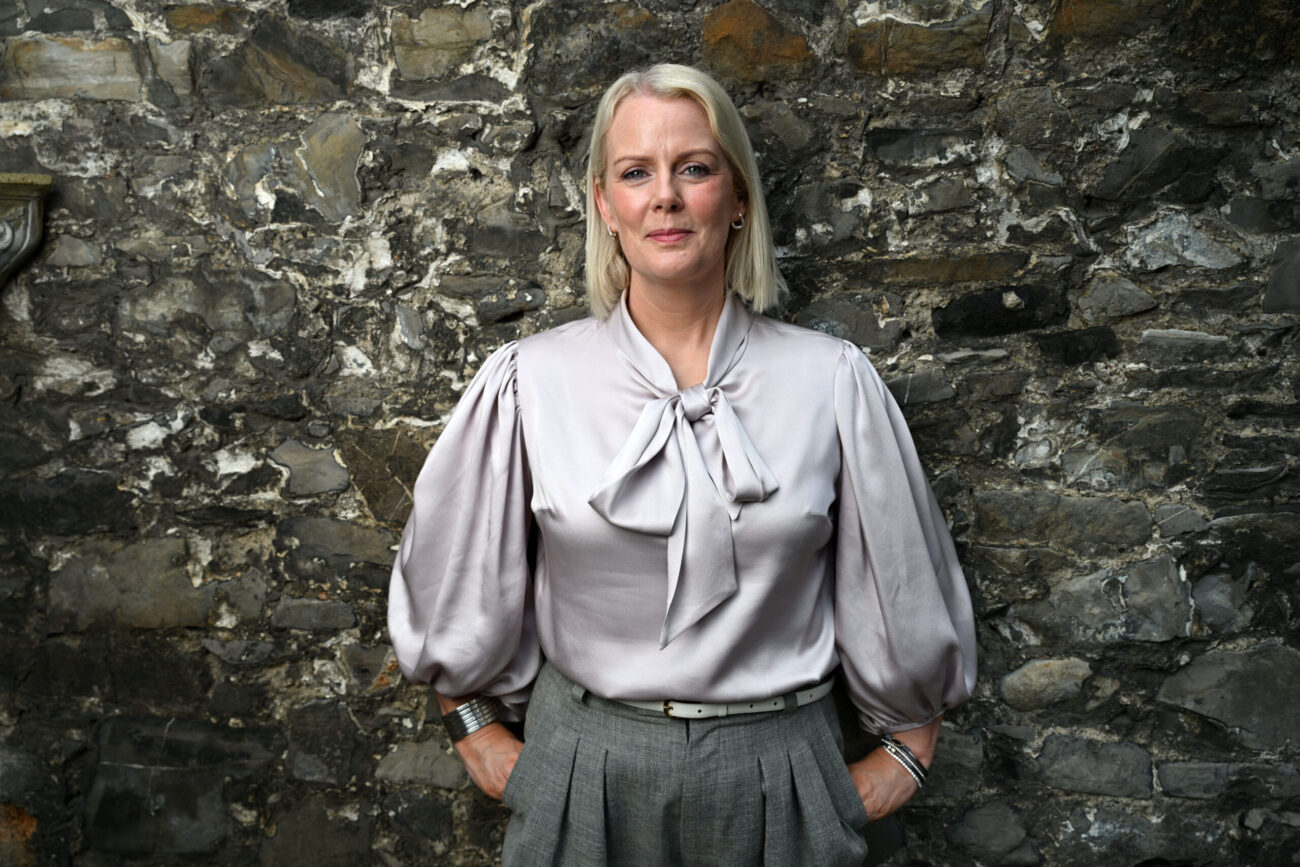
When Sinéad Mahon looks back on her career in financial services, she is careful about one thing.
She did not have a banking career, she says. She had a career in banks.
It took her from PwC into KBC, Ulster Bank, and Danske Bank, where she became CFO, and then into senior operating roles at Barclays and Credit Suisse. She was also head of investment banking at Goodbody.
“I was an accountant who found my way into banking,” she says.
Now she is doing something different.
Mahon has built a portfolio of independent non-executive roles across financial services and beyond. She currently sits on five boards and is a member of the Institute of Directors (IoD) Ireland.
The transition was not, she says, a decision to simply stop being an executive and become an independent non-executive director (INED).
It had been building for years.
Variety before the boardroom
Mahon says she had been thinking about doing something different long before she decided she wanted to leave executive life.
That meant taking on different responsibilities and moving into situations where there was no obvious answer.
As she puts it: “Picking up different tasks, or stepping into places where the known way, the known solutions did not exist.”
The financial crisis was a particularly important experience.
“Organisations just needed people who could stay calm and keep their back straight,” she says.
By then, she had become accustomed to moving between different parts of organisations and solving problems that did not necessarily belong neatly to her job title.
At KBC, where she started as a group accountant, she took on procurement, the canteen, and other operational responsibilities to lessen her manager’s load and provide variety in her day.
“I wouldn’t be afraid, if there’s something that needs a solution, to say, ‘I’ll have a go at that,’” Mahon says.
Financial services was also an industry in which the rules were changing quickly.
“No one had all of the answers at that time,” she says, adding that she was comfortable with that. “I was quite comfortable figuring it out while we were doing it.”
The decision to make the move
The final push towards the INED career came later.
Mahon moved into an organisation where she struggled with the strategy she had been asked to deliver. Rather than simply leaving, she helped reshape the business.
“I helped that organisation to find their way to a deliverable strategy, to put the business on a better footing, and it more or less meant I did myself out of a job by doing that well,” she says.
She had been hired to grow the business, but concluded that it would be stronger if it were smaller and better shaped.
“I asked myself a question: ‘Do I want to get another executive job?’” she says.
The answer was no. Instead, she decided to give the INED route two years.
“Within the first quarter, I had three roles, and I knew then it was going to be fine,” she says.
The important thing, though, is that she had already been preparing.
“If you’re a good professional, as you become more senior, you enable your organisation rather than try to do everything yourself,” she says, adding that makes the transition less dramatic than it might appear.
“INED is a step further, but it’s not a flick of a switch. You are constantly building towards it,” she says.
Building the toolkit
Mahon had been building experience outside her executive roles long before she made the jump.
Through her involvement with IoD Ireland, Mahon also invested in formal director development, including completing the Chartered Director programme, as part of a wider effort to build her governance mindset, confidence and network.
“I did it with an eye on the future career. But it was more than just that – it was to build a network and to start to prepare my mind for a different focus,” she says.
She also gained experience.
“So, I spent four and a half years on the board of a charity which was outside of my day job. I was on a state board before I made the decision to go full-time,” she says.
The board job does not stop when the meeting ends
One of the misconceptions about a portfolio career is that it means having more time.
Mahon says the reality is different.
“I am a fairly disciplined person. I used to get to work at seven o’clock, and the diary was owned by that organisation probably until 7pm, and everything was in one calendar.”
The way Mahon sees it, moving into portfolio work required a different kind of discipline.
“So, even for someone as organised as I am, it was a big step to put everything about my life in one diary,” she says.
She now has to accommodate board work, client work, preparation, and the unexpected: “That’s work too. So, I treat this as a career.”
She is clear about what that means.
“I’m not sitting around twiddling my thumbs waiting for the phone to ring. There are various things I want to research and prep – and you have to stay on top of things,” she says.
“This is where IoD Ireland membership delivers real value to directors, through events, resources and supports that help them stay informed, relevant and up to date.”
The number of boards can also be misleading.
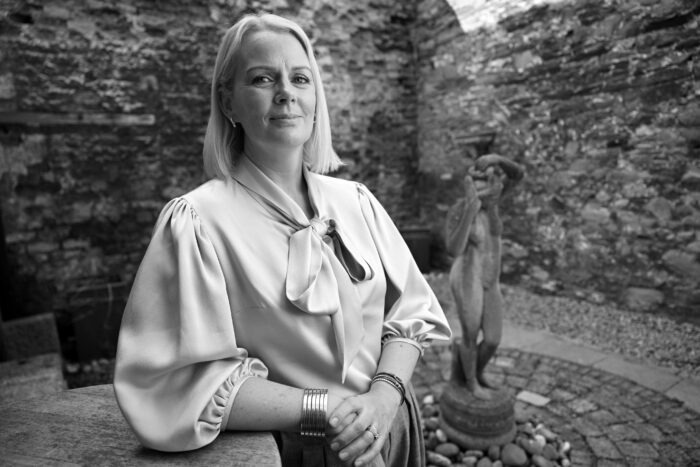
“On paper, being on five boards might seem like a series of quarterly or monthly meetings. That is not how it is at all. You’re constantly on the phone or calling to visit in person,” she says.
Her solution is to organise the week around it.
“So, for me, I’ve tried to corral it into certain parts of the day, probably quite busy three days a week, and I’ll do patchy bits on the other two days, and that allows a little bit of a buffer when organisations need more,” she says.
Nose in and fingers out
The relationship between the board and management is perhaps the biggest change for a former executive.
Mahon uses a simple analogy: “The theory here is always the analogy — nose in and fingers out for an INED.”
The board needs to understand what is happening. It needs to ask questions. It needs to challenge.
But it must not start running the business.
“So, I think being a good INED is about probing and asking questions,” she says. That requires a degree of self-control for someone who has spent years being accountable for delivering the answer.
“You’re coming from a place where you’re getting everything done, you’re delivering. There’s a degree of ego in that,” Mahon says.
Her response is to leave that ego at the door: “I’m not perfect – nobody’s perfect – what you’re trying to do now is leave the ego to the side.”
The best board members, she says, help management improve rather than catch them out.
“A really good INED is encouraging the management team to find answers themselves. Looking under the covers, maybe they haven’t had a chance to look at, but not using that to penalise them, to say, ‘How can we make this solution better?’” she says.
Finding the right fit
Mahon is now in a position to be selective about the boards she joins.
Some opportunities are rejected immediately if not the right fit for her skills or portfolio. Others involve considerable due diligence before she decides they are not right or to continue a process.
“I think I’ve a good sniff test,” she says, adding: “The chemistry needs to be right. I would like to think I’m a strong and capable and value-adding individual. But what I offer has to fit into the pie on the other side.”
Sometimes the organisation is wrong for the person. Sometimes the timing is wrong.
“I could be the right person, but it’s the wrong organisation, or the wrong time. It doesn’t mean there’s anything wrong with them or wrong with me. It’s just the fit isn’t right at this time,” she says.
She is thinking about the portfolio as a career rather than a collection of appointments.
“I want to build a 20-year career out of this chapter,” Mahon says, adding: “So, I need the right portfolio. And the portfolio that’s right for me now mightn’t be the right portfolio in 10 years’ time.”
She has even got a reminder above her desk.
“I have a vision board that helps me when the phone rings to think about what am I looking for next,” she says.
Diversity is more than gender
Mahon sees diversity in broad terms.
“I’m diverse in lots of ways, and gender is only one of them,” she says.
Her own experience has shaped that view.
“In my CFO days, I was 10 years younger than everyone else, which mattered a lot more than the fact I was the only female in that room of men,” she says.
Background matters too.
She grew up in Tullamore, Co Offaly, where she says she had very encouraging parents and was the first person in her direct family to go to university.
“Education gave me belief in my ability, a belief that I was as capable as anyone else,” she says.
Her experience at PwC was also formative.
“I’m always hugely complimentary of my time in a training firm, which for me happened to be PwC. Because I found it to be very flat. There are very layered structures, but actually there was a huge pool of people at the bottom, and background did not matter there,” according to Mahon.
“It was a real meritocracy. Nothing mattered except your ability to do the job, and how much people enjoyed working with you as part of a team, which made me start to think, ‘I have something here.’”
She learned that technical ability was only part of a career.
“It’s important from the very start of a career to focus on building an environment, a culture where people can enjoy the work together, have a bit of fun and be themselves. Everyone has a responsibility to contribute to that. I tried to make myself easy to work with, and I did a good job. So, it’s a combination of all of that.”
“You were coachable,” I say.
“I was coachable. And then I wasn’t afraid to give back by coaching, which I hope… I wasn’t just, as we said earlier, I wasn’t just taking, I was trying to give, and I could see that’s how a firm becomes its best.”
“I’ve been so fortunate, too, to have learned from great people across the industry, who have taken me under their wing and shown me the way, in both work and broader professional life. They gave me something to emulate and aspire to. So much of a career can be luck or timing, but travelling the road with good people helps too. We are all more than the face who shows up at work, we have busy and rich and sometimes complicated lives, and I have really valued the personal connection with great people who I’ve met over the last 30 years.”
The career starts long before the boardroom
Mahon regularly meets people who have begun preparing for an INED career through courses or exposure to boards.
“So, people may ask me for a coffee to say, ‘I’ve done the course with IoD or elsewhere, and I used to work in a certain team, and I reported to the board, I used to give a presentation to the board a couple of times a year.’”
That experience can be useful, she says, but it is not necessarily enough.
“That degree of experience might be right for certain organisations, but really to build a portfolio that you can monetise and add value, it is often the case that a track record of accountability in decision-making is needed. Companies are increasingly working on balancing that with the need to bring in directors with new skills reflecting our changing environment, but I have found that pointing to experience in the trenches has been vital in portfolio building.”
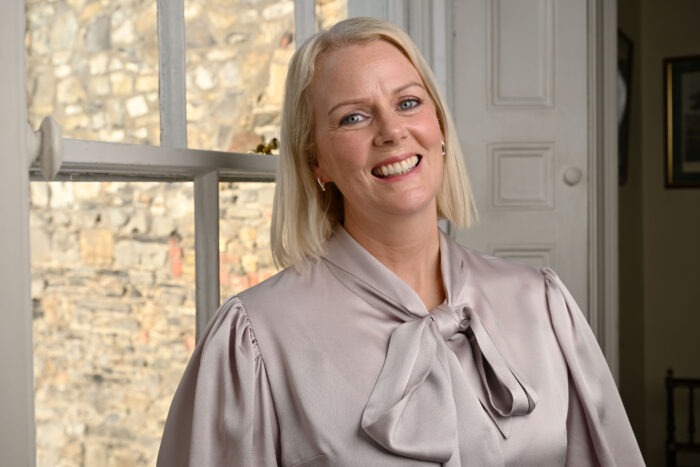
And the preparation is not something that begins when someone decides they are ready to leave executive life.
It begins much earlier.
“So, the first probably most honest piece of advice is you have to be happy that you’re really committed to it, because all of the early phone calls will be trying to entice you back to executive roles. So, it’s very hard to have a leg in both camps.”
The groundwork needs to be laid well in advance.
“So, I think all of the prep – having the training, building some experience, being a team player and thinking about your impact, starting to think about where you need to network – that starts 20 years before you actually do it,” she says.
According to Mahon, the path to the boardroom starts early.
“You have to be meaningfully committed because it won’t be easy at the start. Then you do all the preparation that you can. And then the third bit – to enjoy it is to be thoughtful about who you join, and that’ll start to build into something.”
For Mahon, the move to the boardroom was not a late-career pivot but the result of years spent building judgement, range and resilience.
Her advice to aspiring INEDs is clear: Prepare early, be honest about where you can add value, and choose boards where the fit is right. The boardroom may come later, but the work of becoming board-ready starts much earlier. “Joining networks like IoD Ireland can guide and support you in this,” Mahon says.
This is commercial content and has been produced in association with the Institute of Directors Ireland. For further information, click here.