Stories
To really understand Appleby Jewellers, there are two places you need to visit.
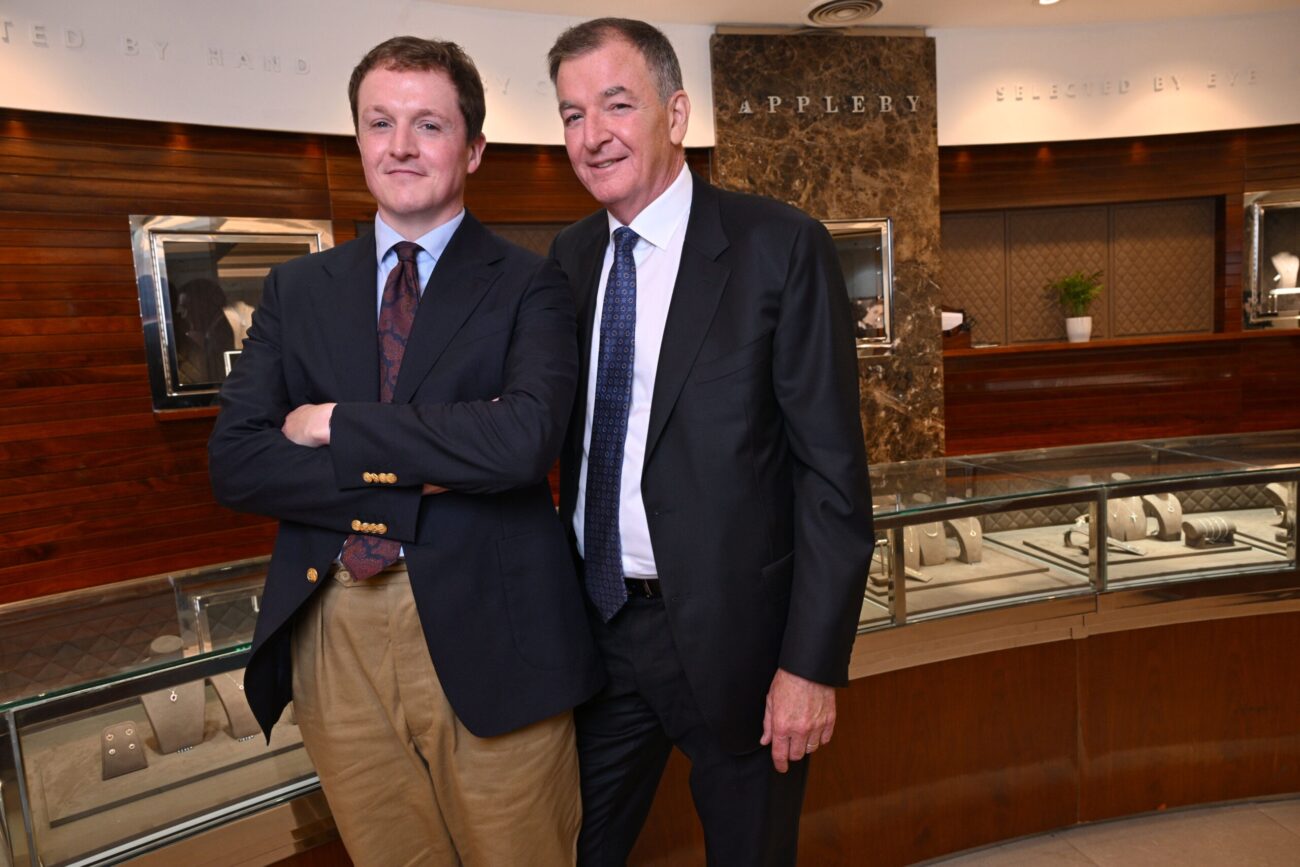
One is the shop itself, an immaculately laid-out premises on Johnson’s Court, just off Grafton Street in the heart of Dublin.
There are rows of counters displaying rings and jewellery, but this is not quite the conventional jewellery-shop experience. There are places to sit down. Coffee is served. Customers are welcomed in; they can take their time, try on jewellery and talk to staff.
As John and Nicholas Appleby, father and son and two of the nine members of the family actively involved in the business, tour me around the property, the pride is evident.
The shop has been at the centre of the family business since the early 1960s. But it is more than a retail space. It is part showroom, part hospitality venue.
At some point in the future, they acknowledge, Appleby will outgrow the physical limitations of the property.
For now, though, the building still works, Nicholas, a qualified gemmologist, says.
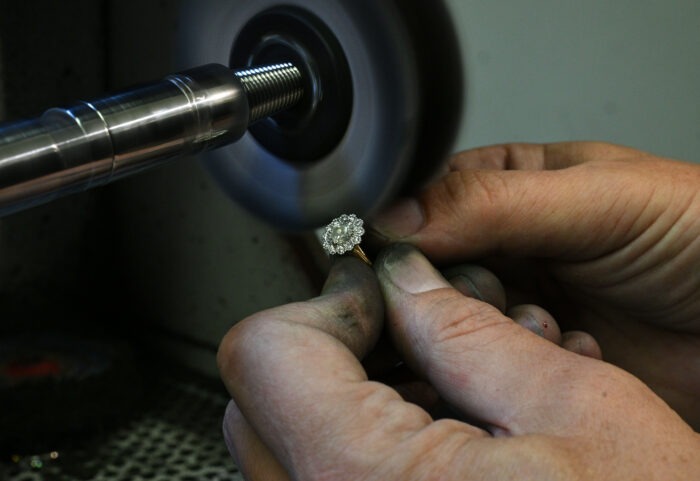
The second location is a nearby workshop, led by Declan McLoughlin, who started off as a messenger more than three decades ago and now, as a master goldsmith, oversees the production of the company’s stock. The workshop has all of the modern production tools – 3D printers, laser welders, and ultrasonic machines to clean diamonds.
But McLoughlin is adamant that the technology has not replaced handcrafting.
“You can have all the technology, but you still need the human touch,” McLoughlin says.
Beyond the two locations, however, you need to go back to the 1950s and a kitchen table in Drumcondra in north Dublin.
*****
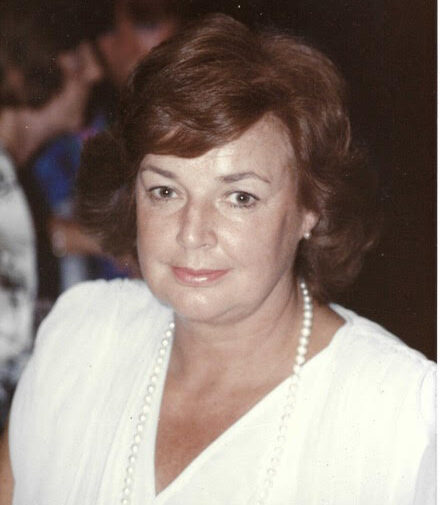
John Appleby’s mother, Peggy, was a Hungarian refugee who came to Ireland in 1946. His grandmother was Irish, having gone to Vienna to study the violin, before meeting an Austro-Hungarian industrialist and moving to Budapest. She was to eventually return to Ireland as a widow with nine children.
Peggy met John’s father at a swimming club dance in Greystones.
Then came an unlikely route into jewellery.
His mother offered English lessons to a German goldsmith and the two traded skills.
“She started working on jewellery at the kitchen table in Drumcondra in the mid-50s,” John says.
The family started selling pieces from the living room. Customers would arrive, and the older brothers would be sent upstairs. In the early 1960s, the family bought a shop, and in 1966 John’s father left the civil service to work in the business full-time.
His father then developed a distinctive marketing approach, using mailshots and affiliations with civil servants, gardaí, teachers, and nurses.
“When you think about it, how many retailers were engaging in this kind of marketing in 1960s Dublin? He was way ahead of his time. He also had an uncanny ability to make every customer feel like they were the most important person in his life. Which, I guess, at that moment, they probably were!”
Seven decades later, that shop remains at the heart of the business.
Now it is facing a different sort of opportunity.
Succession.
There are nine family members involved in the business. The brothers who have spent decades running it are getting older, while the generation coming through are cousins rather than siblings.
“It’s a little bit different for my generation than it would have been for dad’s generation. It has to be a little bit more businesslike, a little bit more respectful,” Nicholas says.
“I can’t turn around and say, ‘you’re a so-and-so’, and expect them to talk to me the next day. So, it has to be more collegiate.”
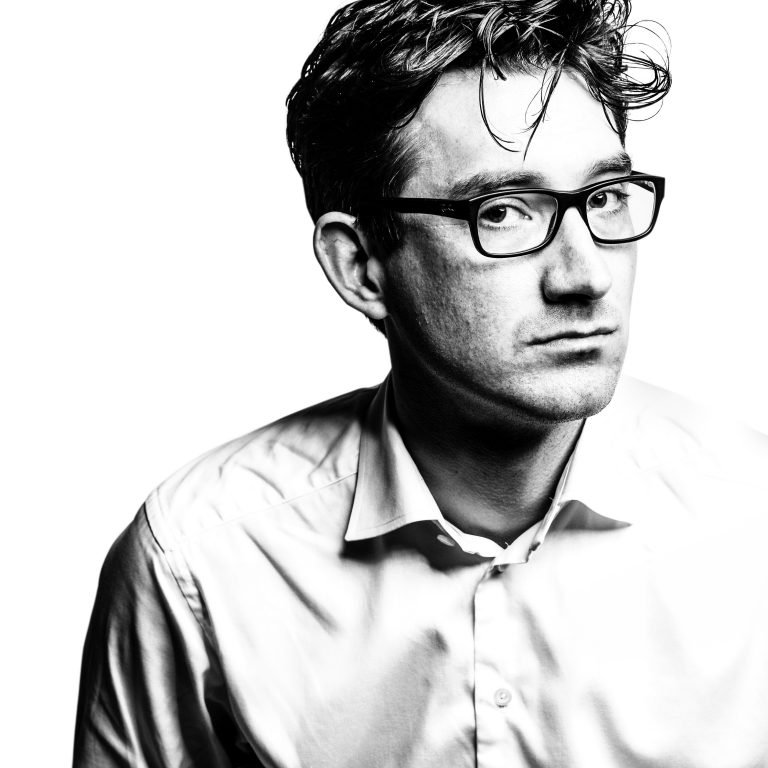
John is the family member tasked with helping make that transition work.
He spent more than 40 years in technology and, unlike his brothers, had no day-to-day involvement in the jewellery business.
“I have had nothing to do with the jewellery business. 40-plus years in technology,” he says, adding that his new role is akin to an executive chairman.
His current role is to bring some of that outside experience into a business that has historically operated on family knowledge and relationships.
“It’s a project-based role which is around succession planning. I bring in a lot of external expertise and more corporate experience,” he says.
He expected the project to take two years.
“It’s going to take three, probably,” he says.
Four brothers, four roles
John’s three brothers traditionally divided business roles between them.
Gerry, the eldest, is the gemmologist. Joe has been responsible for the building and customer experience, while Mark has worked on systems and IT.
Gerry’s standing in the jewellery world is considerable.
“Gerry would probably be one of the foremost gemmologists in the world and a deeply respected name in the industry,” Nicholas says.
“I’m always amazed when I travel with him to trade shows two or three times a year and the reverence that he’s shown when we’re going from booth to booth is incredible.”
The family now wants to put more structure around the business before the cousins inherit it.
“It makes it easier for my generation to carry it forward without losing what makes it special to begin with,” Nicholas says.
The way he sees it, Appleby’s appeal has always been about more than the jewellery.
“Warmth is super important to us,” Nicholas says.
John agrees: “While bringing in slightly more corporate elements, we still want to maintain that level of warmth.”
An anachronism that works
Appleby is an increasingly unusual retailer.
Around 90% of its stock is made in-house. Customers travel from across Ireland, increasingly make appointments and often arrive because something significant has happened in their lives.
“It’s an anachronism. It shouldn’t exist in 2026, because of what we do and how we do it. But it thrives because there’s a demand for it, partly because it shouldn’t exist,” John says.
Nicholas says that the workshop is the heart of the proposition.
“Craft is really the name of the game for us,” he says.
There are currently apprentices coming through, including John’s nephew John, and the company recruits from jewellery courses in Kilkenny and NCAD.
But qualifications only get someone so far.
Applicants with 15 or 20 years of experience can still be asked to prove themselves at the bench.
“They will all have to sit down and do a bench test,” John says.
Nicholas sees the work as comparable with the ateliers of international luxury houses.
“What you saw in the workshop there is really no different to what you might see in the atelier of Cartier or Van Cleef & Arpels,” he says.
A destination shop
Appleby has experimented with other locations, including Arnotts and the Powerscourt Centre, while the workshop was once based on Aungier Street.
The family eventually consolidated back around the Johnson’s Court operation.
“Look, this is what we’re good at. Let’s just do this,” John says.
The building is now approaching its limits.
“It feels like we’re getting pretty close to the ceiling,” Nicholas says.
But the customer base has moved beyond Dublin.
“Yesterday, you know, we sold however many amount of rings but I don’t think a single one of them was from Dublin,” Nicholas says.
Ireland is small enough for customers to travel, he says: “It’s a destination.”
That makes passing trade less important than it once was.
“Everybody who comes in here in the front door, rings the bell, is ringing our doorbell because something amazing has just happened in their lives,” John says.
It might be an engagement, a birthday, or a 21st.
“And those life events will continue to be celebrated, irrespective of what’s happening in the economy,” he says.
The company therefore spends considerable time thinking about hospitality.
“If we have an appointment for a customer, for example, trying to establish what the occasion is,” John says – then it can do something to recognise it: “It’s not a hard thing to do. It’s not an expensive thing to do, and it feels good, so why wouldn’t you do it?”
Diamonds and the cost of being different
The company is constantly buying stones.
“I have been told that we’re the biggest importer of diamonds in Ireland. We’re just one shop,” Nicholas says. “There’s a constant stream of diamonds into this shop from sources around the globe.”
Appleby buys GIA-certified diamonds and concentrates heavily on quality.
The diamond market fluctuates, but Nicholas believes the highest-quality stones are better protected because rarity matters.
“There’s no substitute for rarity when it comes to value,” he says.
The business is also exposed to gold, platinum and silver prices.
We’re very much at the mercy of markets in terms of gold and currencies,” Nicholas says. “It’s been pretty turbulent lately.”
The values of the business are simple, John says. “Our values are, we care more, dignity, and respect.”
They apply to staff, suppliers and customers.
“That’s something we demand from our staff, we have to give to our staff, we demand from our suppliers, and sometimes we even have to fire a customer.”
The values are measured too.
“We’re never going to let someone go because they didn’t sell something,” John says. “We’ll let them go if they don’t live up to the values that make us a special place to work.”
Building a business for the next generation
The business is currently trading strongly.
“Double-digit growth now for the last few years. It’s been great,” Nicholas says.
There are bigger ambitions.
“I don’t know if I necessarily want to put them out there, but there are some big, hairy, audacious goals,” he adds, arguing that the challenge is making sure the company can pursue them without losing what makes it distinctive.
The business is trading strongly, and the ambitions are getting bigger.
“Growth has been strong and the business is trading well,” John says. “We have bigger ambitions and will continue to focus on our aggressive goals.”
For a family business preparing for its next generation, that means putting clear responsibilities around those ambitions.
“Everyone is accountable, and every family member is there because they have earned the right to be in their dedicated position,” John says. “Responsibilities are shared, and clear lines of accountability are crucial.”
It is a different way of thinking about a business that began around a kitchen table in Drumcondra. But the aim is straightforward: to give the next generation the structure to grow Appleby without losing what made it special in the first place.
This is commercial content and has been produced in association with Appleby Jewellers.

