Stories

Ronan O’Gara has spent most of his adult life in high-performance environments.
There were the Munster and Ireland dressing rooms, the British & Irish Lions, the move into coaching, first in France, then New Zealand, France and now at La Rochelle, where he has built a reputation as one of the more interesting, and interested, coaches in world rugby.
Feargal O’Rourke has travelled a different route. The former PwC managing partner spent decades in professional services before becoming chair of IDA Ireland.
Put the two together, and there is an obvious temptation to produce the usual list of sporting lessons for business, and business lessons for sport. After all, the dressing room has long been interested in the nuances of the boardroom, and vice versa.
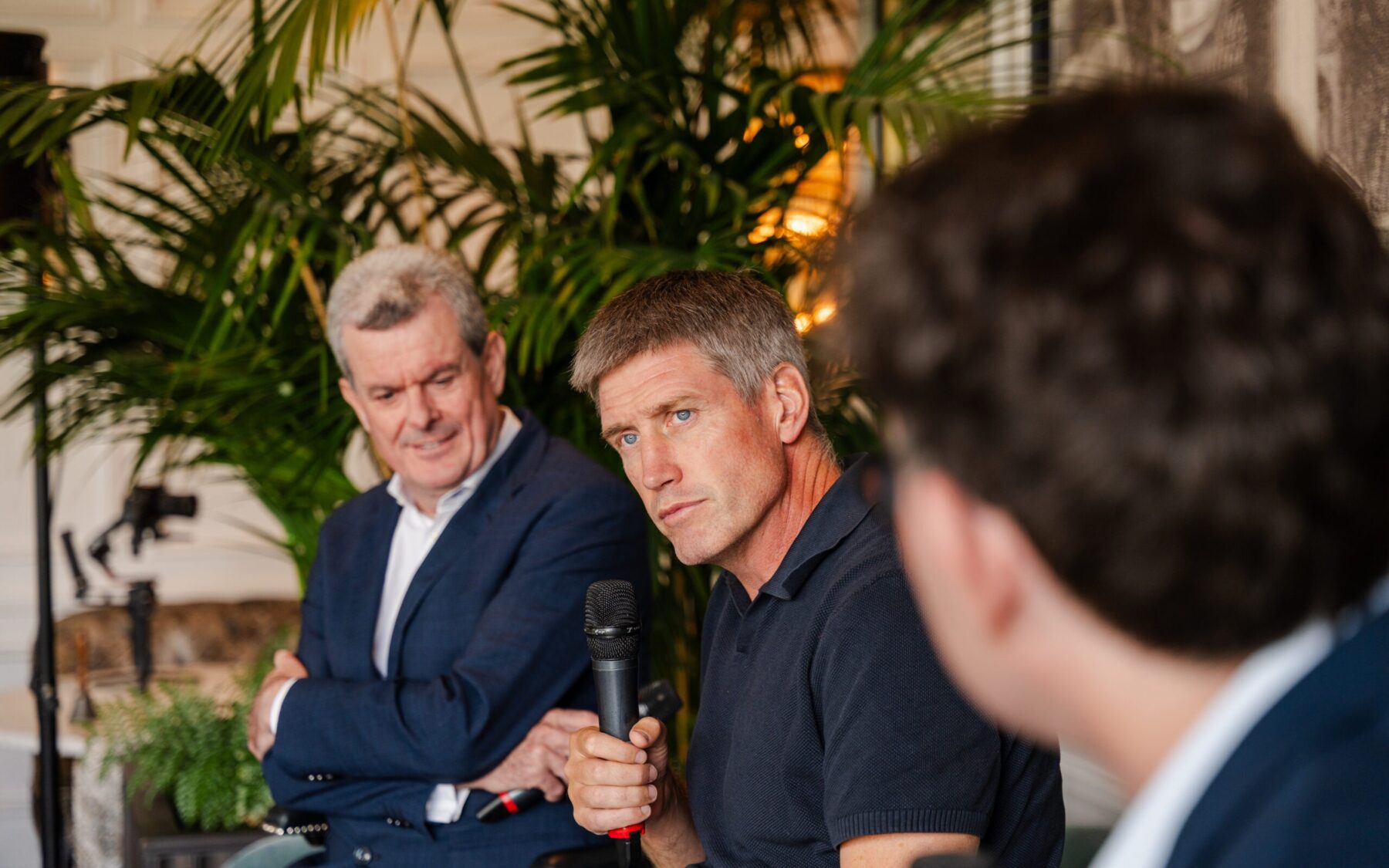
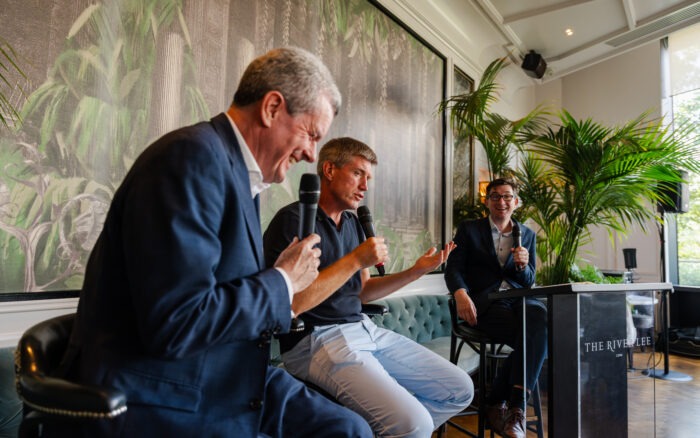
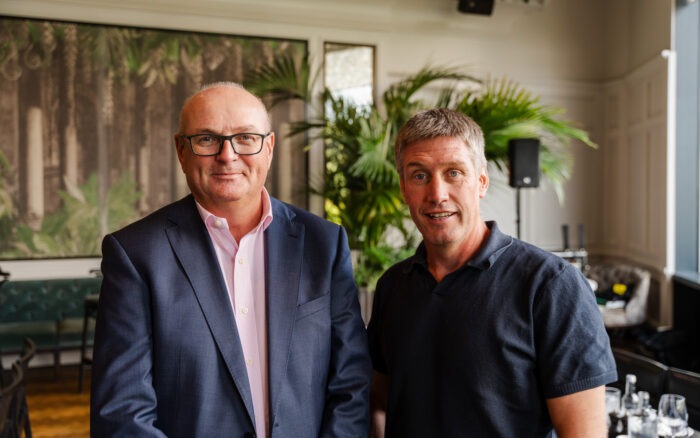
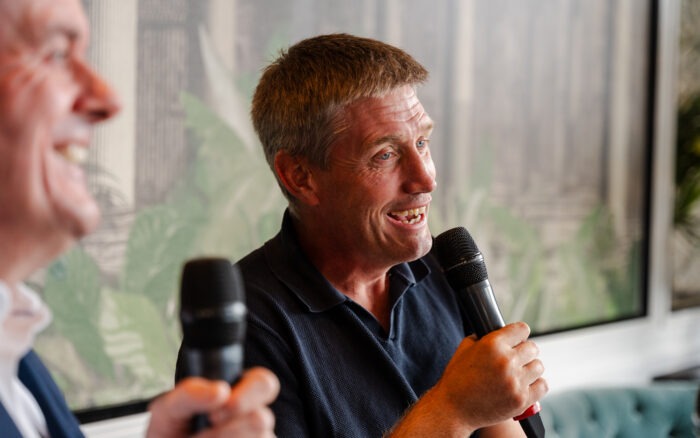
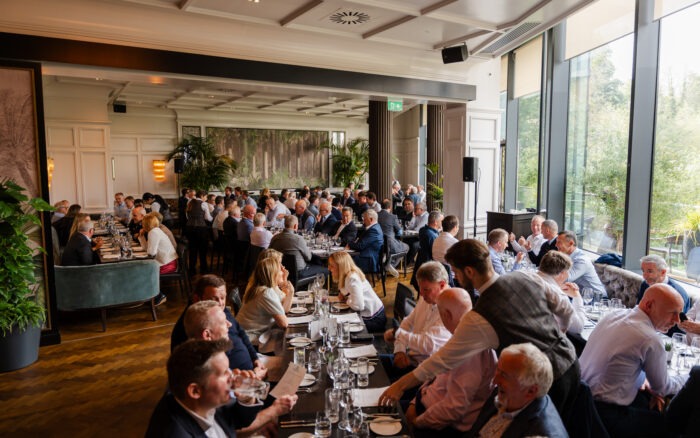
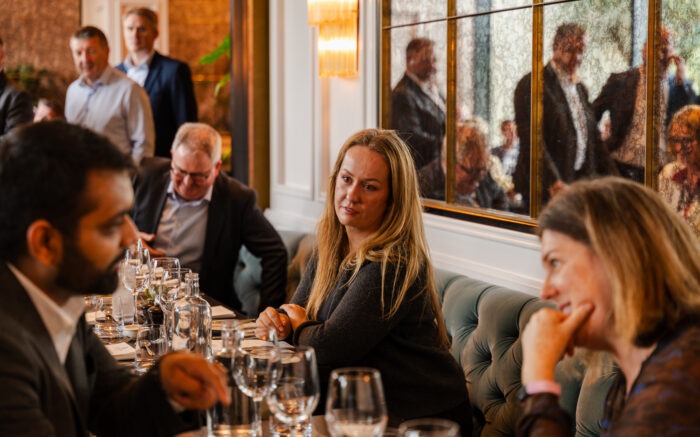
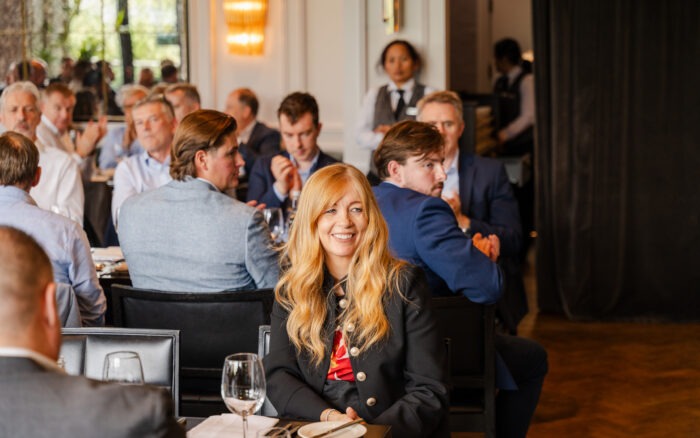
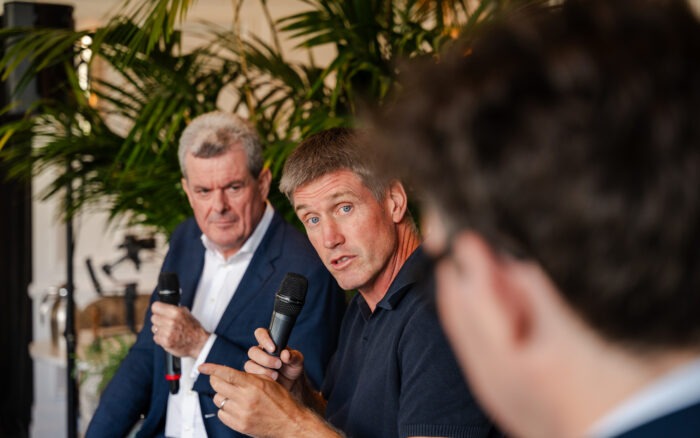
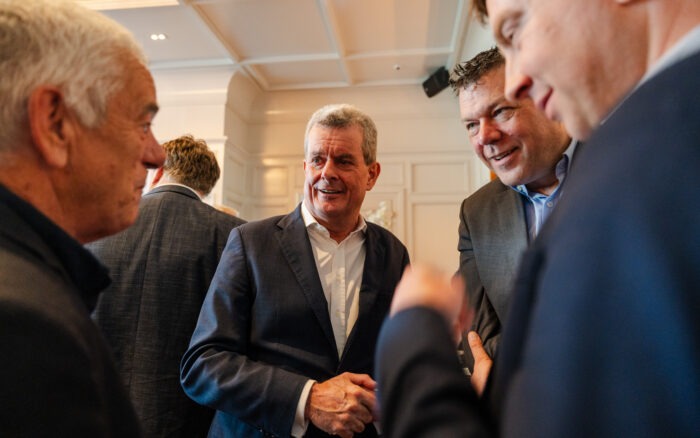
But their conversation, when we put the two together at a Cork event organised by the specialist business lender Capitalflow, was more interesting than that, and went far beyond what business can learn from sport and what sport can learn from business.
O’Gara is not particularly interested in leadership as a theory. His answers tend to come back to people, pressure, preparation and the realities of getting 40-odd individuals to move in the same direction.
O’Rourke provides the business translation. He has spent a career watching people move between organisations, generations and cultures, and his observations often reinforce what O’Gara has learned in rugby.
These were 10 of the lessons we learned at the Capitalflow event:
1. Getting more from other people
O’Rourke has a deceptively simple description of what a leader is there to do: “A big part of the job is to bring the best out of everybody else.”
He went on to explain why that matters in an organisation.
“When I was running PwC, there were times when I thought I could be more efficient if there were two more hours in every day,” he said. “Actually, you’re much more efficient if you can get that extra three or four or five per cent out of everybody – whether it’s in sport or in business. That’s what good leadership is about – getting more out of the people around you and doing a bit of leading by example yourself.”
For O’Gara, the job of a coach is not to be the star of the show. It is to create the conditions in which the people around him can perform.
“I am convinced that all the great teams are made by the players. The challenge in sport is trying to get momentum and give your team momentum. As a coach, you want to try and steer the players in the right direction.”
For O’Gara, the temptation for coaches and managers is to overestimate their own importance.
“People sometimes make it way more complicated and think their coach is way more important than he actually is,” he said.
2. The people outside the spotlight may be the ones who win it for you
Ronan O’Gara spent years as number one, a guaranteed starter for Ireland and Munster at No 10. Then, he became number two, before eventually becoming number three. It was the period further down the pecking order that taught him most.
“The time when you’re number three, you learn the most. [You’re with] guys who wear bibs for Ireland and never get to sing the national anthem – and you see how little appreciated they are,” he said.
Then came the broader point: “If you want to be successful, your numbers 24 to 45 are the key men. And for me, these are the guys that will make you win trophies.”
O’Rourke saw the same lesson when looking at former sportspeople moving into business.
“So, I think ex-players bring more,” he said. “They may lack the technical knowledge in a particular or specific business area than somebody who’s been there for a decade, but they understand how teams work, they understand how to motivate people, they understand about culture, they understand about goals.”
3. You do not grow by staying comfortable
O’Gara has taken the less obvious route in his coaching career. “I think the easiest thing would have been to go into the Munster staff. But how are you going to get better if you do that? No one grows unless they get out of their comfort zone,” he said.
He has continued to apply that principle.
“I’m coaching in France in French, in a challenging environment, in the best league in the world, and I love it. For me, no matter what it is, you don’t grow unless you’re out of your comfort zone.”
4. Culture is not a slogan
O’Rourke brought the conversation back to one of the things he believes former sportspeople understand particularly well: culture.
“Culture is the one thing that drives a business – it decides and determines whether it’s going to be successful or not,” he said.
He linked that to one of Ireland’s less tangible competitive advantages.
“A lot of people say to me, ‘Why is Ireland so successful at attracting foreign direct investment into the country?’ And part of the reason is, we are great storytellers,” he said.
His point was that the Irish tendency to build relationships and look beyond the immediate task can have a practical commercial consequence.
“The French, or the Germans, will do A until A is run into the ground. The Irish guys are looking ahead at C and D and building those relationships, and telling the stories,” he said.
And, he argued, that matters when Ireland is competing for investment: “I think we underestimate that storytelling as part of our DNA in terms of getting inward investment.”
O’Gara had his own, slightly more Irish, explanation: “Irish people are very good after six o’clock.”
O’Gara’s time with the Crusaders in New Zealand appears to have changed his thinking about culture more than almost anything else.
He arrived with one idea of how a professional team should behave and left with another. The experience, he said, “turned me inside out”.
“I was a glass half empty [man] … I would tell you why something wouldn’t work – but I came back from there thinking, ‘This can work.’”
5. Listen before deciding
For all the talk of strong personalities and direct communication, one of the strongest messages from both men was the importance of listening.
O’Gara has learned this through managing players from different countries and cultures.
“I think when you understand their why, you’ve a starting point, but so many of us probably like to impose our why,” he said.
Then he made the point even more directly: “Listening is a great skill, I think people don’t listen enough and you can get so much wisdom from listening.”
He offered an example from La Rochelle, where he initially wanted two members of the medical staff gone. “And then after hearing their why, or their side of the story, you’re like, ‘Oh, that’s interesting…’”
O’Rourke sees the same thing in business.
“I always have a view that listening is a great skill,” he said. “People have hopes and dreams and aspirations and lives outside of the office.”
“And you need to tap into that, understand what those hopes and dreams and aspirations are. And if you create an environment and a culture that they feel accepted and that they feel comfortable in, they’ll do 200% of what you’re asking them to do.”
6. What you say is not necessarily what people hear
O’Gara is comfortable with direct communication. In professional sport, there is little time for elaborate management processes.
“In sport, things happen a lot quicker,” he said.
The consequence is that communication has to be sharper: “Your messaging has to be more direct and more pertinent and more on point.”
But being direct does not necessarily mean being clear. O’Gara said one of the most useful lessons he has brought into coaching is understanding that the message received may not be the one delivered.
“What you say may be completely different to what they hear,” he said.
That means checking. “You ask them to repeat at the end of the meeting what the outcome was.”
7. Direct does not have to mean destructive
There is a difference between being honest with people and simply unloading on them.
“The easiest thing in the world is to call someone out,” O’Gara said.
His question is what happens next: “You have to understand, why would you do that? And am I benefiting from this, to have five seconds of satisfaction, to ruin a relationship for six months, or is there something of benefit for everyone here?”
O’Rourke made a similar point from the business side, although he acknowledged that business is less brutal than sport.
“We’re not as good at direct messaging as in sport,” he said.
He recalled bringing Joe Schmidt into PwC and asking what would happen if someone missed a tackle.
Schmidt’s answer, O’Rourke said, was that he would show him the video, explain what was wrong and, if it happened again, tell him: “‘Well, you won’t be playing for me again’.”
“And everybody in the room went, ‘Oh Jesus…’”
8. Know what you’re good at
O’Gara is remarkably relaxed about what he cannot do.
“Other people are very good at things; I’m very average at a lot of things,” he said.
His advice is not to pretend otherwise: “Just get people in your staff that are better than you at lots of things, for planning, or for the weekly schedule. I’m good at WhatsApp, but I can’t do computers.”
O’Rourke recognised the principle from his own time as managing partner of PwC.
“There were things I loved doing, and there were things I was average at doing. You get good people. I had a brilliant COO,” he said.
For O’Rourke, that self-awareness tends to come with experience.
“I think as you get older, you become much more self-aware, you know what you’re good at, you know what you’re not good at, you don’t really need anybody telling you what you are.”
The trick, he said, is straightforward.
9. Pressure is a skill
O’Gara knows more than most about pressure.
He knows what it feels like to have a kick in front of you that can define a game. He also knows what it’s like to miss in big moments.
His answer is not to try to eliminate pressure.
O’Gara also believes preparation provides the confidence to live with uncertainty: “Once you can do that, you can sleep. Once you sleep, you’ve peace of mind. Once you’ve peace of mind, you just want to try and stay healthy. Once you stay healthy, you can stay in the fight.”
10. Handing over the jersey
The final lesson came from O’Rourke, who found an unexpected connection between retirement from professional rugby and leaving PwC.
He had been managing partner and had spent 37 years at the firm. Then his successor took over.
He recalled a line from Paul O’Connell: “You have the jersey for a period of time and then you pass it onto somebody else.”
O’Rourke said he did not fully understand it until he retired.
“You’re part of the team, you’re leading the team and then you move on and somebody else takes your jersey.”
There is a temptation for leaders to remain attached to the organisation they once ran. O’Rourke deliberately resisted it.
“I said, ‘I’m not going to be that person.’ Once you hang up your boots, you hang up your boots and you move on to do something else.”
As Capitalflow celebrates 10 years in the Irish market, the specialist lender has now advanced approximately €2.7 billion nationwide, with Munster representing a significant part of that growth story. Munster has become an increasingly important market for Capitalflow, with lending in the region almost doubling over the past three years and the province now representing the company’s second-largest regional portfolio.The company has further strengthened its commitment to the region through the appointment of Stuart Curtin as Lending Director for Munster, providing a dedicated local presence to support businesses, brokers and property investors across the region. Alongside its established Asset Finance and Commercial Real Estate businesses, Capitalflow has continued to expand its proposition through Buy-to-Let lending and is exploring further new products as it targets significant growth in the Irish market over the coming years.
The Currency was the media partner for the Capitalflow event.

