Stories

What is the North Star? It’s an important question that Cillian Leonowicz asks any client and it is one being asked even more frequently in a rapidly changing and tumultuous world.
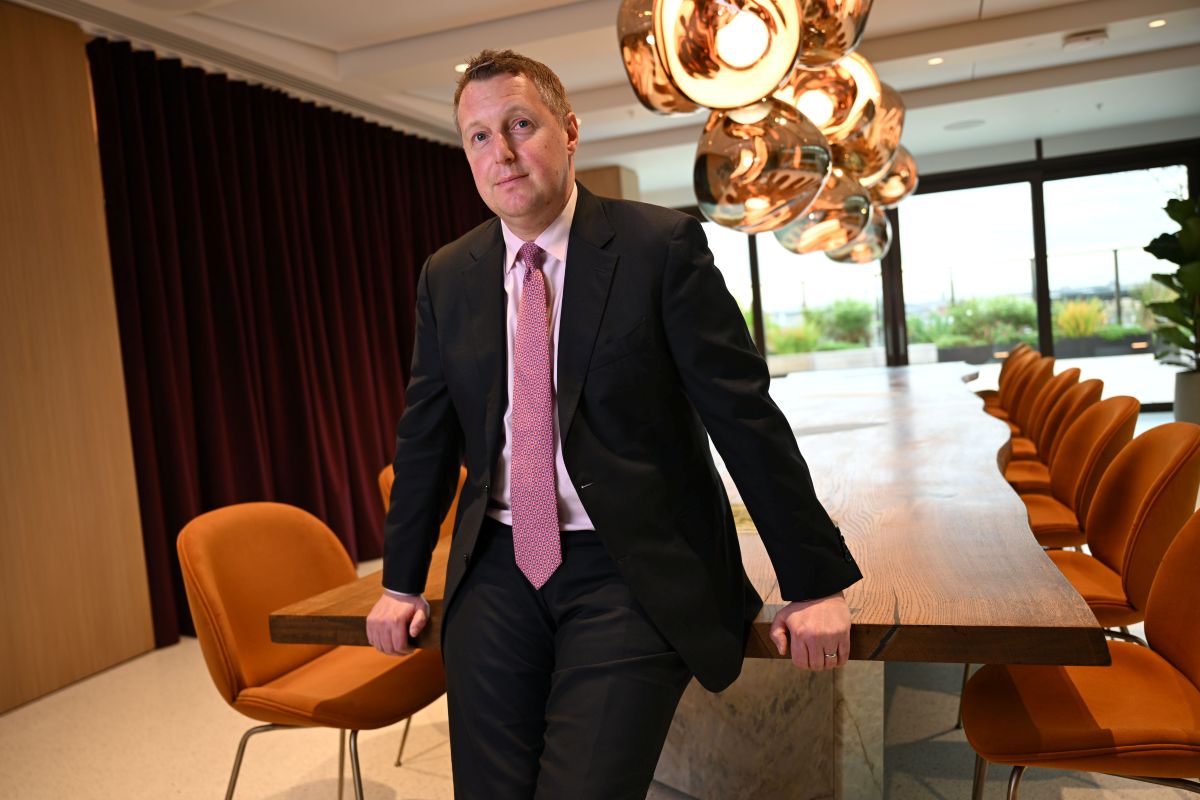
Leonowicz is a partner at EY Ireland and is heading up the launch of EY Studio+ in Ireland, where this question is key.
EY Studio+ was launched globally last year, bringing together several strands of EY’s consulting functions under one roof, including customer strategy, customer experience, brand, design, technology delivery, data, and AI.
Leonowicz said that Studio+ is about customer-led transformation and is built with three core pillars: customer experience, product and service innovation, and marketing, sales and service transformation.
“What’s the North Star? How do we put the North Star in place?” he said.
“I think that’s really important. A lot of organisations get overwhelmed, but if you can give them the North Star and then you can give them the journey to get there and the steps to help them through that change, I think that’s the most important thing.”
Studio+ creates an end-to-end integration of EY’s varying arms, Leonowicz said.
“What’s specific to Ireland is it’s the first kind of capability where we’ve added it all up together here in Ireland from our Customer and Customer Technology team perspective,” he explained.
“Traditionally, we would have had the different capabilities sitting in different areas of consulting, but now we’re bringing it all together under one roof, calling it Studio+, and we’re combining that with the global capability that we have with over 7,000 professionals.”
Business leaders, whether they are the CEO, CIO, CMO or COO, face significant pressure to keep up with rapid technological changes, namely AI, and ructions from geopolitics that have economic and supply chain costs.
These are not challenges unique to Ireland but the addition of the Ireland team to Studio+ means that the local team of 350 people in Ireland can draw from the knowledge base of EY’s international reach.
“What that gives us is an integrated Studio+ team, which is coming and working at it from the angles of strategy right through to technology delivery. It’s giving us an outcome-led focus, which is very much about increasing value both for customers and for the businesses that are serving those customers,” Leonowicz explained.
“If I was sitting here with a COO, a CMO or a CIO, I’d be saying that we’re designing for a changed world, changed on the basis of demographic change, on the basis of sustainability; it’s changed on the basis of AI, the huge changes in geopolitics.”
The rapid pace of AI transformations and geopolitical tensions, driven by tariffs and conflicts, have upended the way businesses think about their strategies.
Amid all of this, customers still have needs and they expect companies to be agile and responsive.
“What we’re trying to do is keep organisations relevant to specific customer cohorts so that they can develop more precise or personalised offerings which then help them to scale with their customers and to resonate more with their customers, because it’s important to be relevant in today’s market.”
Entrepreneurial mindset
When a business comes to Studio+ they will first meet a team from multiple disciplines.
“EY Ireland has had phenomenal growth over the last five to 10 years and as part of that, we’ve really instilled an entrepreneurial mindset within our organisation. We back that up with programmes like Entrepreneur of the Year, where the focus is very much on supporting the ecosystem in building new products, building new capabilities, building new solutions, and growing capability within the market.”
Through that engagement, clients feel like they’re talking entrepreneur to entrepreneur, with someone who understands their unique challenges and tailors strategies to meet those needs.
“They’ll feel that we are people who can help you grow your business but really add value for your customers and for your organisation in a very challenging world,” Leonowicz said.

Clients run the gamut, from the public sector to private enterprise. This includes public-sector organisations providing critical national services every day and innovative businesses building globally recognised brands.
For businesses, thinking global is a key consideration. This is where Studio+ and EY’s mix of local Irish expertise and international reach comes into play.
“We can bring them the local Irish view, but when we combine that with the 7,000 people we have across the world if they’re going into China, or if they’re going into Singapore, if they’re going into the Americas markets,” Leonowicz explained.
“We can bring those teams together, so they have the full view and the capability and the confidence to say that EY can help them scale globally from Ireland with that network of experts and the capability around them that they need to be successful in the new markets they want to go into and with that new customer base that they want to go to.”
These may be indigenous Irish companies or the Irish arms of international organisations. For the latter, the Irish office can often serve as the base of operations for the EMEA market.
“If they’re looking to expand, for example, into Germany, we would have the full understanding of the demographics in the market in Germany, the understanding of what’s required to be successful there. We’d do that by linking ourselves with our German colleagues and we work with them to be able to develop what’s going to be the proposition for success.”
Developing a strategy is one thing, implementing it is another. Often this means developing and defining products and services that they need to be successful in that market.
“Ultimately, we can make any changes in the technology that they need to be able to implement that and service that.”
Game changers
This comes back to the three main pillars of EY Studio+. These pillars – customer experience; product and service innovation; and marketing, sales and service transformation – don’t exist in isolation either, and they all feed into one another.
Questions like “who are your customers” and “what are your products and services” are seemingly simple to answer today but tomorrow’s answer could be much more difficult to pin down.
“We can back that up with some of our deeper technology capabilities in terms of data and AI, so we can actually start looking at, ‘Here’s your service. Here’s your product, or here’s your brand campaign or your marketing campaign. Here are your clients over here. How are they interacting and how are they actually responding to these things?”
The data and AI can identify cross-sell opportunities by mining the existing pool of customers to see what new products and services can be developed.
“We start getting into personalisation, or hyper-personalisation. We can actually start defining, developing, managing new products, new capabilities, or new campaigns for your clients on the basis of everything we know in the system, and from external data sets, at that point in time. How do we refine it and fine-tune it?”
This is how customer expectations evolve into the second pillar of product innovation, generating a feedback loop of data and experiences to act on.
“Through that life cycle, you can start looking at interventions you might want to have with the customer over time, because you’re starting to see the signals and the signs within their buying habits and within their patterns of behaviour to be able to start making interventions with them,” Leonowicz said.
That evolution continues into the third pillar of marketing and expanding on how products and services are spread.
“It could be simple things like being able to push the right relationship manager to them at that point in time, depending on the signals,” Leonowicz said. “Where it gets really clever is actually within the life cycle of the customer servicing, you can start interjecting based on sentiment.”
This is one of the major uses of AI that EY has developed for clients, around the whole area of sentiment analysis to better understand how clients interact with their customers.
“For example, when a customer is interacting with a call centre, they can start seeing the sentiment in the voice. It can tell you whether the person’s getting angrier, whether they’re getting happier, and then you can start using keywords to start pushing to try to defuse situations or ramp up as needed.”
This type of sentiment analysis is all the more important, Leonowicz added, in a world of shifting demographics and dynamics. What a millennial expects is very different from what a Gen Z customer or a baby boomer expects.
These dynamics are further challenged by the geopolitical element that has changed the way we buy and consume products and services.
“The third then is sustainability. We see, particularly with some of the younger cohorts, there is such a large focus on sustainability in terms of what they’re buying and what they’re consuming, compared to a baby boomer, as an example.”
The big looming question over all of that is AI, which has “changed the game”.
“With all these different things that are in place, it’s about how can we influence and interact along that customer life cycle to be able to say, ‘This is how we can redevelop or refine products and services to meet the needs of the future’,” Leonowicz said.
“We do it with that entrepreneurial, value-based, outcomes focus, which really sets us apart, I would say, in terms of being able to really sit down with the CIO or COO or a chief customer officer, a chief marketing officer.”
Ready for the journey
Studio+ is not a one-size-fits-all approach for companies, rather it is a tailored experience for the distinctive challenges and opportunities faced by each business.
The first interaction with a business that comes to EY Studio+ is a frank one.
“It’s a very honest conversation, which is to say, is there a future in this business and are you relevant to your customers? Are there things in your business today where you need to think about stopping that behaviour, or stopping that product, or stopping that service, because it’s simply not going to be relevant into the future?”
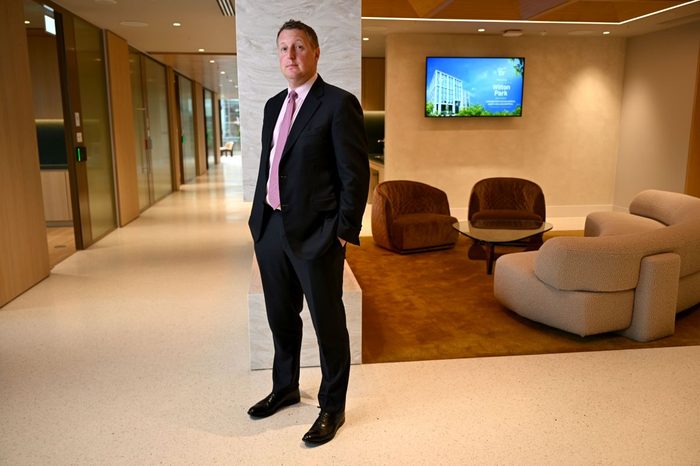
The other question is, is the company itself ready for this journey?
“It’s about how do we help them through the change management? If they don’t have the appropriate change management, you can have all the products, services in the world, but if they don’t change as an organisation, their fundamental behaviours, they’re going to be in big trouble,” he said.
“I think where we do it very well with AI and with technologies, but particularly AI, is we’re very much focused on rolling up the sleeves to deliver working technology. That’s what we’re about.”
Businesses can get stuck in a phase of trying new technologies, running pilots and proofs-of-concept, without advancing and getting the true value of the tech.
“The real point is we want working code and technology, which is delivering measurable value. It goes back to that value piece. How do we know you are getting value out of this? We track and manage that.”
Fundamentally, companies need a foundation of reliable data to build any of these strategies to reach the North Star. Is the data reliable? Is it standardised?
“AI relies on data. The second thing it relies on is good pipework in terms of systems being connected, having the integrations that are needed. What I don’t always see is organisations who have that capability in place. So, I would say start with the foundations and the fundamentals.”
Leonowicz likens it to running. No one starts by running a marathon. You need to start with couch to 5K.
“You don’t go straight to running the Dublin marathon. I think organisations are realising that,” he said.
“This is phenomenal technology. It’s really amazing what it can do, but you just have to go on the journey with it. It’s like everything in life, you’ve got to take your time and you have got to understand the principles and the foundations and get that right before you can run.”
This article is partner content and has been produced in association with EY.

