Voices

There comes a point with any successful economic policy when the thing that once made you different starts to feel a little less different.
That is where Ireland finds itself with corporation tax.
The 12.5% rate was once a formidable competitive weapon. When Ireland adopted it, the gap with many competing economies was enormous. Since then, other countries have moved closer, while the international agreement on a 15% effective minimum rate has changed the rules of the game.
Ireland retains an advantage in the calculation of the profits subject to this rate, but the word “effective” in the globally agreed minimum sets limits on what any country can offer multinationals to minimise their tax base.
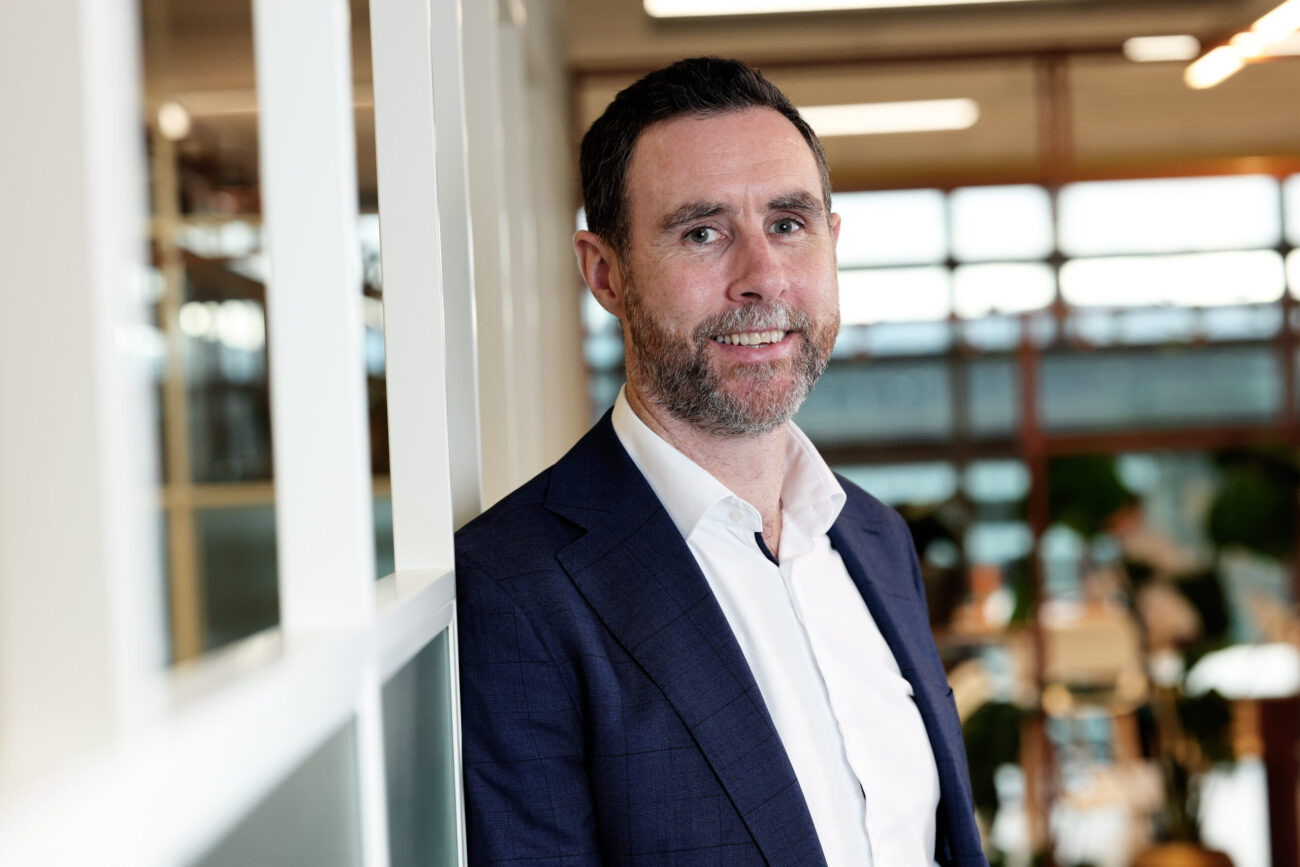
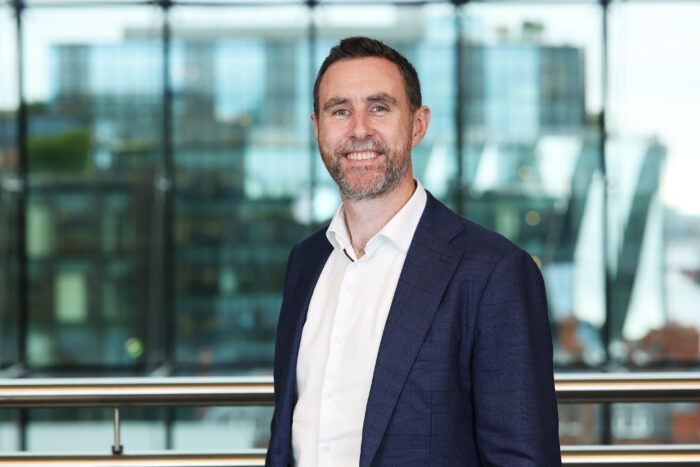
Peter Reilly, PwC’s tax policy lead, is under no illusions about what that means. Working with multinationals and indigenous firms, he sees on both hands what has been happening – and what he feels needs to happen next.
When I spoke to him last week in advance of the upcoming budget, he argued that Ireland is still attractive. It is, he says, still a small, open economy with a large multinational sector. But the tax differential is not what it once was.
“Are we still very attractive? I think we are. But is the level of differential as much? It’s just not,” he says.
It is a simple observation but one with profound implications – for Irish companies and the wider Irish economy.
For years, the Irish tax debate has been dominated by the question of whether the corporation tax rate should be protected. Reilly’s argument is that the more interesting question now is what Ireland does when the rate itself becomes less distinctive.
“You’re going to have to try harder for every euro of investment that you’re going to get, or for every euro of investment that you’re going to keep,” he says.
The way Reilly sees it, that means looking beyond tax.
Housing and infrastructure are obvious examples. If a multinational is deciding where to locate its next investment, it needs to know that its employees can actually live there.
“If you don’t have the right infrastructure, or if you have multinationals coming in and saying, ‘We think it’s going to be pretty hard to house our people in Dublin or wherever we’re going’, that’s difficult,” he says.
Reilly is not arguing that tax has stopped mattering. Quite the opposite. He thinks Ireland needs to get smarter about where it uses the tax system as a competitive lever.
R&D is one obvious example.
“We need to keep enhancing that, right, because R&D brings high value jobs,” he says.
PwC’s pre-budget submission proposes changes to the R&D regime, including greater flexibility around outsourcing, as well as a broader innovation incentive. The thinking is fairly straightforward: If Ireland wants the next generation of investment, it needs to compete for it.
“You’re always trying to focus on the next wave of investment, and it’s a competitive process,” Reilly says.
Multinational investment is not something that arrives in Ireland once and then stays permanently, he says. Instead, the PwC partner argues that companies are constantly deciding where the next project, factory, research programme, or expansion should happen.
The competitive question is therefore not simply: How do we keep what we have?
It is: How do we get what comes next?
In our conversation, there is another word Reilly uses repeatedly.
Simplification.
It is not the sexiest word in tax policy, but it may become more important as the headline rate becomes less of a differentiator.
Ireland’s tax system has become increasingly complicated, something even ministers have acknowledged. International reforms have added another layer to rules that were already difficult to navigate. Reilly points to interest deductibility as one example.
“Reform should mean simplification,” he says. That’s how you’re going to get companies going, ‘Well, I’m happy to invest in Ireland, because I know there’ll be a tax deduction for it, whereas, at the moment, it’s like, ‘I think I will,’ but there’s a lot to manage, you know?” he says.
Thomas will return to the issues of R&D tax credits and interest tax deductibility in the coming days.
As the budget approaches, there is a broader point here. If Ireland is going to be competing with other countries that are increasingly offering similar headline tax rates, being easier to deal with becomes part of the proposition.
Then there is the other side of the equation. Ireland’s economic model has spent decades getting very good at attracting companies from elsewhere. The next challenge is making sure Irish companies can grow here too.
When Reilly talks to entrepreneurs, he says one question comes up repeatedly. “Do I exit now, or do I try and build?”
“Would you prefer someone to sell at €300 million rather than €30 million?” he asks.
Reilly believes tax is part of the reason some owners may decide to take the money and leave rather than keep building.
PwC is proposing a reduction in the capital gains tax rate from 33% to 20% over a phased basis, alongside changes to entrepreneur relief and measures designed to encourage employee ownership.
Reilly is particularly interested in the question of what happens to companies when their founders want to step away.
He tells the story of a founder who wanted to structure an exit so that management would eventually own the business.
“It ended up costing him more money,” he says. “So you’re actively asking someone to sell to a third party, which is most likely going to be a third party outside the country.”
There is a bigger concern behind that. Ireland has produced successful indigenous companies, but it has also seen a number of them leave the stock market or move into foreign ownership.
“We need more companies growing up and becoming Irish Plcs,” Reilly says.
The way he sees it, it is not about getting the next multinational to choose Ireland over another country. It is about creating the conditions for an Irish company to choose Ireland as the place from which it grows.
So what would Reilly actually like to hear from the minister on budget day?
“I’d love a minister to go up and say, ‘Guys, we’re not done. We are open for business; we want to maintain what we have. We want the next wave of investment from an FDI perspective, and we want to continue to grow our homegrown brands, and our homegrown companies, and we want to be proud of the next Irish behemoth,’” he says.
Reilly wants Ireland to take some of the enormous corporation tax receipts it has generated and put them towards the next phase of competitiveness.
“We want real and meaningful reform, and this will be we are going to reinvest some of what we’ve gotten from an exchequer perspective, through corporate tax, and through those significant tax takes, we’re going to reinvest that into our reform,” he says.
That means thinking about tax in a longer timeframe than the next Budget.
“What is it that we value, what is it that we want in five, 10, 15, 20, 30 years?”
That is probably the most interesting question in the entire conversation.
Elsewhere last week…
As a new wave of activists target US military assets at Shannon Airport, Niall looked back at 25 years of protest, successive governments’ relationship with the US, and what the airport tells us about the debate over a neutral Ireland’s role in the transatlantic alliance.
Stripped of its assets by successive Venezuelan presidents Hugo Chávez and Nicolás Maduro, packaging giant Smurfit has spent years hunting down hundreds of millions in compensation from the Latin American country. Then Trump came along. Jonathan had the inside story.
RTÉ’s hit crime drama Kin faced an existential crisis for three years. Its renewal for a third season is an incredible achievement by those who refused to let it die, particularly when cast against the bizarre challenges that threatened its survival. Michael had the detail.