Voices

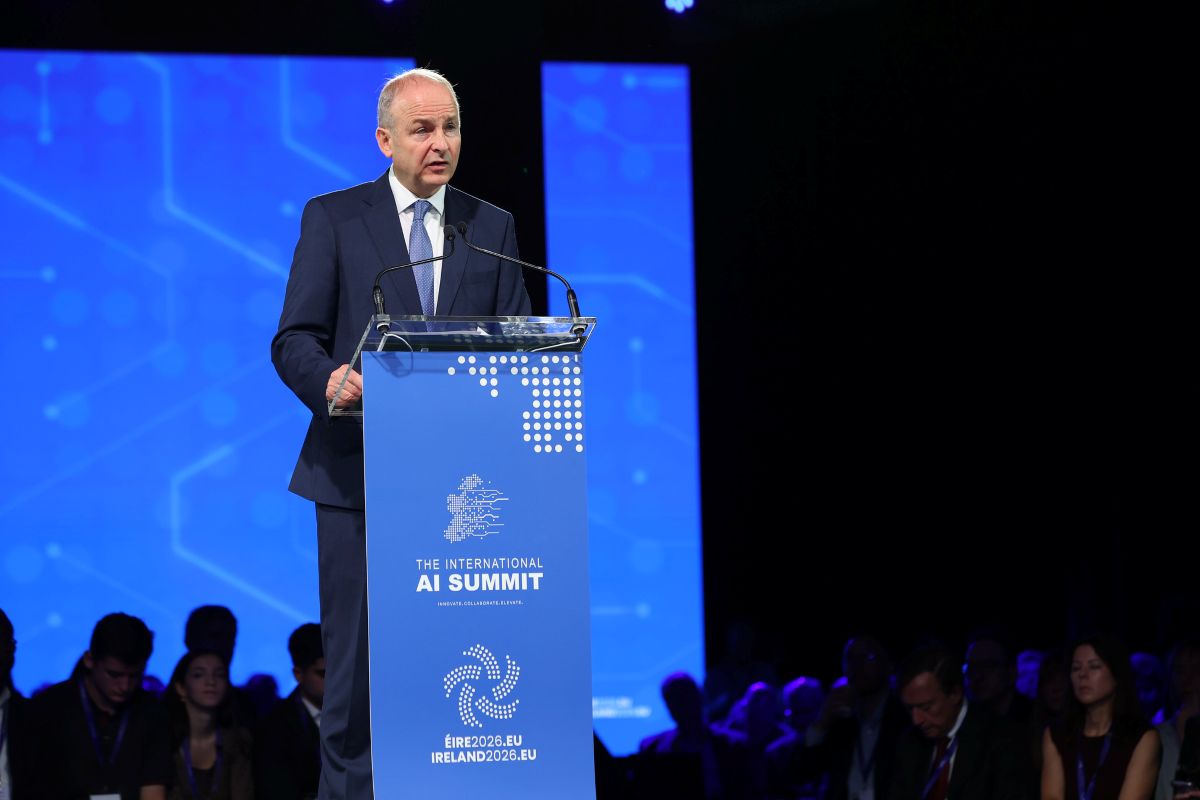
As I cycled to the RDS on Wednesday morning for the International AI Summit, I passed several government buildings and third-level institutions where public sector workers were on strike over pay.
The strike was the biggest story in Ireland this week and, for those organising the AI Summit as part of Ireland’s EU presidency, it must have felt like their thunder was stolen.
But the thought I had by the end of the day was, what exactly was the thunder supposed to be anyway?
On the surface, the AI Summit was impressive with its line-up of big-name speakers from the industry – from OpenAI to Anthropic and Google to Meta. Sure, it wasn’t like Sam Altman was there, but it’s still rare that so many of these executives are in the same building at the same time.
However, beyond the flashy veneer lay an awkward and still unanswered question – just what exactly was this summit for?
Roaming the exhibition hall, talking with executives, government officials and other journalists, it became clear that I was not the only person wondering this.
If you came to the AI Summit for compelling talks and lively debate, you were out of luck. As we reported on Friday, perhaps with the exception of some (sort of) blunt remarks by Microsoft’s Brad Smith, you would be hard-pressed to come away with a stirring thought or mission statement.
Demis Hassabis of Google DeepMind talked about creating an international standards authority for AI. European Commissioner Henna Virkkunen talked up the AI Act and sovereign tech in Europe. OpenAI CFO Sarah Friar addressed safety and cybersecurity.
Frankly, we’ve heard all this before. That Europe is behind, that Europe needs to build resilient sovereign tech, that Europe needs to lead on AI safety and innovation, that Europe needs its own champions. We know, we’ve all read the Draghi report (or at least pretend we have).
A few days later, the only answer to the question of the AI Summit’s thunder is that it was an advertisement of sorts or an effort to be seen to be doing something.
AI is an unavoidable topic. It actually would have been odd if Ireland’s presidency didn’t do some kind of event around it, given its pervasiveness as a political issue and the country’s deep reliance on tech-driven corporation tax receipts.
In the end, the event reinforced Ireland’s delicate balance as both loyal EU member state and friend of the US.
As I reported on Friday, there’s a big push at the European level for sovereign tech. Stripping away the Brussels-speak, that means preferring European-made tech in the public sector and in critical industries where sensitive data is kept within the bloc, and fostering a strong European tech sector so that we’re not so dependent on Amazon and Microsoft servers and LLMs by OpenAI and Anthropic.
It’s a nice thought but, as of right now, a utopian one. Inevitably, these proposals will be watered down in some way but the general direction of travel is clear: reduce reliance on US tech.
And yet, Ireland’s AI Summit for Europe – attended by three European Commissioners – was chock full of speakers and exhibits by the biggest American tech companies. And TikTok, too.
There was, of course, plenty of Irish and European representation. The week proved a pivotal one for Enterprise Ireland to show off its wares and launch Startup Ireland. John Collins analysed those initiatives in more detail on Thursday.
Whether intended or not, perhaps the biggest message from Ireland to the EU and its counterparts this week is that the entanglement with US tech runs extremely deep.
Building independent tech ecosystems in Europe is a noble idea and one that should be pursued for the betterment of Europeans in a world where the US is simply unreliable but any EU officials with bright-eyed ambitions about European tech sovereignty got a stark reminder in Dublin of how hard that’s going to be to achieve.
Elsewhere last week…
McCann FitzGerald marked 40 years of presence in London. The Irish law firm’s lead partner in the City, Hugh Beattie, told Francesca how its UK business has evolved over the decades – and what comes next.
A €63 million allocation was supposed to cover the cost of the Ryder Cup to the taxpayer. It turns out that “significant” security and transport costs were not included. Niall had the details.
Despite a judgment last June, ramifications of the bitter dispute between Tinakilly House’s co-owners came before Justice Eileen Roberts again on Monday. Alice was in the Commercial Court and went through the financial report presented to the judge.
After spending three days beside her teenage son on a hospital trolley, Ann channelled her frustration into a reflection on Ireland’s €29 billion health budget informed by her business experience: What happens when organisations become so focused on their processes that they lose sight of their purpose?
Finally, the Renatus M&A report for the third quarter of this year shows that while dealmaking has slowed down around the world, this is not the case in Ireland. It explains who is buying what type of company here, and why the picture is less positive in fundraising for early-stage businesses.