Voices
For the past few months, the Irish Government appeared to have lost its legendary ability to secure compromise. As international leaders packed their bags for the summits of the European Political Community and the European Council last week, there was the distinct prospect that they would arrive in Dublin amid strikes, protests, and a Garda work-to-rule crippling the largest operation in the force’s history.
By Wednesday morning, the clouds had cleared. A public sector pay deal had been agreed in the small hours. For good measure, solicitors and Minister for Justice Jim O’Callaghan had also settled on a new pay scale for criminal legal aid fees on Tuesday. Meanwhile, gardaí working on securing the summit stood down their industrial action in exchange for better overtime terms.
In the hours following the pay deal with public servants’ unions, Minister for Public Expenditure Jack Chambers said: “This is a similar-sized agreement to what Minister Donohoe would have agreed previously in my role.”
In percentage terms, this is correct. The new pay deal will deliver average pay increases of 10.75% over 33 months, equivalent to the 10.25% over two and a half years agreed in 2004. Just like the previous time, lower-paid workers are set to receive a comparatively larger boost. The comparison, however, ends here.
Applied to a growing, better-paid public sector, this agreement will cost €5.2 billion – over 40% more than its predecessor in absolute terms.
More significantly, the path to achieve compromise was far more tortuous. Then-minister Donohoe and trade unions had opened negotiations before the end of the 2021-2023 agreement and struck a deal within one month of its expiry date. By contrast, last week’s denouement came over four months late, after industrial action including a nationwide strike not seen since the financial crisis.
One month ago, Chambers had set the financial parameters for the agreement, describing the €1.2 billion allocated for pay increases in 2027 as a “starting point” and making it clear that a portion of Budget 2027’s contingency reserve was available to top it up, as long as the majority of this €1.6 billion reserve remained protected for unforeseen shocks. In the end, he took over €600 million from the reserve to seal the deal.
National embarrassment
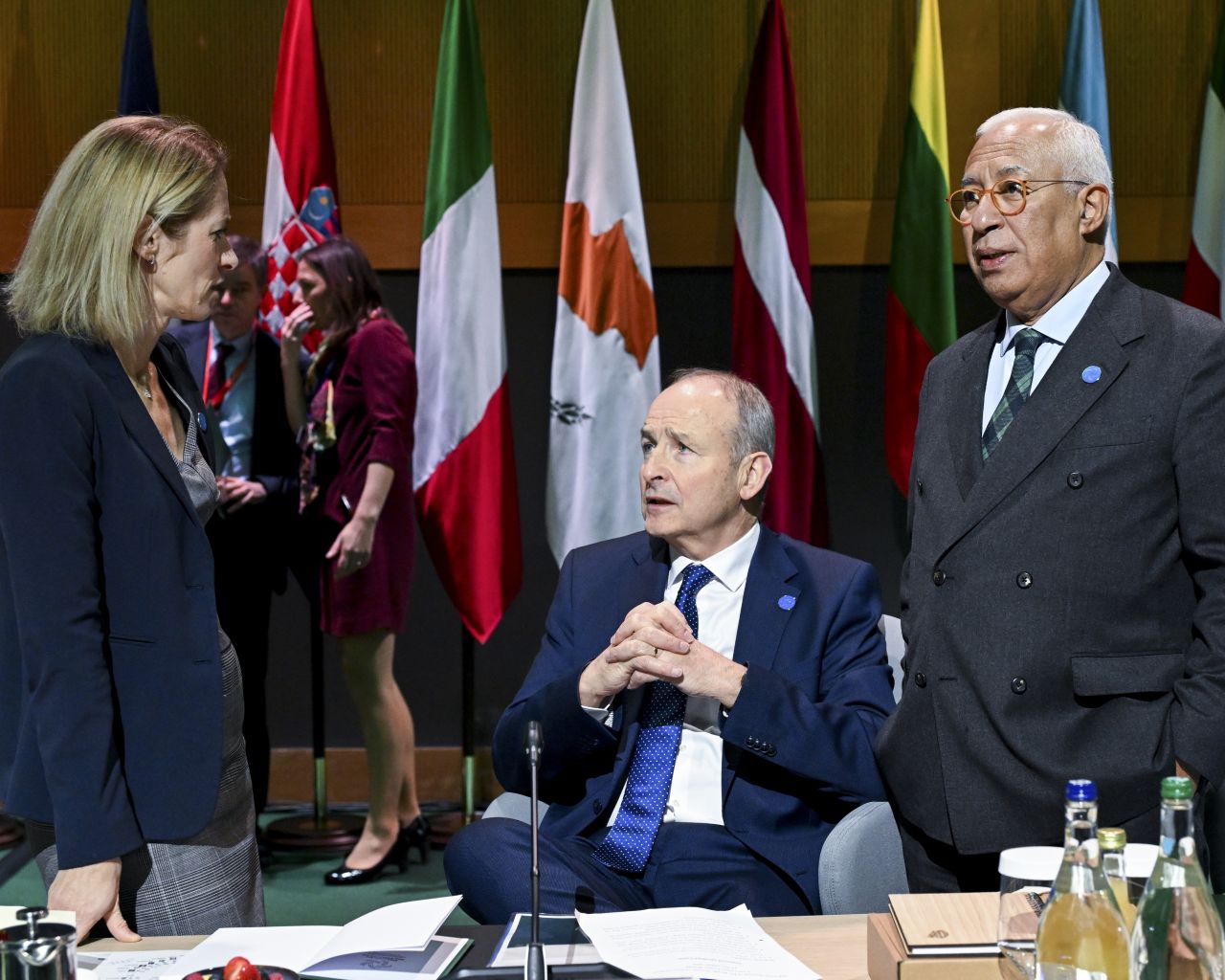
The unions appeared to have the Government over a barrel as the Dublin international summit approached but, in truth, this pressure applied to both sides. Neither really wanted to be responsible for the national embarrassment that would have been caused by heads of government including UK Labour leader Andy Burnham having to cross picket lines on their way into the Convention Centre.
If the end agreement was always going to be sealed before the summit, within budget lines, and largely resemble its previous iteration in a comparable context of high inflation and comfortable Exchequer revenue, this begs the question why a four-month stand-off was left to culminate in a day of missed hospital appointments and closed schools during the October 14 strike.
The acceleration of talks after Taoiseach Micheál Martin intervened publicly and appointed a mediation team led by Kevin Foley, the former chairman of the Labour Court, left the impression that Chambers had not been able to resolve the issue as part of his portfolio.
The same question applies to the parallel five-month period during which large numbers of criminal lawyers withdrew from the legal aid scheme. O’Callaghan’s decision to reduce all types of cases to a single flat fee was evidently inequitable and unworkable.
Despite this becoming clear early in the crisis, there were no audible counter-proposals from the Law Society, even as the most egregious cases handpicked by O’Callaghan showed that the existing scheme was open to abuse and needed reform amid rising costs.
The eventual solution – a tiered system of flat fees reflecting the variety of cases before the courts – was always going to be found. Why submit citizens to unnecessary delays and risk the fair administration of justice for victims and accused before coming to this conclusion?
The resolution of these disputes in the past week may signal that the Government and its negotiating partners have recovered the ability to compromise that has made Ireland an island of stability in an increasingly fragmented world. They mark an improvement compared to the ransom paid to fuel protesters in April.
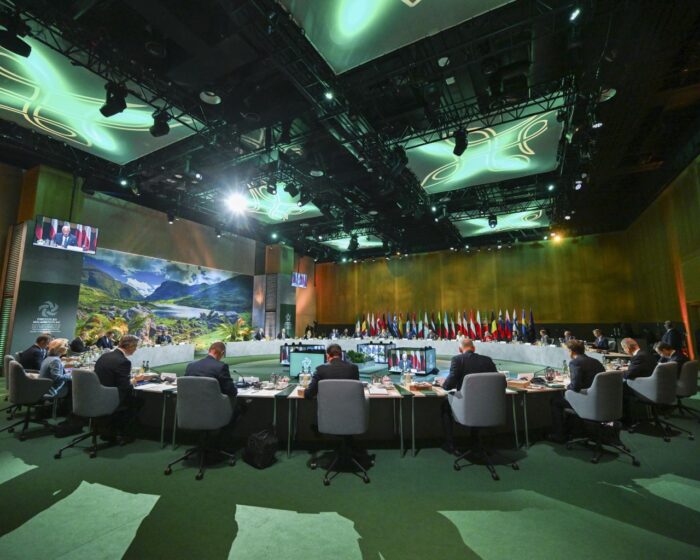
While there won’t be a European summit to focus the minds every time difficulties arise, last week’s international meetings highlighted the scale of much larger challenges in which Ireland currently enjoys outsized influence through its presidency of the EU. The rotating presidency may be a costly security nightmare, as Dan wrote on Thursday, but as long as it continues, it does put the country in charge in the spotlight.
World-class negotiating skills are required to address the lack of European unity in supporting Ukraine; move on the protracted talks at the COP31 conference in Turkey, where Minister for Climate Action Darragh O’Brien leads the key EU delegation; and agree the bloc’s next seven-year budget before elections across the continent make this prospect even more difficult in the coming months.
The EU’s budget, in particular, is on the agenda of a crunch ministerial Council meeting to be chaired by Minister of State for European Affairs Thomas Byrne on Thursday. Alice will be in Brussels to report on the €2 trillion fraught budget talks, where success will hinge on the groundwork laid by Martin with his counterparts in Dublin last week, before final decisions return to government leaders at the end of this month.
The previous Irish presidency, in 2013, is remembered for then-Taoiseach Enda Kenny and Tánaiste Eamon Gilmore’s ability to burn the midnight oil and break a similar deadlock on EU budget negotiations in time for the following seven years, as Europe was reeling from the consequences of the financial crisis.
For Europe’s sake, let’s hope Ireland has got its negotiating mojo back. It is as valuable an asset to this country’s standing as any FDI policy.
Elsewhere last week…
Monday’s agreement to take Ires Reit private for €731 million marks the end of the road for Ireland’s policy experiment with listed property investment firms. Michael revisited the 13 years since then-finance minister Michael Noonan brought Reits to this country, and Ian explored why the stock market didn’t value Ires at the level its promoters had hoped.
In Charleville, Co Cork, I visited one of the largest dairy processing factories in the Kinisla group. Now majority owned by the farmers’ co-op that started Kerry Group, and in the process of separating from the multinational taste and nutrition PLC, the domestic food business is investing €300 million to move up the value chain again. Its top executives told me how.
When the European Commission authorised a levy on excess profits made by energy companies in the wake of price hikes since the escalation of the war in Ukraine, it added a condition that proceeds should go towards supporting electricity consumers and emphasised that vulnerable households should be the priority.
Niall tracked the money to Ireland’s non-domestic microgeneration grant scheme, which subsidises solar panels, and found that its largest beneficiaries were profitable supermarket chains, meat processors, and luxury estates owned by Ireland’s wealthiest. Opposition politicians raised questions from his article with Taoiseach Micheál Martin in the Dáil on Tuesday.
Thanks to our partnership with The Wall Street Journal, we have tracked the developments surrounding the US national-security concerns that led to the resignation of Nvidia CEO Jensen Huang, including the implications of his family and political connections. The Currency‘s members also have access to the WSJ‘s full coverage of the scandal through their subscription.

