Stories

Is work what you thought it would be when you started? Or, to put it another way, does what’s ahead in your working life feel less predictable given the journey you’ve been on to date?
Irish Life’s Life100+ report very much has this changing face of what work is in mind. The conventional working life when most of us started was designed around a very different expectation of longevity.
For decades, really predating the foundation of the state, the basic pattern has been education, decades of work, and retirement.
Longevity has changed that dynamic, and that’s something that Barbara O’Malley, chief people officer at Irish Life, thinks about a lot in terms of the challenge it poses for employers.
“In lay terms, we’re all going to live longer in Ireland. If you look at the demographics, the population aged 65 and over is going to double over the next 30 years to 1.9 million. One in six people starting work today may live to 100, as may one in four babies being born today,” she said.
The obvious impact of this is that retirements will likely be longer so they’ll cost more. The real impact is far more complex than this and involves rethinking the way people work throughout their lives.
“We’re having to reframe our thinking from a life centred around 80 years to one that could last 100 years. All of our systems and structures, whether in life or work, have to be reimagined to take account of that. It’s a really important area of focus for employers,” said O’Malley.
From career ladders to career pathways
The career ladder as we know it is no longer fit for purpose. Conventionally, it has assumed continual upward progression. Greater seniority tends to bring greater responsibilities, with it heavier workloads, and increased management demands. Yet a working life potentially spanning more than 50 or 60 years challenges the sustainability of that arrangement.
“You might think this is a problem for tomorrow, but it’s very much a challenge for today. We already have colleagues across the group coming in and having conversations about extending their working lives beyond traditional retirement. What we don’t have as employers is a system that can accommodate that longer working life,” said O’Malley.
This is far from a hypothetical. The Life100+ research found that 38% of employees are seeking phased-retirement options, while 43% seek greater career flexibility.
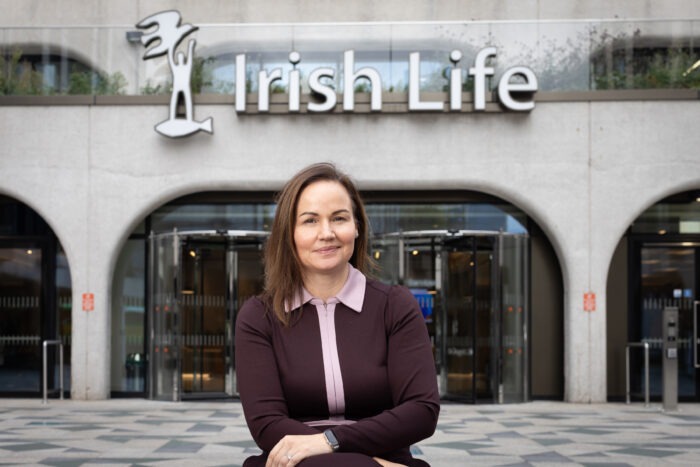
“If you’re going to be working for 50-plus years, you have to rethink what that looks like. The traditional view is that you have a career ladder and you keep climbing it. The intensity increases; you might get more responsibility, more workload or more people to manage. Is that progression sustainable over a 50-plus-year career? Probably not,” said O’Malley.
Different career pathways could replace the expectation of continuous progression, and employees may want to change direction several times across their careers.
“Organisations have to move from thinking about career ladders to career pathways, supporting people in a meaningful way throughout their lives and providing options,” said O’Malley.
“At the moment, you go up the ladder, there’s a cliff effect, and you retire. That’s not going to cut the mustard anymore in the context of living to 100.”
Working longer isn’t necessarily about money, and that’s an assumption that will prove difficult for employers to overcome. The reality is that financial necessity isn’t necessarily the primary motivation for people remaining in employment beyond conventional retirement age.
Staff might value workplace relationships, maintaining good health, and having a sense of purpose as they grow older. This changes the conversation from how long people must work to how work can remain meaningful.
“What I found interesting about the research was what people working beyond traditional retirement age actually want. Most people would assume that financial reasons would be the biggest consideration, but that’s not the case,” said O’Malley.
Wise employers recognise the social and psychological benefits of continued participation in the workforce. Financial considerations still matter, but they do not necessarily dominate individual decisions.
“They want a sense of purpose. They want to maintain their health and well-being. They like the people they work with, and they want to maintain that connection. Financial considerations are further down the list,” said O’Malley.
Making career changes part of the culture
Longevity also changes the definition of career success for many workers. It’s vital that employers recognise this and embrace it within the culture. A lateral move or taking a less senior role can still be seen as professional failure if the employer doesn’t create a culture where doing so is normal.
“I was previously the chief internal auditor for the group and, about five years ago, I started having conversations about moving into HR. To get the experience I needed, I had to take a step back in order to move forward. People were very shocked by that,” said O’Malley.
Career changes can require employees to sacrifice seniority temporarily to gain experience. Longer working lives create greater opportunities for multiple careers, but employers must recognise that progression will not always be linear.
“People couldn’t get their heads around it because we’ve been wedded to the idea of the career ladder for so long. Going up the ladder means you’re successful, while going backwards is seen as failure,” she said.
“Organisations have to normalise those moves from a cultural perspective and start celebrating those stories. If you’re going to have a longer working life, you might have multiple careers. You need to be able to change jobs, and that won’t always mean moving up the ladder. It can mean moving backwards, forwards or sideways to get the right experience and exposure.”
Naturally, this means a greater emphasis on lifelong learning is essential in the current day. Employees cannot assume the skills that secured their initial employment will remain sufficient decades later. The challenge for employers is to make development accessible and practical.
“The days of starting a role and staying in that role for 50-plus years are very unlikely to continue, and probably wouldn’t be something you’d thrive in anyway,” said O’Malley.
Learning should be about more than formal courses and qualifications. Development through practical experience, temporary assignments and exposure to different functions can prove valuable with the correct structure.
“The challenge for organisations is making it as simple as possible for people to navigate how they acquire new skills. It’s not just about putting somebody on a course because that’s not how you learn best. You learn through experience, so it’s about providing exposure to and experience in other parts of the group,” said O’Malley.
It’s a lot easier to provide that structure if an employer knows what skills it has in-house and what skills it needs. Irish Life is currently mapping capabilities across its workforce to help determine future needs.
“What we’re doing at the moment is re-baselining and understanding where our skills sit. What you’ll find with lots of employers is that they don’t actually know what skills and capabilities they have in their organisations today,” said O’Malley.
“They don’t even know their starting point, never mind thinking about what skills they’ll need five or ten years into the future.”
Irish Life’s Orbit programme is a good example of a practical approach to addressing this. The two-year programme provides experience across business functions.
“People can navigate across the organisation over a two-year period, gaining exposure to leadership, customer service and commercial experience. We’re in the first year of that programme now and we’ve already had one promotion from the group. It’s about trying new things,” said O’Malley.
This is leading to a skills passport, a way for employees to identify skills gaps and opportunities where they could develop further.
“The idea is that people can use their skills passport as a navigational tool to understand how they can acquire new skills, fill gaps and access opportunities across the organisation,” she said.
“That could be traditional learning, but we also need to provide opportunities for people to work on a project, shadow somebody or be mentored by somebody in another part of the group.”
The opportunity of a multigenerational workforce
Having a multigenerational workforce creates opportunities around this. While employers may worry about the difficulties that might occur between generations, there are real advantages to retaining experienced staff to work with those coming up.
“People sometimes think having all these different generations working under the same roof is a massive problem. Actually, it’s probably one of the biggest opportunities we have as employers,” said O’Malley.
Having access to decades of accumulated practical knowledge can benefit those at earlier stages in their careers. Retaining experienced staff also provides opportunities for mentoring.
“With people working longer, there’s a fantastic opportunity to retain experience in the organisation for longer by providing a range of options and flexibility that work for both employees and the organisation,” she said.
A successful multigenerational workforce requires knowledge flowing both ways. Younger employees can introduce new approaches and technological perspectives. That said, it’s best to avoid treating any generation as inherently more capable in particular areas.
“People entering the workforce are typically more digitally native, so they can bring a different perspective on the way the world is going. Organisations that intentionally structure their workforce to encourage that sharing of experience is where the magic will happen. It could be quite innovative,” said O’Malley.
Employers need to be conscious of where they hinder themselves in managing a multigenerational workforce. It’s natural to unintentionally favour more recent qualifications or particular forms of experience, when what really matters is assessing capability.
“There’s a perception that employers can put blockers in the way of experienced people joining the workforce. I don’t think employers do that intentionally, but some of our practices need to be reviewed,” said O’Malley.
“If you think about recruitment, we’ll often advertise a role and specify particular qualifications or focus on recent experience. When you’re assessing people applying for roles, you need to look at their skills and capabilities in the round.”
Beyond recruitment, employers need to think about how they develop and design opportunities for existing staff and how age factors into that.
“We should be careful not to badge people as young people or old people because even within those age groups, people want different things at different stages of their lives,” said O’Malley.
“I think it’s about having a range of options that, whether I’m 60 or 20, I can draw on at a moment that matters to me and that is right for my life.”
Benefits that reflect different stages of life
Opportunities extend beyond roles and also into the benefits provided. These go beyond the obvious parts beginning with a € sign. Different benefits suit different workers.
“We carried out research about five years ago with DCU students. We already had great flexible policies, including sabbaticals, but what the research told us was that some colleagues felt those policies meant nothing to them because they weren’t parents,” said O’Malley.
“Our policies were skewed towards parents and weren’t necessarily addressing other moments that matter in people’s lives. That includes caring for elderly parents, bereavement and menopause. We designed our Life Matters policy suite around those moments that matter for people.”
Of course, no matter how good the options are, they’re only useful if employees understand what’s on offer.
“You can have the best employee value proposition in the world, with loads of options and flexibility, but what you often find in organisations is a communication gap,” said O’Malley.
“People don’t necessarily know or understand what’s available to them or that they can draw on those options at different points in their lives.”
Therein lies the nub. Employers need to understand both their workforce demographics and what their employees actually want. The core goal is to give meaningful choices to staff so they can deliver their best value to you.
“Some people want to keep going. Their ambition won’t wane with age. They’ll want to keep progressing. Others may want to phase down to a three-day week or gradually move into retirement. Others might want to do something completely different,” said O’Malley.
“What people all want to do, and be under no illusions about this, is ensure they continue to make a contribution that feels valued. If people are growing, learning and developing, no matter what stage of their career they’re at, and they feel that sense of contribution and value, I think they’ll thrive.”
Further reading:
Healthspan, not lifespan: What Irish Life research tells us about new ways to plan for the future

