Voices

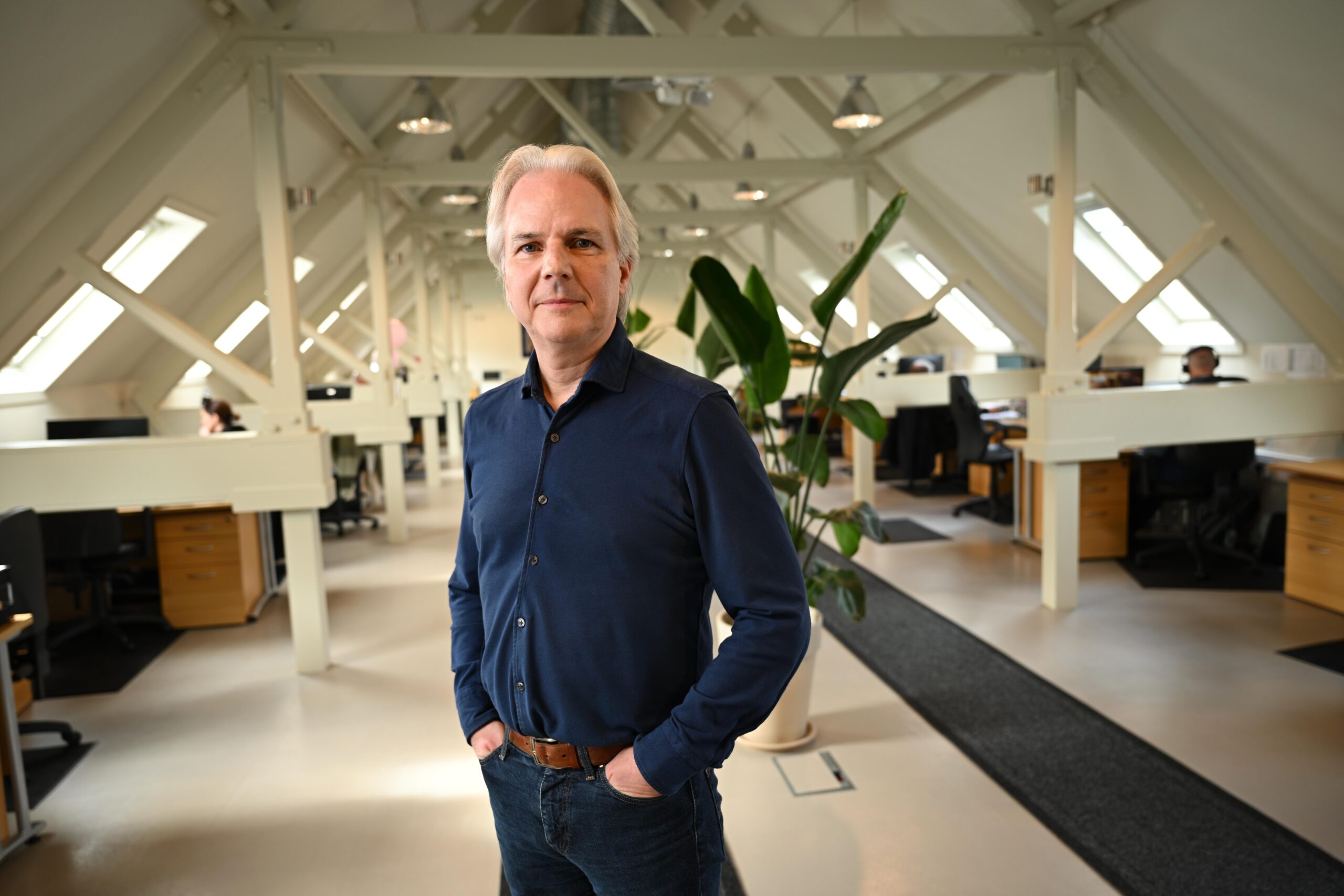
Tom Clinch steered me around the offices of Clinch Wealth Management like a proud parent showing off a newborn child.
And it was easy to understand the pride. The office is breathtakingly beautiful with striking artworks and tasteful furniture. As I wrote last week, it is more boutique hotel than corporate workspace.
On Thursday, for example, it was used to launch the firm’s sponsorship of Ireland at the Venice Biennale, where Ireland’s representative is the artist, Isabel Nolan – one of her paintings adorns a wall in the office.
But the space is more than just aesthetic. It offers an immediate insight into the mindset behind the business – carefully curated, highly personal, and intentionally different.
“It was a big investment in the future,” Clinch told me. “It was a long-term decision, but it’s sort of the physical manifestation of who we are.”
When Clinch took over the family business, it had assets under management of €30 million. Today, the figure is €700 million.
This has been achieved through a mix of organic growth, a string of acquisitions, and a rebalancing of its customer base. It has sought areas, such as arts and the creative industries, that he and his partners felt were underserved.
In person, Clinch was affable and open, a stark contrast to many in the upper echelons of the Irish wealth industry. He seemed happy with his place in the world, and in the business he was building.
Here are five key takeaways from the interview.
Marrying the personal with business
Tom Clinch never set out to be a wealth manager. His heart was in performing and production – he appeared on stage and was running his own production company. He was a storyteller. But the death of his mother, who ran the business with his father, created a vacuum, and he felt the need to fill it.
He found his background gave him a different perspective – about people, about business, about the importance of collaboration. Not long after, he realised, “Actually, I’ve an aptitude for this,” adding, “I knew how to make money out of things.”
It shows that for many, there is no such thing as a linear career, and that many talents are transferable. For Clinch, storytelling became relationship-building in wealth management.
Focus beats scale
Yes, Clinch and his team have scaled the business. But it has not been growth for growth’s sake. Instead, much of the expansion has come from a focus on the right people and the right sectors.
Essentially, it reshaped its client base – reducing it from several thousand to fewer than 1,000 higher-value relationships.
“We had two and a half to three thousand clients. Now we have less than a thousand… the AUM has gone up exponentially,” he told me.
Rather than chasing volume, he describes a conscious pivot towards depth and selectivity: “You know the 80:20 rule? We’d keep the 20 and sell the 80.”
A recurring theme is that financial advice is not purely technical – it’s deeply personal. Clinch even describes it as “50 per cent personal therapy”.
Clients aren’t just seeking investment returns; they’re managing uncertainty, identity, and life transitions. That shapes the firm’s choice to stay highly personal, he says.
People are the real infrastructure
Clinch is very clear that growth in a business like his is not primarily driven by systems, products, or even strategy – it is driven by people. While the firm has expanded to around 25 staff and €700 million in assets under management, he repeatedly anchors that success in the quality of the team around him.
As he puts it, “We’ve built something that works… and it works because of the people.”
His two key partners, Michelle McGurk and Andrew O’Donoghue, both have equity and he name-checked both of them numerous times during the interview.
“My job really in the business is curating the team, curating the service, and then the brand,” he says.
Brand is strategy – not decoration
The design of the office, the integration of art, and the firm’s involvement in the creative world (including initiatives like SoSimpatico) are not aesthetic extras – Clinch says they reinforce the firm’s positioning.
By aligning the business with the creative sector, the firm has built a clear niche identity that competitors cannot easily replicate. He understands this market because he comes from it and is immersed in it – his daughter Catherine was the star of An Cailín Ciúin, while his wife is the Grammy-nominated singer Méav Ní Mhaolchatha.
“It turned out that by happenstance it was a very good business move, because nobody else does it, nobody else knows how to do it,” he says.
Through SoSimpatico, a separate company he owns with his wife that works on arts and productions, and his wider involvement in the arts – including initiatives such as HAA (Helping Artists Achieve) – Clinch has become an active supporter of creative work, providing both financial backing and structural support to projects and individuals.
“I love the creative world,” he says. “It’s where I came from.”
Don’t overengineer everything
A quieter but still important theme in Clinch’s thinking is his resistance to over-structuring the business as it grows. While the firm has clearly become more sophisticated over time – through acquisitions, hiring, and a refined client base – he is wary of pushing efficiency too far at the expense of judgment and relationships.
As he puts it: “I think if you try and over-engineer everything, you can lose what made it good in the first place.” That line captures a broader philosophy: systems matter, but they should not override the human qualities that created the business’s success in the first place.
He says this appealed to his clients, particularly those who work in the entertainment and creative industry, where trends and income streams can be fickle.
“They’re all worried that they’re never going to work again,” he says.
Elsewhere last week…
Ronan examined what the first data on Ireland’s new rental rules reveal for the market. The way he sees it, there has been a slight recovery, but this masks a more troubling reality: the market may now be permanently smaller.
I sat down with Stuart Fitzgerland, managing direct or Fitzgerald Power; Mark Flood of Renatus Capital Partners; and June Butler of Bank of Ireland to discuss the upcoming Real Deal event. They spoke about entrepreneurship, the M&A market, and how companies can navigate choppy times.
The recruitment platform Jobbio, backed by IIU and Michael Smurfit Jr, entered Scarp a year ago to restructure the business. With its most recent accounts showing retained losses of €37.9m, it is now set to appoint a liquidator. Jonathan had the story.
More than two years after the Supreme Court ruled Domino’s Pizza delivery drivers were PAYE employees, not contractors, artists and writers appearing at public libraries are the latest freelancers affected by new tax rules. Thomas revealed how the reclassification of 6,600 gig workers as employees leaves many confused.
Eleven years after its last visit to Dublin, IMAP returned to the capital as a guest of Key Capital. CEO of the Irish finance house, Colin Morgan, and IMAP chair Jurgis Oniunas talked shifting global dealmaking trends amid geopolitical uncertainty and changing valuations.