Voices
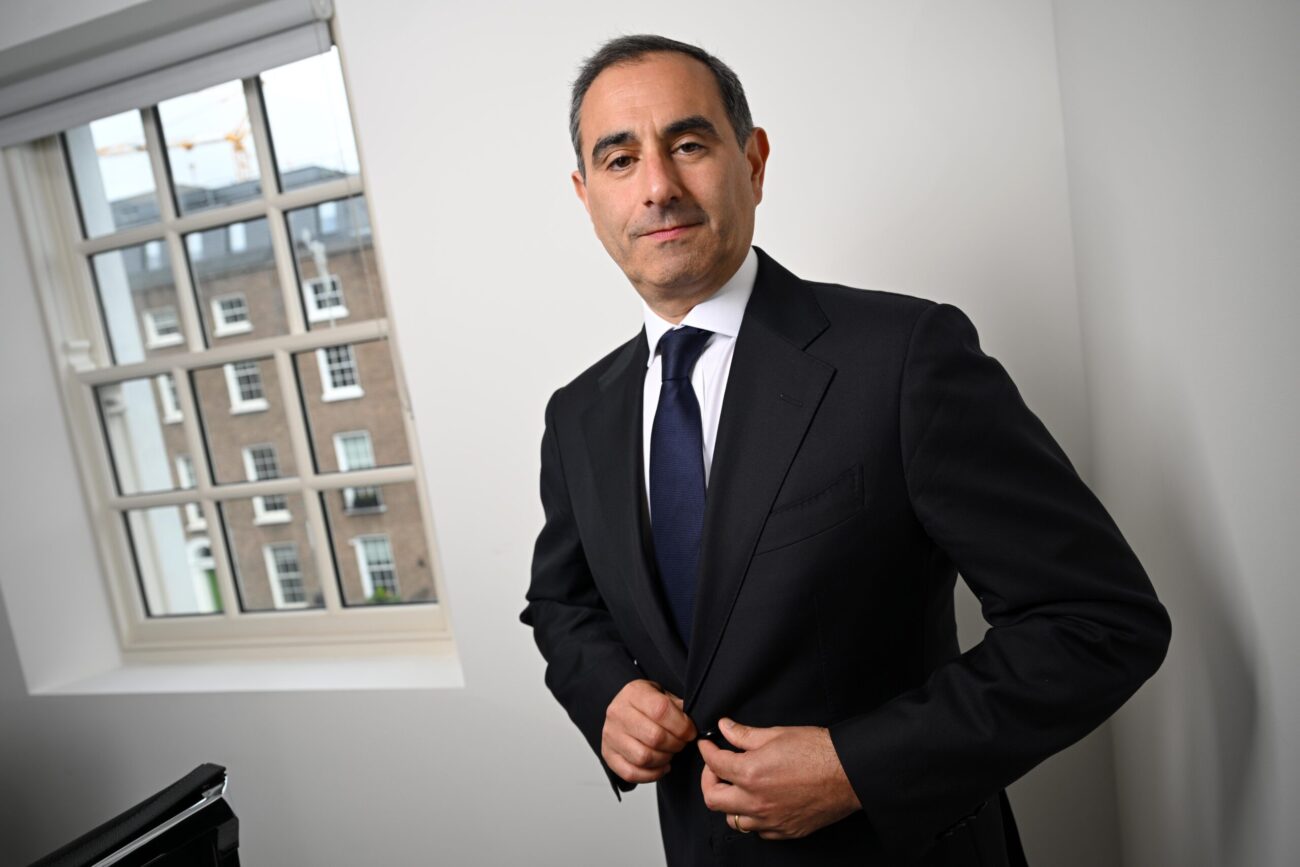
Almost a year ago, when I sat down with Jacob Silverman in Dublin, the global chief executive of Kroll described the world through the lens of a familiar acronym: Vuca – volatility, uncertainty, complexity and ambiguity.
At the time, Silverman argued that uncertainty itself had become the defining constant for businesses navigating geopolitical tensions, cyber threats, shifting capital markets and the early disruptive wave of generative AI.
Companies, he told me, could no longer afford complacency – even in areas where they believed themselves to be strong.
Twelve months on, the environment has become even more unpredictable. Geopolitical uncertainty and fragmentation have deepened, cyber threats have become more sophisticated, and AI has rapidly accelerated to the point where people are both enthused and nervous.
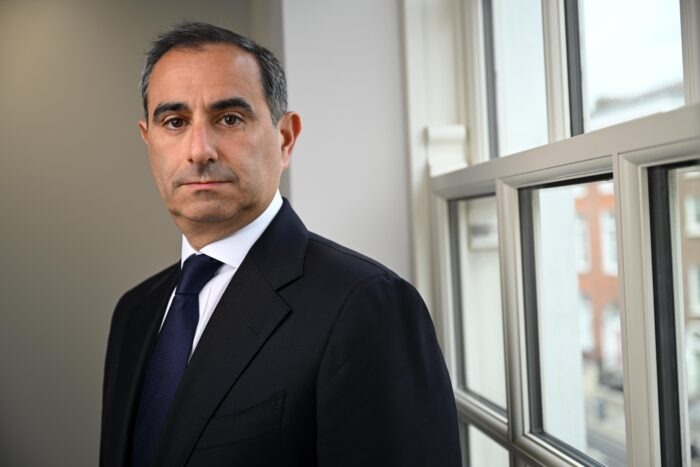
Silverman was back in Dublin in recent days, when I caught up with him again. His insights are interesting for several reasons.
First, his firm employs 6,500 people around the world, and he spends much of his time travelling to meet them. He knows the mood of international businesspeople, entrepreneurs and executives, because he spends his days talking to them.
After all, the professional services firm he leads provides global financial and risk advisory services all over the world and across a range of specialities. It can work on liquidations as well as advising on cybersecurity threats – and much more besides.
Secondly, it has a serious operation in Ireland. Kroll, which traces its Irish lineage back to Farrell Grant Sparks (FGS), followed by Duff & Phelps, employs 75 people in Ireland, of whom nine are at the managing director level.
It specialises in property and fund valuations and liquidations, carving out significant niches in both areas. More recently, it acquired Kirby Healy, the boutique insolvency firm established by Myles Kirby and John Healy. (This acquisition, Silverman says, has panned out much better than anticipated, with targets being exceeded.)
A year has passed since I last sat down with Jacob Silverman. But, as he reflects upon the helter-skelter 12 months, the Kroll boss is quick to explain why business has become more accustomed to the vagaries of this so-called Vuca world.
“The world has always had upheavals and curveball events, as I call them, and just cyclical or secular trends or technological developments. It just feels perhaps more acute now. And I think some of that is because of the accessibility of information, and the very real-time news cycle and communication cycle that exists because of technology. It’s immediate and in your face, and pretty much every minute – when you go to sleep, when you wake up, and throughout the day,” he says.
The way Silverman sees it, this creates a different sense of the volatility in the world now.
“In fact, the world has been complicated, whether it’s kinetic warfare, cyber warfare, geopolitical upheaval and the changing of the world order. That’s something that people have had to grapple with. That said, a year ago, for whatever reason, the Vuca of the world really caused a level of paralysis, particularly in the early months after the tariffs came in,” he says.
“A year later, there are plenty of events that have caused consternation, concern, anxiety, and tragedy, and yet the world seems to have been able to acclimate itself to being in a highly Vuca environment and carry on. We’re seeing capital markets at all-time highs. We’re seeing transaction activity continue and not suffer the paralysis from a year ago.”
So what, then, are the defining themes now shaping the conversations Kroll is having with clients around the world?
For Silverman, three forces dominate almost everything else. They are interlinked, overlapping and, in many cases, reinforce one another: geopolitical instability and the reshaping of the global order; the rapid rise of artificial intelligence; and the continuing surge of capital into private markets.
“Those are the big three for our business and what our people are focused on. Underneath all of that is a continuing focus on how, across those three themes, in a Vuca world, can we best advise our clients with regard to how to protect themselves against threat actors who are continuing to exploit vulnerabilities.”
Artificial intelligence, unsurprisingly, looms large in those discussions. Yet for all the noise, hype and eye-watering investment surrounding the sector, Silverman suggests many corporate leaders are still trying to determine precisely where the technology is heading – and which platforms will ultimately endure.
“As I talk to other business leaders in similar industries and, in fact, other industries, my realisation is that, with perhaps a few exceptions, most businesses that are not at the forefront of developing this technology are still very much in the mode of figuring things out,” he says.
“When you unpack things, people are still very much in rapid learning mode, and we certainly are as well. And what we’re also observing is that the platforms and the models themselves are so quickly evolving that taking a little bit of time to see which ones will start to become the entrenched incumbent tools of record is perhaps a wise course.”
At the same time, the accelerating sophistication of AI is feeding directly into another of Kroll’s core areas: cybersecurity.
Silverman describes cyber risk not simply as a fast-growing advisory market, but as an increasingly permanent feature of modern corporate life – one intensified by the speed and accessibility of new technologies.
“It’s a major area of focus for us, and it’s core to our mission of protecting, restoring, and maximising value. That protection piece is really the core to our ethos,” he says.
“With the rapid advancements in technology, that helps companies do lots of amazing things and it also helps threat actors do lots of terrible things. It’s an arms race. And for every technological advancement that is created for good, there’s someone out there, unfortunately, who will try to exploit that technology for negative effect, and we just have to constantly be vigilant about defending against that.”
For all the uncertainty hanging over the global economy, however, Silverman says dealmaking activity has proven more resilient than many had anticipated.
“The desire of market participants [is] to transact, and for many participants, particularly in the private markets, the imperative [is there] to transact because of other businesses that have been invested in many years ago that need to be harvested and returned to investors and idle capital that needs to be deployed,” he says.
“That reality, and I should also say, being able to operate in what is now still a higher interest rate environment than it was several years ago, during a very low capital cost period – all of those facts and realities are driving, I think, a desire to transact. Is that the robust levels, and perhaps the euphoric levels of certain years past? No, but there is a steady hum.”
That “steady hum”, as Silverman puts it, is particularly evident across private capital markets – an area that has become increasingly important for firms such as Kroll as institutional money continues to shift away from traditional public markets.
“The private markets have been secularly growing now for many, many years. Private equity, more recently, private credit, and other forms of private capital across asset classes – it’s been growing explosively,” according to Silverman.
“The world of private credit has been growing very rapidly and very much in the public eye over the past period. And it is evolving, and in many ways going through a maturation process, and the focus and indeed scrutiny on private credit over the past few months, I think, will continue to further the development of proper infrastructure and governance to support that market. And we’re part of that role.”
In that sense, the Vuca world Silverman described a year ago has not eased. It has simply become normalised.
Elsewhere last week…
The High Court has clarified the tax treatment of foreign withholding tax on royalties collected by an Irish subsidiary of the consulting multinational. On Friday, Thomas delivered the inside story of Accenture’s €79m tax tussle with Revenue.
Tamboran’s acquisition of Falcon has been complicated by sanctioned shareholder Viktor Vekselberg but US authorities have issued a licence to “consummate” the deal. Jonathan had the details.
After an exceptional 2025, farmers are reluctant to steer their milk processors towards M&As. Could the clouds gathering over commodity markets spur them to consider new joint businesses like Ornua instead? Thomas sought to answer the question when he looked at the performance of Ireland’s largest co-ops.
Mounting costs, changing consumer behaviour, and “the Shein and Temu effect” have led Jenni Timony to pull the plug on her FitPink clothing brand, she explains. She explained her decision.
ESW founder Tommy Kelly reflected on the Irish business leaders who shaped his thinking, the mentor who kept him grounded, and why he believes in adaptability and the importance of getting direct experience with the consumer.