Voices
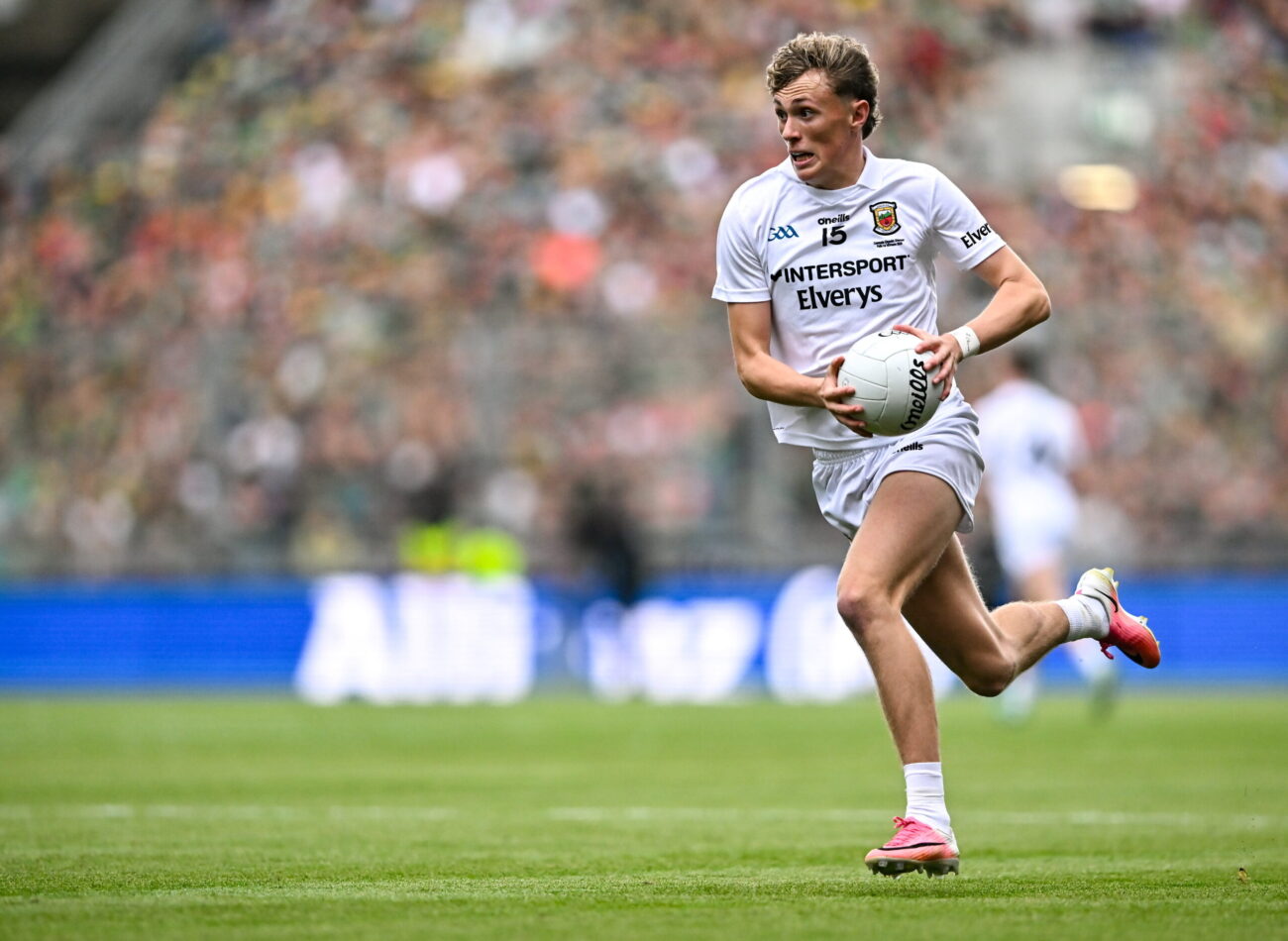
Even now, two weeks on, it is impossible to look back on Mayo’s stunning All-Ireland men’s football final victory without smiling.
In truth, I suspect even many in Kerry were happy for Mayo. There was something almost atavistic about the triumph: a county that had endured so many heartbreaking defeats finally summoned something elemental to claim the ultimate prize.
As captain Jack Coyne declared in his rousing speech afterwards: “Stick yer chest out and be proud to be from Mayo.”
It is also worth looking at the name emblazoned across that Mayo jersey: Intersport Elverys.
The Mayo-based sports retailer has stood alongside the county team through its highest highs and deepest lows, sponsoring it through decades of hope, disappointment and, at last, redemption. It is difficult to imagine any other name on the famous green-and-red jersey.
Yet, like the team it backs, Elverys has faced challenges of its own. And, again like Mayo, it has emerged on the other side stronger – profitable once more and back in expansion mode.
Indeed, when you look back at Elverys’s own financial struggles, its recovery is a remarkable story in itself.
It is a tale featuring an unlikely cast of characters, including Nama, British retail billionaire Mike Ashley, and the Staunton family, the dynasty behind the retailer.
In 2014, Elverys almost collapsed.
In fact, it was heavily insolvent. It suffered losses in all but one year between 2008 and 2014.
It had a great brand name, but a problematic balance sheet. Its owners owed money to Nama, the State’s bad bank, and it was teetering on the edge of collapse.
But it had a plan: a pre-pack receivership that would see the company taken over by its banks before being quickly sold back to its managers. As a corporate strategy, it is quite common. But in those helter-skelter years after the financial crisis, a lot of best-laid plans came asunder.
AIB had been lined up to provide finance, while the Dublin private equity house Capnua had also been brought on board.
The Staunton brothers were on side and had agreed to use the €11 million sale proceeds to pay down Nama debts. Nama, for its part, was on board.
In essence, the management team would acquire control of the business in a deal facilitated by the owners.
However, as the plan was in train, Mike Ashley arrived in town, claiming he would pay a 25 per cent premium over management to nab the chain.
Nama quickly pulled out.
Instead of a pre-pack receivership, the company went into examinership.
The Stauntons were central to any deal. They owned 20 of Elverys’ 56 stores, making them the retailer’s largest landlords, and also controlled several of its key brands, including the RugbyTech label.
The management team, led by Patrick Rowland, held off a challenge by Ashley to buy the company.
O’Neills, the Irish sportswear manufacturer best known for its GAA jerseys, backed the management buyout (MBO) and took a 45 per cent stake in a company called West Roxbury, a vehicle used to facilitate the MBO. The deal made business sense for O’Neills, as it preserved one of its best customers.
Over the years that followed, the Staunton family have bought back control of the business. Operating through a company called Dunkellin Investments, the family has bought a majority stake in West Roxbury.
It was a remarkable reversal of fortunes.
Many entrepreneurs who lose control of a business never get the chance to return. The Stauntons did so by remaining patient and staying connected to the company through some of its most difficult years.
There was no dramatic takeover. No grand announcement. Instead, the family steadily rebuilt its position in the business they had created.
The latest accounts for West Roxbury, covering the 2024 financial year, show the scale of the turnaround. Revenues reached €138 million, while the company generated profits of €6.2 million.
Today, Elverys is once again a profitable and expanding retailer.
There is a certain symmetry in that.
Mayo’s All-Ireland victory was not delivered by one moment of inspiration. It came after decades of heartbreak, near misses and disappointment. The county reached the summit because it refused to give up.
Elverys’ journey has followed a similar path.
Elsewhere last week…
Having moved from CEO to chair of the athleisure brand Gym+Coffee, Niall Horgan has joined Endeavor Ireland as entrepreneur-in-residence and is working on a new group travel platform that connects people going abroad. He spoke to Olivia.
Dermaceutic Laboratoire makes high-end beauty products for international markets. But a multi-million-euro shareholder oppression battle of “war” and “retaliation” has broken out at its Irish company over intellectual property rights. Francesca had the story.
National Beauty Distribution started with €6,000 worth of nail polish and has grown to €27 million in revenue in 15 years. Founder and CEO Kieran Walsh told Alice the company’s journey, and his own.
Following my column on the restored nine per cent Vat rate, hospitality operators from across the country explained what life now looks like on the ground. Their stories suggest the tax break is no longer about cheaper meals but about keeping viable businesses alive.
Irish people – including younger workers – are saving more than ever before. Dan wrote that the destruction of their wealth, largely on bank deposits exposed to inflation, is the biggest justification for the introduction of personal investment accounts.
As Gianni Infantino’s grip on Fifa weakens, Colm McCarthy argued Ireland has an opportunity to push for reforms that could transform the prospects of domestic clubs and finally challenge the structures that have favoured Europe’s biggest leagues for decades.