Voices

Mike Ashley’s Irish empire looks set to expand. Again.
Harvey Nichols’ department store in Dundrum has collapsed into liquidation, and Frasers Group, Ashley’s retail conglomerate, is favourite to buy it.
A luxury retailer that arrived in Dundrum with a €10 million store, Dita Von Teese and the confidence of the Celtic Tiger could soon find itself under the ownership of the controversial retail billionaire who made his fortune from a “stack it high, sell it cheap” philosophy.
Ashley has already mopped up Harvey Nichols’ UK stores out of administration. Assuming he cuts a deal with the landlord in Dundrum, the Irish outpost will follow suit.
It will add yet another property to his Irish operation, one steadily advancing since he first entered the Irish market two decades ago through a link-up with the department store chain Heatons.
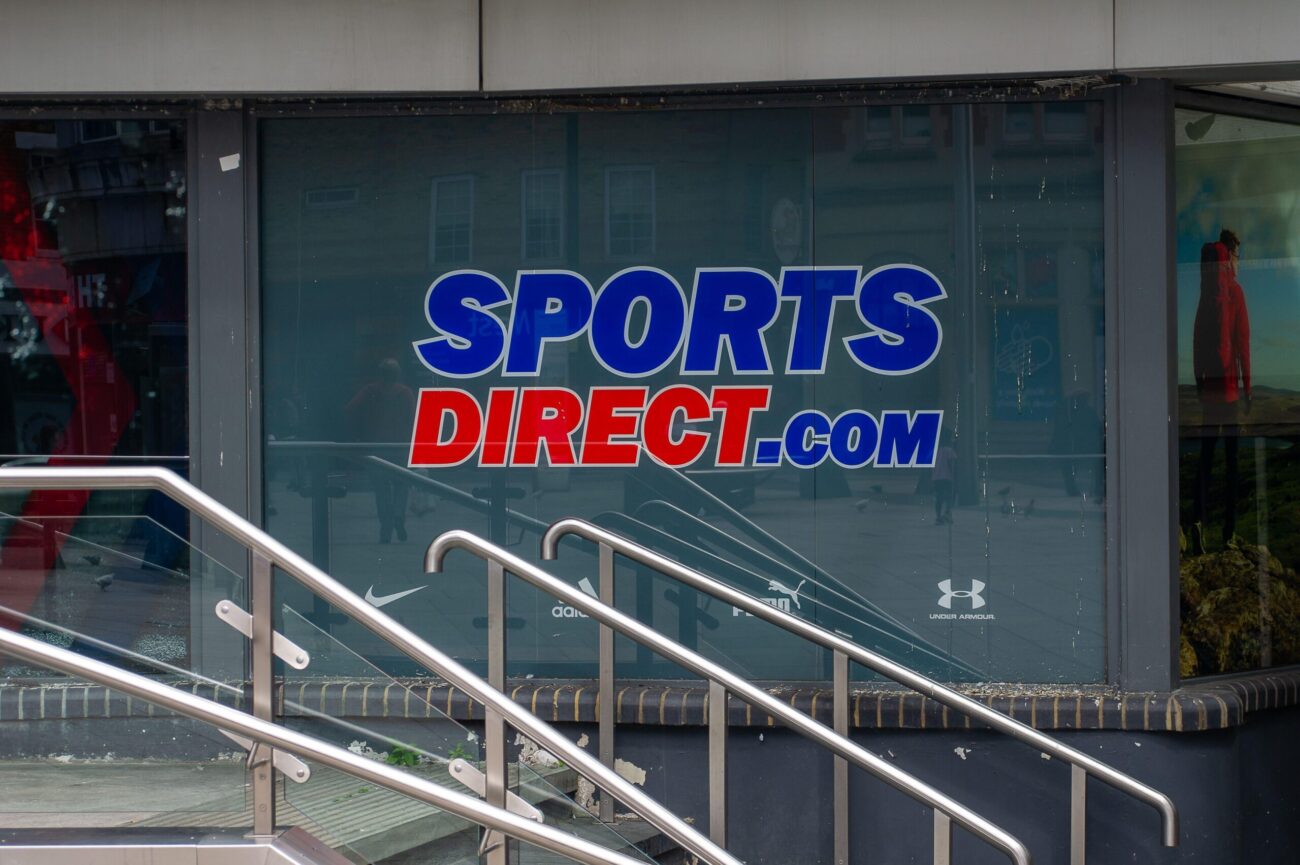
He went on to take full control of the chain, gradually rebranding the stores as Sports Direct (Ashley also has several Frasers and BrandMax outlets on the island). All told, he has close to 40 stores across the island.
In between, he has tussled with Irish landlords, engaged in a massive (and ongoing) legal battle with the Irish Revenue Commissioners, and even tried to take control of rival sports retailer Elverys.
It begs some questions. What is the billionaire’s plan for Ireland? And how has his Irish business performed?
It would be easy to look at Ashley’s assault in Ireland as an unrivalled success. But that is not altogether true. His company is making handsome profits here now (it recorded a pre-tax profit of €48 million for the year to the end of April 2025), but this has been achieved through aggressive cost-cutting over a sustained period of time, and numerous provisions against what the company believes have been onerous leases.
To best understand Ashley’s Irish strategy, you have to look at the numbers. And the best place to start is before the pandemic.
Because even before Covid-19 and the high street shutdown, the retailer was already feeling pain. Its accounts for the year ending April 28, 2019 showed falling sales, a hefty loss, and significant issues with its property leases.
The group’s turnover fell from €200 million to €181 million in 2019. A profit of €1.4 million in 2018 had reversed into a loss of €19.4 million in 2019.
Much of the loss stemmed from a provision for onerous leases of €26.8 million during the year.
The provision was made against the company’s long-term leasehold property leases and its short-term property leases. As I wrote at the time, it was, in essence, a negative hedge on the future resilience of Irish retail and commercial property.
Ashley used the pandemic as an opportunity. He began playing hardball with landlords, with five individual landlords suing the Irish operation over disputed rental payments. It also benefited significantly from pandemic-era wage support schemes.
It reduced headcount, centralised more functions, and sought to rein in costs.
It also took on the Irish tax authority and is currently trying to stop a retrospective Revenue Vat audit of its online sales to Ireland, describing the potential probe as a “stalking horse” and an attempt to gather evidence of fraud or neglect to support a potential tax assessment.
The bullish and opportunistic approach has worked.
2022’s accounts for Heatons Unlimited Company showed how it used the pandemic to streamline its operating business. Not only did the company protect its pre-pandemic margins, it grew them.
Sports Direct’s admin costs are much lower as a percentage of sales than its smaller Irish rivals. As we reported at the time, that gave it bigger operating and Ebitda margins.
Sports Direct’s buying power also allowed it to achieve higher gross margins than Irish competitors.
Fast forward to today. The company recently filed its accounts for the 2025 financial year. They are, by any standards, remarkable.
Revenue increased to €229 million, while profits surged. The profit number was boosted by €12 million in interest income from related-party loans and the reduction of an onerous loan provision of €4 million.
The company said the provision was reduced based on the group’s current trading performance and management’s expectations for future performance.
Before taking the €12 million interest receivable into account, the group’s operating profit increased marginally from €35.9 million to €36 million.
The surge in performance comes at a time when many other retailers are struggling.
Figures from PwC show that one in four insolvencies in the first half of this year were in the retail sector. Some 109 retail businesses entered liquidation, receivership, Scarp, or examinership over the six-month period.
That represented an increase of 35 per cent on the same period last year.
There is an underlying irony of course.
Ashley made his name and his fortune in low-cost retailing. That has given him the leverage to pick over the assets of distressed luxury retailers like Harvey Nichols.
Harvey Nichols arrived in Dundrum at the height of the Celtic Tiger, when the assumption was that Ireland’s appetite for luxury retail would only grow. Two decades later, the store has become another distressed asset for Ashley to pick over.
Elsewhere last week…
The same day the Donegal native Amanda Torrens sold her nursing-home business Brindley to France’s Orpea in 2021, she bought the iconic Co Kildare castle for €15m. Five years on, she is revelling in her role at the helm. She spoke to Michael.
Jerry Kennelly’s new documentary tells the Shakespearean story of the Healy-Raes and how a healthy tension between them became “war in the camp”. He talks about how he got inside the Healy-Rae operation. Kennelly spoke to Dion.
The impact of AI on jobs appears to be slight and slow – for now, according to Dan O’Brien. Competition for workers between employers in the growing construction and hospitality industries is a bigger factor shaping Ireland’s economy.
John and Patrick Collison have spent 15 years building Stripe into one of the world’s most valuable private companies. And their recent M&A activity shows they are just getting going.