Voices

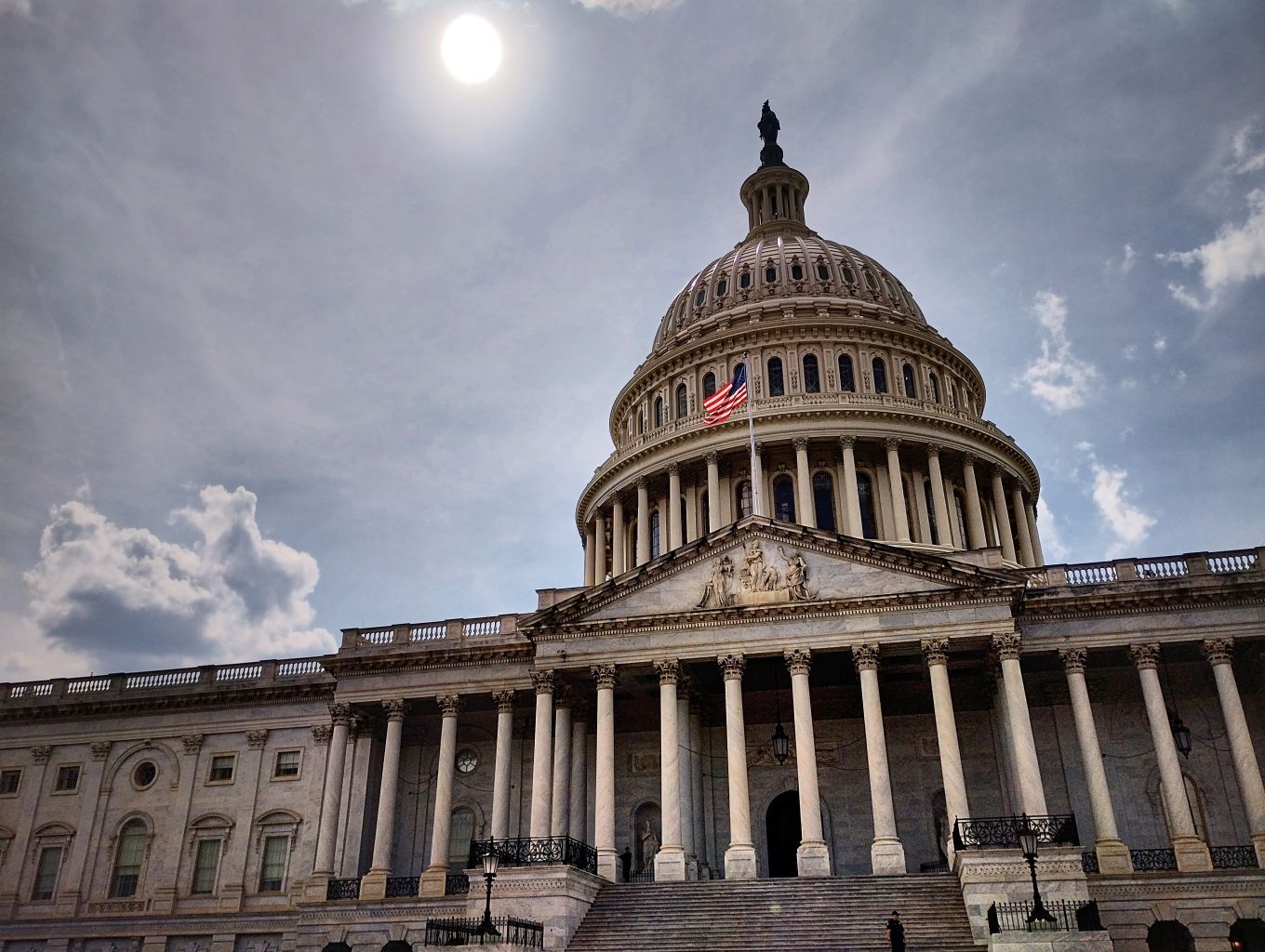
“Total carnage” was how Tom Rath, a former Republican Party electoral strategist, described the result of Tuesday’s US midterm elections to The Currency’s partner publication The Wall Street Journal. Past the shock of the resounding victory that gave Democrats comfortable control of both houses of the US Congress, attention is quickly turning to what they do with the power newly vested in them by American voters fed up with the economic consequences of President Donald Trump’s scorched-earth politics.
From this side of the Atlantic, the turning tide in Washington heralds some change in the American policies that have caused widespread disruption across Europe, including in Ireland – but just some.
Trump acted outside any control from Congress when he meted out his most direct hits to European economies through his imposition of unilateral tariffs and his willingness to set oil and gas markets ablaze by stoking war in the Middle East.
The president did not require congressional approval to implement so-called Liberation Day tariffs. Only US courts were able to stop them – and only for Trump to reintroduce a version of the import duties through another set of presidential powers. Despite controlling the House of Representatives and the Senate, Democrats cannot force Trump to lift all tariffs, though they can make his life more difficult in retaliation for keeping them.
Likewise, the US war on Iran and its support for Israel’s regional military campaigns remain under the control of the American commander-in-chief. Again, Congress can throw spanners in the works when it comes to funding for the military or parliamentary scrutiny of strategic decisions, but it doesn’t call the – literal – shots.
Ukrainians may find comfort in the growing number of representatives and senators willing to continue military aid to their country and investigate recent limitations in the sharing of US intelligence and access to Elon Musk’s Starlink satellite service. But Trump can still veto aid bills he might find too generous for Ukraine and make day-to-day executive decisions on what US technology Ukraine can access.
Meanwhile, the groundswell of support enjoyed by Democrats is primarily calling for answers to domestic American issues. The party’s leader in the House, Hakeem Jeffries, said on Tuesday: “Things are broken. We need a Congress that puts the American people first.”
The global economy at large will benefit from any efforts to undo the damage of Trump’s war on Iran and dampen energy prices. But this is the extent of the overlap between the bread-and-butter concerns shared by US and European voters.
Democrats and Republicans are set to embark on a series of inward-looking, all-consuming fights over health insurance rules for Americans, US government spending, who should be appointed to or fired from official jobs, and investigations into the money trails for Trump’s vanity construction projects.
While this will keep their attention away from world affairs, it doesn’t mean their decisions won’t have repercussions across the Atlantic. As Hannah McCarthy reported from Texas, the American small-town vote swing to Democrats is partly due to the backlash against data centres being railroaded into rural communities – an industry where Irish engineering companies have built up their presence.
Tara contributed to the wider debate on AI’s environmental impact by weighing up the promise offered by more intelligent technologies in addressing climate change against the impact of associated data centres’ energy and water consumption – the very issues on the minds of American voters.
The drop in tech stock prices at the end of last week illustrated this backlash, though it mostly hit those companies focused solely on AI infrastructure (including Intel) but left the two multinationals most significant for Ireland’s economy and Exchequer revenue, Apple and Microsoft, comparatively unscathed.
Meanwhile, US budget debates will, at least in part, re-run last year’s sparring over the One Big Beautiful Act (OBBA). The Republican-sponsored legislation, along with a slew of income-tax measures for Americans, perpetuated the rules allowing high-tech US multinationals to don the green jersey and locate their overseas intellectual property in Ireland for maximum tax advantage – or to book profits in Irish distribution centres for international products and services based on American technology at a lower US tax rate.
It is behind the continued boom in Irish corporation tax receipts from US tech, pharma, and medical devices multinationals.
Democrats opposed the OBBA. Their search for money to plug the gaping federal deficit may lead them to multinationals’ profits again, but they would likely hit Trump’s veto if they tried to undo the web of tax breaks he takes credit for introducing.
The only tax measure appearing to enjoy current bipartisan support in Washington is a proposed tax credit for film and television production taking place in the US. It is approaching the final stage of adoption by Congress after Trump finally lent its support to the measure earlier this year.
Once passed, the US will offer a credit worth 20% of eligible production costs (and up to 30% in some cases), with no maximum cap. This is in addition to state incentives, with California Governor Gavin Newsom proposing on Monday to expand his state’s own film and TV tax credit.
These moves are in direct competition with Ireland’s section 481 tax regime, which was expanded in recent years to cover unscripted TV shows and to refund 32% of eligible costs – 40% for some visual effects – but is constrained by a maximum cap.
Ironically, the first visible consequence of a welcome return to relative normality in US politics may well be an incentive for American films and shows shot in Ireland in recent years, especially larger ones, to up sticks and move back to their home studios.
Elsewhere last week…
Nomad Capitalist says it has relocated over 3,000 wealthy individuals, helping them pay less tax by moving countries. Michael talked to its founder Andrew Henderson about his “avant-garde” company, his stint in Ireland, and the ethics of helping rich people contribute less.
Four years after his rugby club collapsed, Derek Richardson, the founder of 123.ie and former owner of Wasps rugby club, is deep in court battles with AIB over debts and his former financial advisors over alleged deceit and misrepresentation. Jonathan had the story.
The complex liquidation of the Cork-based investment firm BlackBee was in the High Court again this week. Francesca watched as its founder David O’Shea was cross-examined on Tuesday and Wednesday, giving his version of what happened to millions of euro in investors’ money.

