Voices

I bought Peter O’Mahony’s new book the other day and went straight to the index, under F. What might he have to say in All In about Ian Flanagan, the CEO of Munster Rugby for the past seven years, whose imminent departure was announced seven days after O’Mahony’s book was published? Answer: nothing. Not one mention.
What about another very senior figure in the organisation – Ian Costello, director of rugby operations for the last two years of O’Mahony’s time with Munster and a coach for several years before that? Again, zilch.
When I worked with Brian O’Driscoll on his memoir, The Test, he said at one point that he was against the idea of it having an index. Why so, I asked. He mentioned the name of a prominent person he wasn’t well disposed towards. He wanted him to have to read the entire book before finding out he hadn’t been mentioned once. In the end, the book did include an index – and so this person could have got the message pretty quickly that he didn’t matter in O’Driscoll’s world.
I won’t speculate too much on the reasons why Flanagan and Costello didn’t make the cut in All In. Neither is this a criticism of the book, written with Dion Fanning, which is a very good read. For proof of that, see this extract in The Currency, in which O’Mahony describes in fantastic detail how his game was improved by the relentless, merciless coaching of Joe Schmidt with Ireland. It’s the best account I’ve read of how Schmidt operated. If you didn’t do it his way, then “Joe would be howling in your face” – as O’Mahony puts it in one of his milder descriptions of the Schmidt doctrine.
Back to Munster. O’Mahony’s unhappiness at how things were run there in the latter years of his career does come across in the book – for example, he hammers the decision not to retain the services of performance coach Caroline Currid. But his criticisms are not very explicit and require some reading between the lines. Things were better, he says, when the late Garrett Fitzgerald was CEO: “He knew what was going on and what needed to be done.”
O’Mahony’s restraint did not stand up too well under questioning from Will Slattery for the Indo Sport podcast, in an interview to publicise the book. Munster is not a well-run organisation, and it needs change, he said – specifically a change in “the people who are running the place”. Again no names, but none were needed.
Lo and behold, the rugby correspondents had barely parsed these comments when the announcement came. Flanagan is leaving this month. Then, in rapid succession, came the news that an interim CEO will start on October 21.
A good start
Avan Lee, a New Zealander, has the job for a year but has already said he wants it permanently. He said something else: he has already “connected” with Peter O’Mahony and wants him inside the camp in some capacity.
Most people who follow Munster Rugby – maybe all – would call that a good start by Lee.
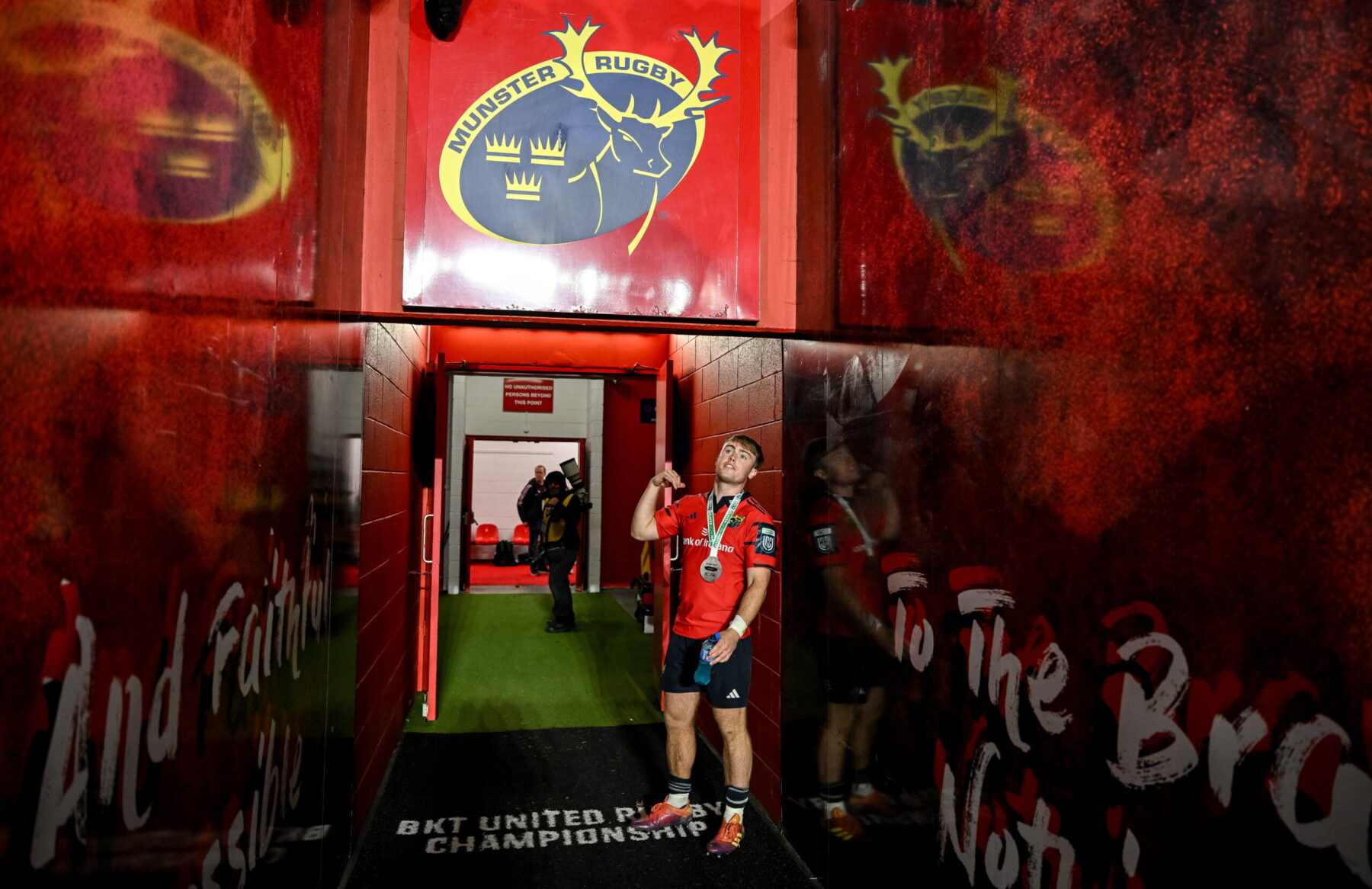
In his piece yesterday, Brett Igoe looked at the challenge Lee now faces and mentioned recent attendance figures at Thomond Park. A crowd of 10,381 saw Munster beat the Bulls from South Africa last Saturday night, well under half of the stadium’s capacity. It was a wonderful game and everywhere I went on Sunday people were talking about the outstanding performance of the 20-year-old out-half, Charlie O’Shea. Most of them watched it on TV – which doesn’t do anything for the revenue lines Lee will soon take responsibility for.
Still, there are a lot of people out there who will come back as paying Munster supporters if they have even a little encouragement that the team’s fortunes are on the turn.
Things started going downhill in 2009, when Leinster beat them in a Heineken Cup semi-final in May and followed that up with a 30-0 thumping five months later. It still took a while after that for the realisation to sink in that Leinster’s new supremacy wasn’t going to be challenged any time soon.
In late 2009 I began working with Paul O’Connell on a book that emerged almost seven years later as The Battle. O’Connell didn’t give a free pass to those who were running the Munster show back then. He rejected the idea that what happened in that semi-final led to Munster falling apart and Leinster going to another level. “The truth is that, by then, they had good plans in place to be better and we didn’t,” he said.
The kid who wanted it
In only our second interview, he worried that there wasn’t enough fresh blood coming into the team, players with the potential to be a future captain.
He did, though, see one bright ray of hope then.
There was this kid from Cork in the academy, 20 years old, who he had his eye on. A bitter little fucker, he called him. This description didn’t make it into the book, but it was meant as a great compliment. He could tell the kid wanted it by the way he trained. His name was O’Mahony – Peter O’Mahony.
It wasn’t long before everyone could see it – this was a future Munster captain alright. O’Mahony’s misfortune was that he arrived as the team was waning – and he then had to carry the responsibility of leading it for a very long time.
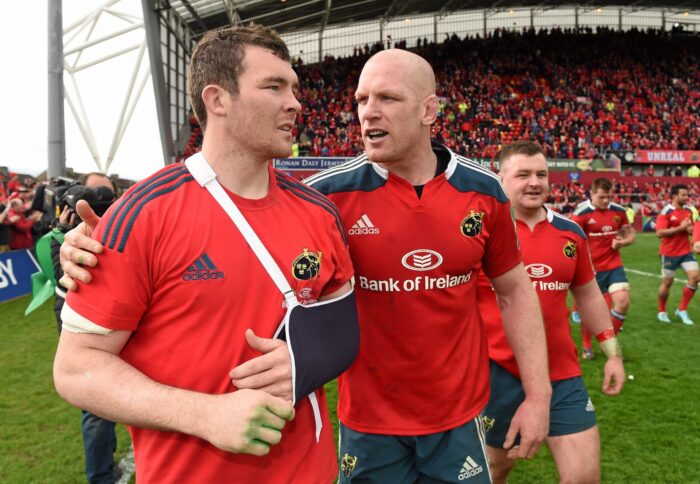
Maybe because I knew from an early stage what O’Connell thought of him, I was always asking how he was getting on. Later on, when the captaincy came his way, there was a sense that he couldn’t allow people to see the pressure he was feeling inside.
In his book, O’Mahony admits that as Munster captain he would ignore players he didn’t think had what it took to push the team forward. He regrets this now and sees it as a failure of his leadership, but there’s a context for it too. As O’Connell noted, O’Mahony understood the responsibility his generation had to keep things going for Munster. When that didn’t really happen, he was always going to take it hard.
Charlie O’Shea has several things in common with O’Mahony – they’re both gifted players from Cork who captained their schools (CBC and PBC) and made their Munster debuts at the same age. It’s early days for O’Shea and it would be unfair to take the comparisons any further. All we can do is hope that he gets the breaks that his talent deserves.
If he has the good fortune to benefit in the long term from better leadership at the top of the organisation, then that would be good too.
And if Avan Lee can find a way to get some input from Peter O’Mahony, as he begins the challenge of putting Munster back where they should be, then better again.
Elsewhere last week…
The week’s coverage was dominated by coverage of Budget 2027. On the day, we examined the budget from multiple perspectives, including tax, property and entrepreneurship, as well as a deep dive into the new national savings scheme.
In the days that followed, we had in-depth interviews with the Minister for Finance Simon Harris, the Minister for Public Expenditure Jack Chambers and the Minister for Enterprise, Tourism and Employment Peter Burke. Our budget coverage was supported by the LHK Group.
In Cobh, Wayleaf investors have brought shareholder oppression proceedings accusing a homebuilder of using project funds for other developments. Clopen rejects the claims and blames a dispute with the contractor for issues with the build. Francesca had the details.
Ireland is preparing to defend a $100 million investment row taken by oil and gas firm Lansdowne Resources under an international treaty that Ireland and others have opted to leave. Jonathan had the story.